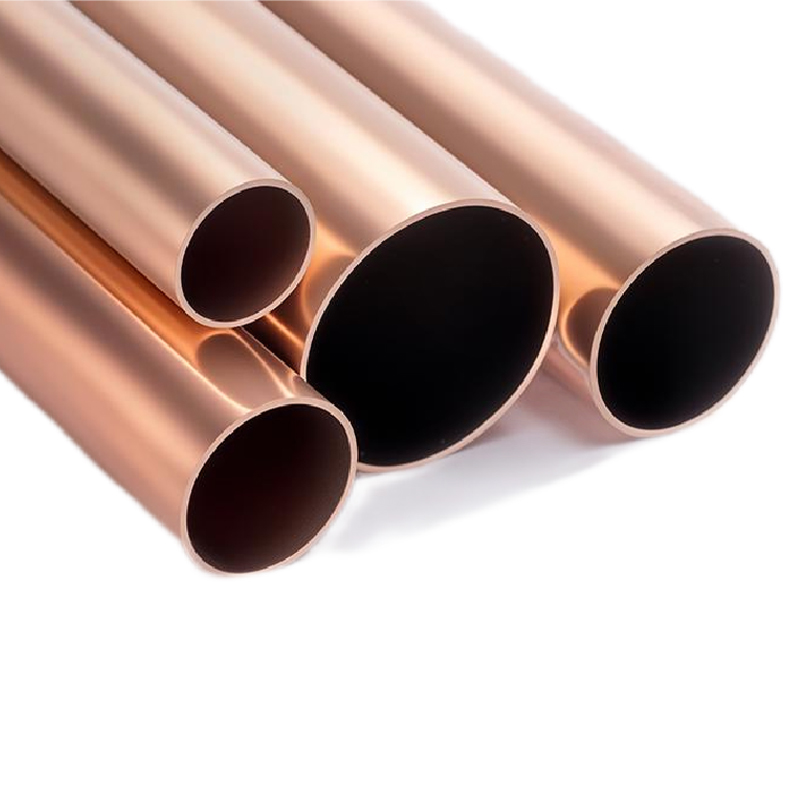
Copper tubes are the "blood vessels" of the refrigeration system, mainly used in condensers, evaporators and connecting pipelines. Its high thermal conductivity (with a thermal conductivity coefficient of approximately 400 W/m·K) enables rapid heat transfer, enhancing the energy efficiency ratio of air conditioners and refrigerators. The promotion of environmentally friendly refrigerants such as R410A has further driven the development of copper tubes towards high pressure resistance, thin-walled and lightweight. Industry standards such as ASTM B280 (Copper Tubes for Air Conditioning) have strict regulations on indicators such as cleanliness and tensile strength to avoid refrigerant leakage and system blockage.
What is the relationship between the conductivity of ultra-fine copper tubes with an outer diameter of <5mm and their wall thickness?
Copper is one of the most commonly used conductive materials in the electrical industry, and its conductivity directly affects the efficiency of electrical systems. In ultra-fine copper tubes with an outer diameter of <5mm, conductivity is closely related to the wall thickness. The main influencing factors include tube diameter, wall thickness, material purity, and current type.
The relationship between conductivity and cross-sectional area: The conductivity of a copper tube is usually determined by its cross-sectional area, which is closely related to the difference between the inner and outer diameters of the copper tube (i.e., the wall thickness). In copper tubes with an outer diameter less than 5mm, as the wall thickness decreases, the inner diameter of the tube increases, thereby increasing the conductive cross-sectional area and reducing resistance. Therefore, thinner walls generally result in better conductivity.
In high-frequency current applications, the current tends to flow through the surface of the tube wall, creating the so-called "skin effect." This means that in ultra-fine copper tubes with an outer diameter of <5mm, the main area of current flow is concentrated on the inner and outer surfaces of the copper tube, rather than being evenly distributed across the entire cross-section. If the wall thickness is too thin, the skin effect may lead to excessive current density, resulting in localized heating, increased energy loss, and reduced conductivity.
Another influencing factor is the purity and alloy composition of the copper. High-purity copper has excellent conductivity and is widely used in the production of ultra-fine copper tubes with an outer diameter of <5mm. However, to improve the strength, corrosion resistance, or high-temperature resistance of the copper tube, other metal elements may be added to form alloyed copper. The conductivity of alloyed copper is usually slightly lower than that of pure copper, and in small-diameter copper tubes, changes in alloy composition will affect conductivity more significantly.
The surface quality of the copper tube is also related to its conductivity. Copper tubes with rough surfaces or oxide layers will increase the resistance to current flow. Therefore, ensuring a smooth and contaminant-free surface is crucial for maintaining high conductivity.
What are the specific applications of ultra-fine copper tubes with an outer diameter of <5mm in the electronics industry?
Ultra-fine copper tubes with an outer diameter of <5mm are widely used in the electronics industry due to their unique physical properties. Especially in high-frequency, high-precision, and miniaturized applications, ultra-fine copper tubes with an outer diameter of <5mm have become an indispensable material.
Electronic wires and micro-cables are one of the most common applications of ultra-fine copper tubes with an outer diameter of <5mm. In modern electronic products, devices are becoming increasingly miniaturized, especially in mobile phones, wearable devices, computers, and medical electronic equipment. These devices require cables and wires that possess both sufficient conductivity and lightweight, flexible characteristics. Ultra-fine copper tubes with an outer diameter of <5mm effectively meet these requirements; their excellent conductivity and high mechanical strength make them an ideal material. Through precise manufacturing processes, copper tubes can be made into micro-cables, widely used in connectors, batteries, capacitors, and other miniature components.
Heat dissipation systems are another important application area for ultra-fine copper tubes with an outer diameter of <5mm. In electronic devices, especially high-power density devices (such as LED lights, computer processors, lasers, etc.), heat dissipation is a critical issue. Copper, due to its excellent thermal conductivity, is widely used in heat pipes and cooling systems. Ultra-fine copper tubes with an outer diameter of <5mm can be used as part of a heat pipe, efficiently transferring heat in micro-heat exchangers. By embedding ultra-fine copper tubes with an outer diameter of <5mm into micro-heat dissipation systems, the generated heat can be effectively removed from electronic components, ensuring the stability of the device during high-load operation.
Micro-batteries and capacitors also frequently use ultra-fine copper tubes with an outer diameter of <5mm. As electronic products become thinner and lighter, the capacity and energy density of micro-batteries are constantly increasing. Copper tubes, as electrode connection materials for batteries or capacitors, ensure the efficiency and stability of electrical energy transmission. The high conductivity of copper tubes allows batteries to charge and discharge more quickly, improving the performance of electronic products. Especially in the fields of portable devices and new energy vehicles, the application of ultra-fine copper tubes with an outer diameter of <5mm is particularly important.
Precision sensors are also an application area for ultra-fine copper tubes with an outer diameter of <5mm. With the development of sensing technology, more and more sensors require higher precision and smaller size. Due to their excellent conductivity, corrosion resistance, and flexibility, ultra-fine copper tubes with an outer diameter of <5mm have become an ideal current conductor material in precision sensors. For example, sensors in medical equipment, or high-precision sensors in the aerospace field, may use ultra-fine copper tubes with an outer diameter of <5mm to ensure stable signal transmission.
How to control the uniformity and smoothness of the tube wall during the production of ultra-fine copper tubes with an outer diameter of <5mm?
When producing ultra-fine copper tubes with an outer diameter of <5mm, ensuring the uniformity of the tube wall and the smoothness of the surface is crucial for guaranteeing product quality and performance, especially in applications requiring high precision and reliability. Zhejiang Jingliang Copper-Tube Products Co., Ltd., a reliable partner in the copper tube industry, has been deeply involved in the industry for over thirty years, accumulating rich production experience and technological expertise. To ensure product quality, Zhejiang Jingliang Copper-Tube Products Co., Ltd. employs a series of advanced processes and technologies during production to ensure that every ultra-fine copper tube with an outer diameter of <5mm meets stringent standards.
Precise Control of Precision Drawing and Cold Rolling Processes
In the production of ultra-fine copper tubes with an outer diameter of <5mm, Zhejiang Jingliang Copper-Tube Products Co., Ltd. utilizes precision drawing technology and cold rolling processes to control the uniformity and smoothness of the tube wall. Precision drawing is one of the core processes in copper tube production, gradually reducing the outer diameter of the copper tube through multiple drawing dies. For ultra-fine copper tubes with an outer diameter of <5mm, Zhejiang Jingliang Copper-Tube Products Co., Ltd. focuses on temperature control and uniform distribution of drawing force in each drawing process to ensure the consistency of the tube wall thickness. Excessively high or low temperatures can lead to uneven deformation of the copper tube; therefore, Zhejiang Jingliang Copper-Tube Products Co., Ltd. uses advanced temperature control equipment to precisely adjust the drawing temperature at each stage, maximizing the uniformity of the tube wall.
In addition, the cold rolling process maintains the uniformity of the tube wall while the tube size is gradually reduced. Cold rolling applies continuous pressure to the copper tube, gradually reducing its outer diameter, while controlling the rolling speed and pressure to ensure consistent wall thickness. Zhejiang Jingliang Copper-Tube Products Co., Ltd.'s production line is equipped with precise cold rolling equipment, allowing for fine control of the copper tube during each rolling pass, avoiding excessive deviations.
Surface Treatment Technology Ensures Smoothness
To ensure the surface smoothness of ultra-fine copper tubes with an outer diameter of <5mm, Zhejiang Jingliang Copper-Tube Products Co., Ltd. employs surface treatment technologies such as acid pickling, polishing, and grinding. Acid pickling is primarily used to remove oxides and impurities from the surface of the copper tubes, ensuring that the surface is free of stains or oxide layers, preventing them from affecting conductivity or causing corrosion during subsequent use. Polishing and grinding further improve the surface smoothness of the copper tubes, reducing the roughness of the tube wall. This is especially important for ultra-fine copper tubes with an outer diameter of <5mm used in applications requiring high-frequency current transmission and precision equipment.
For precision control of surface treatment, Zhejiang Jingliang Copper-Tube Products Co., Ltd. maintains strict quality standards in every production stage, ensuring that the surface of each copper tube is smooth and free of significant defects. The company uses intelligent surface inspection equipment to detect surface defects in real time, minimizing surface imperfections.
Annealing and Heat Treatment Improve Tube Wall Uniformity
Zhejiang Jingliang Copper-Tube Products Co., Ltd. also pays special attention to annealing and heat treatment processes during production, especially for ultra-fine copper tubes with an outer diameter of <5mm. Annealing effectively removes internal stress in the copper tubes, optimizing their structure and mechanical properties. During the annealing process, by precisely controlling the temperature and time, the grain structure of the copper tube material is homogenized, resulting in a more uniform tube wall and preventing dimensional deviations caused by internal stress.
The annealed copper tube material not only has improved mechanical properties but also a smoother surface, making it suitable for precision applications. Zhejiang Jingliang Copper-Tube Products Co., Ltd. possesses advanced heat treatment furnaces and automated control systems to ensure that each batch of copper tubes achieves the desired results during the annealing process.
Intelligent Manufacturing Improves Production Efficiency and Precision
Zhejiang Jingliang Copper-Tube Products Co., Ltd. actively introduces intelligent manufacturing technologies, combining advanced production equipment and automated control systems to make the production process of ultra-fine copper tubes with an outer diameter of <5mm more precise and efficient. Through intelligent data monitoring and real-time adjustments, the parameters of every stage in the production process can be precisely controlled, ensuring that the dimensions, wall thickness, and surface smoothness of the copper tubes meet high standards.
Driven by intelligent manufacturing, Zhejiang Jingliang Copper-Tube Products Co., Ltd. can more accurately control the production process of ultra-fine copper tubes with an outer diameter of <5mm, guaranteeing high quality and consistency of the tubes. Furthermore, intelligent manufacturing technology has helped the company improve production efficiency, reduce manual intervention and operational errors, and lower production costs.
Organic Combination of Multiple Processes
In its production process, Zhejiang Jingliang Copper-Tube Products Co., Ltd. not only utilizes the aforementioned precise traditional processes such as drawing, cold rolling, pickling, polishing, and annealing, but also combines them with its powerful production facilities and technological expertise to form a complete industrial chain. This complete industrial chain, from smelting, extrusion, wire drawing, precision rolling to annealing, allows Zhejiang Jingliang Copper-Tube Products Co., Ltd. to effectively improve production efficiency while ensuring the quality of the copper tubes, meeting the demands of large-scale production.
In the integration of the industrial chain, Zhejiang Jingliang Copper-Tube Products Co., Ltd. strictly controls the quality of each link, ensuring that every copper tube meets the specific needs of its customers, especially in the production of ultra-fine copper tubes with an outer diameter of <5mm. With its strong production capacity and technological advantages, Zhejiang Jingliang Copper-Tube Products Co., Ltd. continuously provides high-quality products to domestic and international customers.

 English
 Español
 中文
中文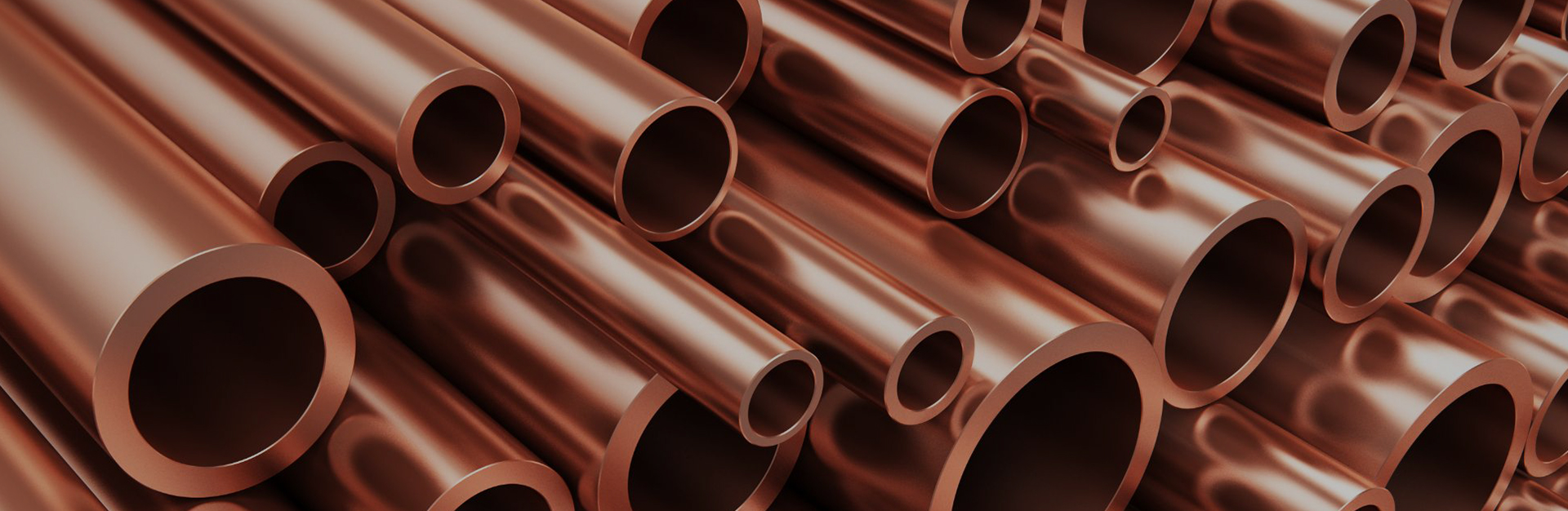
 Tangpu Industrial Zone, Shangyu District, Shaoxing City, Zhejiang Province, China
 +86-13567501345
