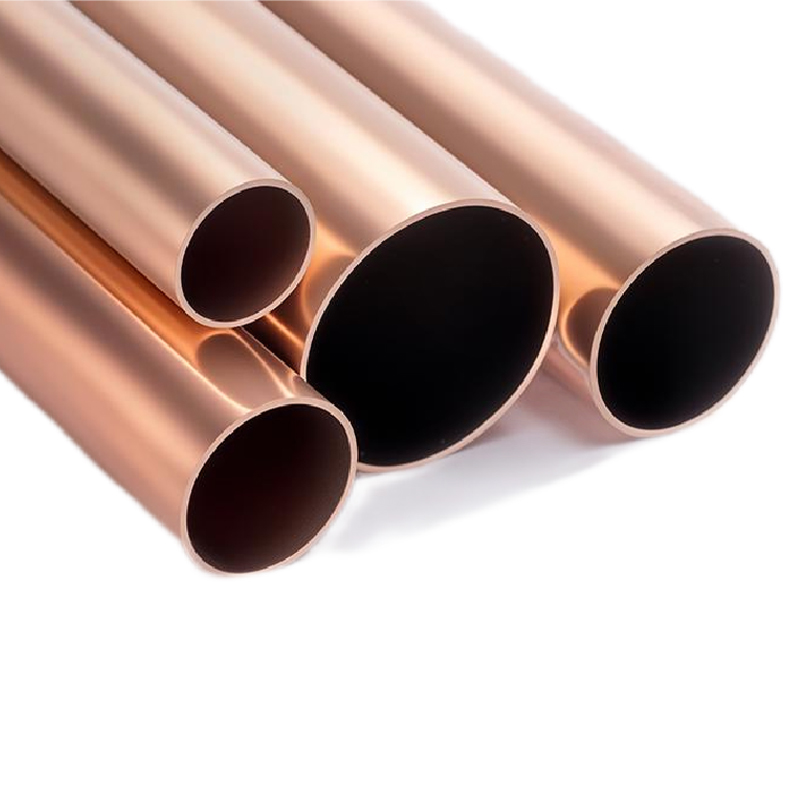
Copper tubes are the "blood vessels" of the refrigeration system, mainly used in condensers, evaporators and connecting pipelines. Its high thermal conductivity (with a thermal conductivity coefficient of approximately 400 W/m·K) enables rapid heat transfer, enhancing the energy efficiency ratio of air conditioners and refrigerators. The promotion of environmentally friendly refrigerants such as R410A has further driven the development of copper tubes towards high pressure resistance, thin-walled and lightweight. Industry standards such as ASTM B280 (Copper Tubes for Air Conditioning) have strict regulations on indicators such as cleanliness and tensile strength to avoid refrigerant leakage and system blockage.
What are the main chemical components of corrosion-resistant phosphorus deoxidized copper tubes and how do they improve the performance of copper?
phosphorus deoxidized copper is a copper alloy treated with phosphorus deoxidation, commonly used in applications requiring high corrosion resistance and mechanical properties. The addition of phosphorus improves the chemical and physical properties of copper, particularly in reducing oxygen content, enhancing corrosion resistance, and improving mechanical properties.
The Role of Phosphorus
Phosphorus plays a crucial role as a deoxidizing agent in the copper smelting process. By adding an appropriate amount of phosphorus, it effectively reacts with oxygen in the copper, forming phosphides (such as Cu₃P), thereby reducing the oxygen content in the copper to the lowest level. This process not only reduces the formation of pores and bubbles inside the copper tube but also effectively prevents oxidation and discoloration of the copper during heating. Compared to pure copper, phosphorus deoxidized copper has a very low oxygen content, thus significantly improving its stability at high temperatures.
Enhanced Corrosion Resistance
The corrosion resistance of corrosion-resistant phosphorus deoxidized copper tubes is one of its most important advantages. Phosphorus, by forming phosphides, significantly improves the oxidation resistance of the copper tube surface. The phosphides form a dense protective film on the copper surface, which effectively prevents external corrosive substances (such as acids, alkalis, and salts) from penetrating into the copper tube, thus reducing the corrosion rate of copper. Especially in seawater, chloride, or humid environments, the corrosion resistance of corrosion-resistant phosphorus deoxidized copper tubes is far superior to that of ordinary copper tubes. This makes it particularly outstanding in applications in the chemical, power, refrigeration, and air conditioning industries, especially in high-humidity and chemically corrosive environments.
Improved Mechanical Properties
The addition of phosphorus improves the grain structure of copper, resulting in a significant improvement in the mechanical properties of the copper tube. Corrosion-resistant phosphorus deoxidized copper tubes have higher strength and hardness compared to pure copper tubes. In some industrial applications requiring high strength and heavy loads, corrosion-resistant phosphorus deoxidized copper tubes can provide stronger load-bearing capacity and compressive strength. Although the addition of phosphorus may slightly affect the ductility of copper, phosphorus deoxidized copper generally maintains good ductility, making it suitable for applications requiring bending and stretching.
The presence of phosphorus also inhibits the oxidation of copper in high-temperature environments, further improving the stability of copper tubes under high-temperature operating conditions. Therefore, corrosion-resistant phosphorus deoxidized copper tubes perform exceptionally well in high-temperature and high-pressure working environments and are often used in industries such as aerospace, automotive, and oil and gas.
Impact on Electrical and Thermal Conductivity
The addition of phosphorus slightly reduces the electrical and thermal conductivity of copper because phosphorus does not have the same perfect electron conduction capabilities in copper as pure copper. Nevertheless, the electrical and thermal conductivity of phosphorus deoxidized copper is still higher than many other copper alloys and close to that of pure copper. For some electrical transmission and heat exchange applications, phosphorus deoxidized copper can provide relatively good conductivity and thermal efficiency. Therefore, phosphorus deoxidized copper remains an ideal material choice in equipment requiring high electrical conductivity and thermal efficiency.
How do the cold rolling and annealing processes of corrosion-resistant phosphorus deoxidized copper tubes affect their final mechanical properties and corrosion resistance?
Cold rolling and annealing are common processing techniques in the manufacturing of corrosion-resistant phosphorus deoxidized copper tubes. They significantly influence the mechanical properties, surface quality, ductility, strength, and corrosion resistance of the copper tubes. The combination of these processes can significantly improve the performance of copper tubes in practical applications, especially in high-temperature and high-pressure environments.
Influence of Cold Rolling on Mechanical Properties
Cold rolling involves processing copper tubes at room temperature through a series of rolling and drawing processes to achieve the desired size and shape. During cold rolling, the copper tube's grains undergo plastic deformation, resulting in a denser crystal lattice, which increases the material's strength and hardness. Specifically, cold-rolled corrosion-resistant phosphorus deoxidized copper tubes have higher tensile strength and yield strength compared to hot-rolled or untreated copper tubes. This makes cold-rolled corrosion-resistant phosphorus deoxidized copper tubes suitable for applications requiring higher pressure and more complex operating conditions, such as high-pressure pipelines and hydraulic systems.
However, the cold rolling process can also lead to a decrease in the ductility of the copper tube, as strain hardening occurs during cold rolling, making the material more brittle. Therefore, although the strength of cold-rolled corrosion-resistant phosphorus deoxidized copper tubes is increased, their ductility and plasticity may decrease, and cracking may occur, especially at lower temperatures. Therefore, appropriate annealing treatment is required after cold rolling to restore the material's toughness and ductility.
Influence of Annealing on Performance
The annealing process typically involves heating the copper tube to a certain temperature, maintaining it for a period of time, and then slowly cooling it. The main purpose of annealing is to eliminate the internal stresses introduced during the cold rolling process, restoring the copper tube's high ductility and toughness. In addition, annealing promotes the recrystallization of copper grains, making the microstructure of the copper tube more uniform and further improving its mechanical properties.
Annealed corrosion-resistant phosphorus deoxidized copper tubes not only have improved ductility but also regain a certain degree of strength. The annealing process also has a positive impact on the corrosion resistance of the copper tubes. Through annealing treatment, the surface microstructure of the copper tube is improved, and the oxide layer is removed or thinned, thereby improving the corrosion resistance and oxidation resistance of the copper tube. Annealed copper tubes generally have a lower corrosion rate in chemical media and humid environments, making them particularly suitable for applications requiring long-term exposure to corrosive environments such as acids, alkalis, and seawater.
Combined Effects of Cold Rolling and Annealing
The combination of cold rolling and annealing processes achieves a balance in the performance of copper tubes. Cold rolling increases the strength and hardness of the copper tube, while annealing improves its ductility, toughness, and corrosion resistance. Overall, the corrosion-resistant phosphorus deoxidized copper tube treated with cold rolling and annealing shows significant improvements in strength, toughness, corrosion resistance, and processability, making it widely applicable in various industrial fields requiring high strength, high corrosion resistance, and good processing performance.
How effective are cold-rolled/cold-drawn silver-copper tubes in heat exchangers? How does their thermal conductivity affect heat exchange efficiency?
Corrosion-resistant phosphorus deoxidized copper tubes are widely used in various industries due to their excellent mechanical properties, corrosion resistance, and electrical and thermal conductivity. They are particularly suitable for applications that require high corrosion resistance, strength, and thermoelectric properties. As a key player in the industry, Zhejiang Jingliang Copper-Tube Products Co., Ltd., with its years of experience and strong technical advantages, provides high-quality corrosion-resistant phosphorus deoxidized copper tubes in multiple industrial sectors.
Power and Electronics Industry
The power and electronics industries have strict requirements for the electrical conductivity, corrosion resistance, and strength of materials. Corrosion-resistant phosphorus deoxidized copper tubes are widely used in power transmission systems and electronic equipment due to their high electrical conductivity and good corrosion resistance. They are mainly used in conductive components, connectors, cooling systems, and electrical wiring of power equipment. Because of their ability to withstand high temperatures and humid environments, they play an important role in equipment such as air conditioners, transformers, generators, and power tools.
Zhejiang Jingliang Copper-Tube Products Co., Ltd., with its strong production capacity and advanced copper tube processing technology, has become a reliable supplier to numerous power companies and electronics enterprises. The corrosion-resistant phosphorus deoxidized copper tubes produced by the company are highly favored in domestic and international markets, especially in projects with strict requirements for power conductors. Zhejiang Jingliang Copper-Tube Products Co., Ltd.'s products meet industry needs with their high conductivity, stability, and high quality.
Refrigeration and Air Conditioning Industry
In the refrigeration and air conditioning industry, corrosion-resistant phosphorus deoxidized copper tubes are widely used as important components of heat exchangers, condensers, evaporators, and cooling pipes in household appliances, industrial cooling systems, and high-efficiency air conditioning equipment. The excellent thermal conductivity of copper tubes allows them to efficiently transfer heat, ensuring the efficient operation of cooling systems. The corrosion resistance of corrosion-resistant phosphorus deoxidized copper tubes also results in a low corrosion rate during long-term use, making them particularly suitable for high-humidity and chloride environments. As a company with many years of experience in the copper tube industry, Zhejiang Jingliang Copper-Tube Products Co., Ltd. utilizes innovative manufacturing processes to produce high-quality copper tubes that meet the demands of the refrigeration industry. The company's corrosion-resistant phosphorus deoxidized copper tubes not only possess strong thermal conductivity but also exhibit excellent corrosion resistance, making them widely used in air conditioners, refrigerators, and freezing equipment.
Chemical and Oil & Gas Industries
Due to their excellent corrosion resistance, corrosion-resistant phosphorus deoxidized copper tubes are widely used in the chemical industry, especially in environments requiring resistance to acids, alkalis, high temperatures, and corrosion. They are often used as part of chemical reactors, piping systems, and heat exchangers for transporting chemical media, corrosive liquids, or gases. Corrosion-resistant phosphorus deoxidized copper tubes also have extensive applications in the oil and gas industry, particularly in high-temperature, high-pressure, and extreme environments, where they effectively prevent leaks and corrosion, ensuring the safety and long-term durability of equipment.
Zhejiang Jingliang Copper-Tube Products Co., Ltd.'s corrosion-resistant phosphorus deoxidized copper tubes have been recognized by numerous customers in the oil and gas industry. The company employs advanced processing technologies in its production process and customizes products according to customers' specific requirements, thus providing long-term stable solutions for petrochemical equipment and ensuring the efficient and safe operation of systems.
Aerospace and Automotive Industries
The aerospace and automotive industries have extremely stringent requirements for material performance, especially in hydraulic systems, fuel lines, and cooling systems. Corrosion-resistant phosphorus deoxidized copper tubes are widely used in these fields due to their high strength and excellent corrosion resistance. In the aerospace field, corrosion-resistant phosphorus deoxidized copper tubes can operate stably in high-temperature, high-pressure, and extreme environments, ensuring the safety and efficiency of cooling systems, fuel lines, and hydraulic systems in aircraft and spacecraft.
Corrosion-resistant phosphorus deoxidized copper tubes also have important applications in the automotive industry, particularly in hydraulic systems, cooling systems, and fuel lines. The excellent thermal conductivity and corrosion resistance of copper tubes make them an important component in automotive engines and high-performance vehicles, ensuring temperature control and operational stability of the engine and other critical components. Zhejiang Jingliang Copper-Tube Products Co., Ltd., through its strong production capacity and technological advantages, has successfully provided a large number of customized corrosion-resistant phosphorus deoxidized copper tube products to the aerospace and automotive manufacturing industries. In these industries with high precision and reliability requirements, the company has earned widespread recognition from customers for its high-quality copper tube products.
Machinery and Manufacturing Industry
In mechanical manufacturing and engineering equipment, corrosion-resistant phosphorus deoxidized copper tubes are commonly used in hydraulic pipelines, cooling systems, and other components requiring high strength and corrosion resistance. Due to its strength and durability, corrosion-resistant phosphorus deoxidized copper tube maintains stability under high load, high temperature, and high pressure conditions. In large-scale mechanical equipment, ships, construction machinery, and industrial robots, corrosion-resistant phosphorus deoxidized copper tubes are used to ensure stable operation and efficient performance.
Zhejiang Jingliang Copper-Tube Products Co., Ltd., leveraging its extensive experience in copper tube production, has successfully provided high-quality corrosion-resistant phosphorus deoxidized copper tubes to numerous machinery manufacturers and engineering equipment companies. With its sophisticated technology and comprehensive quality control system, the company can provide customized products that meet specific standards and requirements, ensuring the long-term operation of mechanical equipment.
Environmental Protection and Energy Industry
With the increasing global environmental awareness and the promotion of sustainable development goals, corrosion-resistant phosphorus deoxidized copper tubes are finding more and more applications in the environmental protection and energy sectors. Corrosion-resistant phosphorus deoxidized copper tubes are widely used in cooling systems and pipeline transmission systems in solar water heaters, geothermal energy systems, and wind power generation equipment. Copper's excellent thermal conductivity effectively improves the thermal efficiency of energy equipment and reduces energy loss, while its corrosion resistance ensures that the equipment can operate stably in complex environments.
Zhejiang Jingliang Copper-Tube Products Co., Ltd. adheres to the concept of green environmental protection and actively participates in the new energy and environmental protection industries, providing efficient and corrosion-resistant copper tube solutions for renewable energy equipment such as solar and geothermal energy. With its strong production capacity and technical support, the company continuously provides high-quality copper tube products to the energy industry, promoting the sustainable development of the industry.

 English
 Español
 中文
中文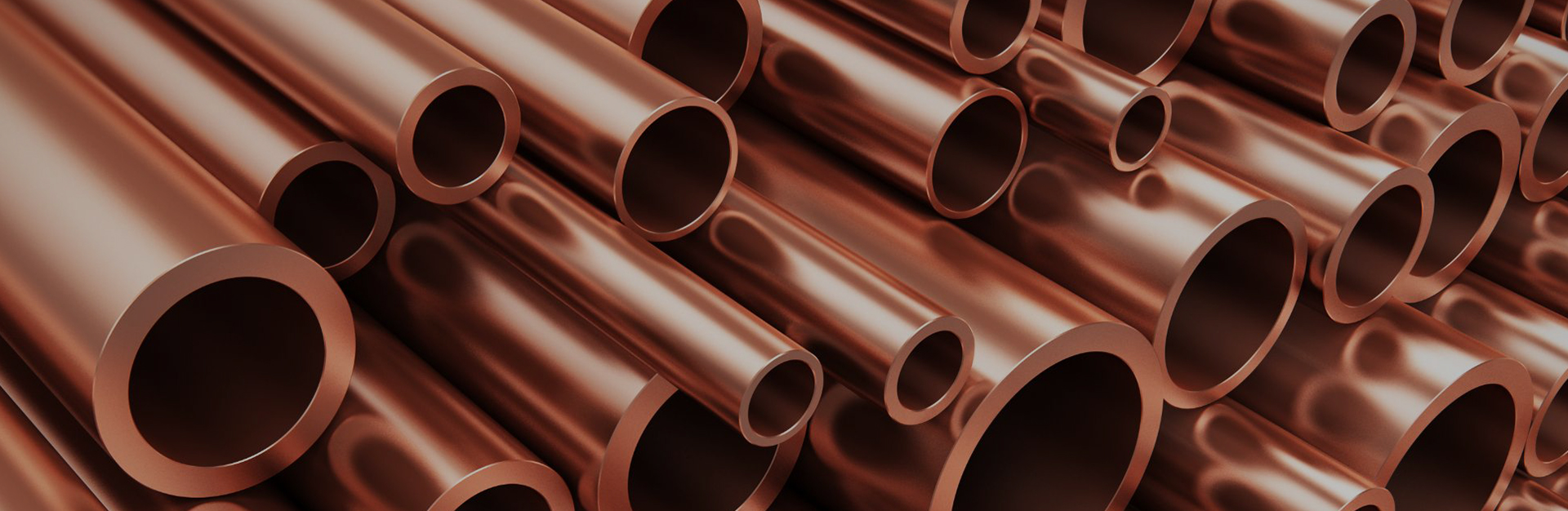
 Tangpu Industrial Zone, Shangyu District, Shaoxing City, Zhejiang Province, China
 +86-13567501345
