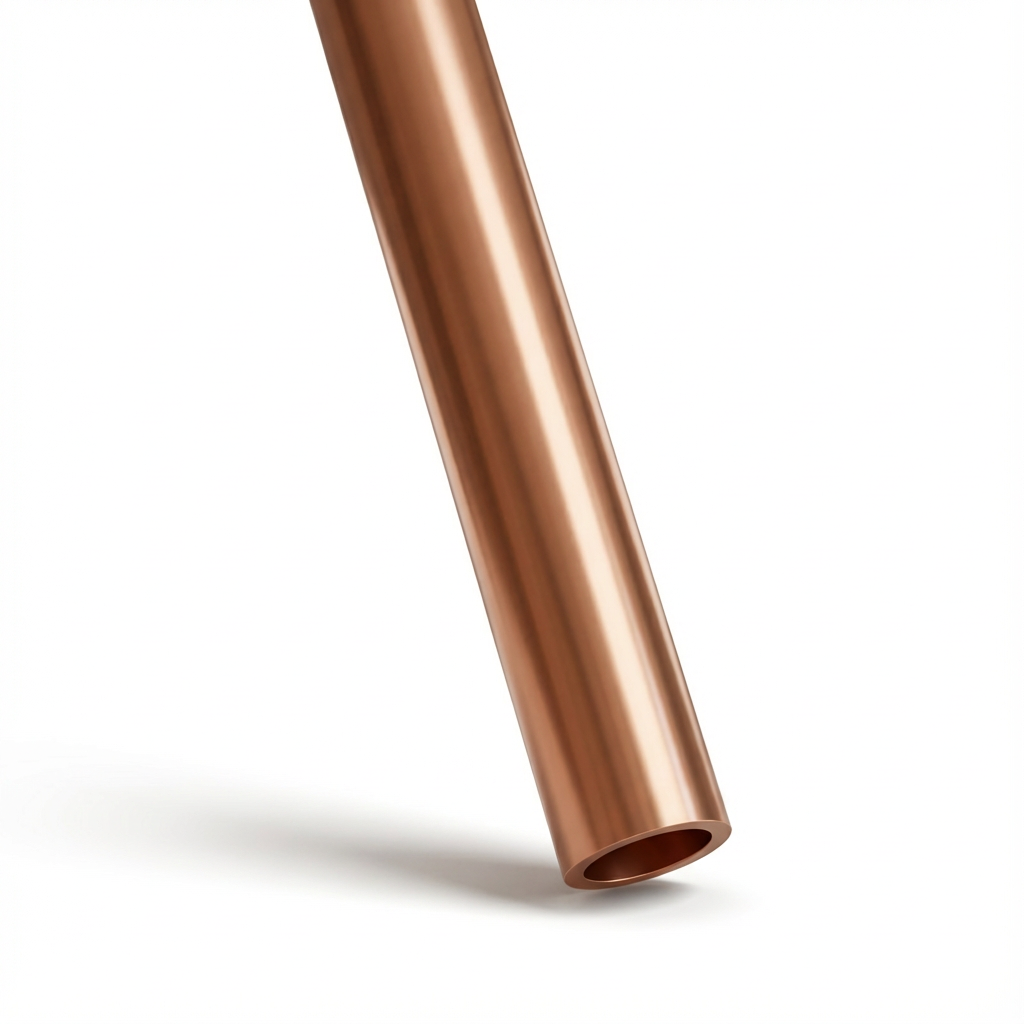
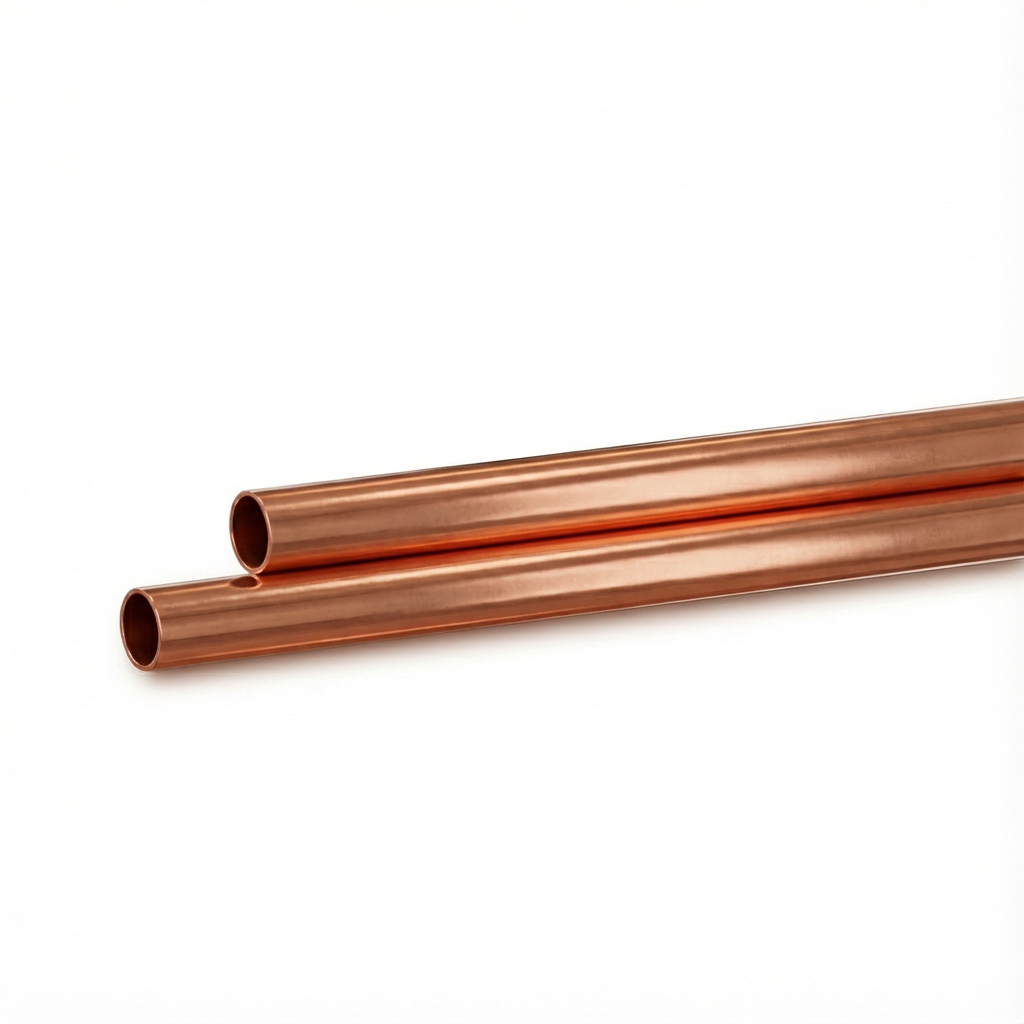
There are four main types of copper pipe used in construction and industry: Type K, Type L, Type M, and Type DWV. Each is defined by wall thickness, pressure rating, and intended application. If you need a quick answer: Type L is the most common choice for residential plumbing, Type K is used for underground and high-pressure systems, Type M is a budget-friendly option for low-pressure indoor use, and DWV handles drain and vent systems. Beyond these, copper tube from a specialized copper tube factory also includes ACR (air conditioning and refrigeration) and medical gas tubing for industrial and commercial purposes.
Understanding the differences helps you select the right product, avoid costly failures, and comply with local plumbing codes. The sections below break down each type in detail, with specifications, use cases, and selection guidance.
Copper pipe and copper tube are classified primarily by wall thickness relative to the outer diameter (OD). All types share the same OD for a given nominal size, which means fittings are interchangeable. What changes is the inner diameter (ID) and the wall thickness — and that directly affects pressure capacity, cost, and appropriate use.
Standards are set by ASTM International (primarily ASTM B88 for plumbing tube) and the Copper Development Association (CDA). Color-coded markings printed on the tube surface help identify the type at a glance:
Copper tube factories produce these in both hard-drawn (rigid) and soft-annealed (flexible) tempers. Hard copper comes in straight lengths (typically 10 or 20 feet); soft copper is sold in coils (typically 60 or 100 feet) and is easier to bend without fittings.
Type K has the thickest wall of all standard copper pipe types, giving it the highest pressure rating and the greatest resistance to physical damage. It is the required choice for underground water service lines and is widely used in municipal water distribution systems.
The trade-off is cost: Type K is the most expensive standard plumbing copper pipe, sometimes 20–30% more per foot than Type L of the same diameter. For above-ground residential plumbing, this extra cost is rarely justified.
Type L is the most widely used copper pipe type in North America for interior plumbing. Its wall thickness strikes the right balance between pressure capacity and material cost, and it is accepted by virtually all residential and commercial plumbing codes.
Soft Type L coils are particularly valued in renovation work, as they can be routed through walls with fewer fittings, reducing both labor time and potential leak points.
Type M has the thinnest wall among the three pressure-rated types (K, L, M) and is designed for systems where pressure demands are moderate and the pipe is not buried or exposed to physical damage. It offers meaningful cost savings in large-scale residential projects.
Important caveat: some local plumbing codes prohibit Type M for certain applications, particularly in areas with aggressive water chemistry that accelerates wall erosion. Always verify local code requirements before specifying Type M.
DWV (Drain, Waste, Vent) copper tube is not a pressure pipe. Its walls are even thinner than Type M, and it is designed exclusively for gravity-flow drainage and venting systems. It is never used for water supply or pressurized gas.
DWV copper has largely been replaced by PVC in new construction due to significant cost differences — copper DWV can cost 3–5 times more than equivalent PVC drain pipe. However, it remains specified in high-end projects or jurisdictions where plastic drain pipe is restricted.
ACR (Air Conditioning and Refrigeration) copper tube is a distinct product category manufactured to tighter cleanliness standards than plumbing tube. It is cleaned, dried, and sealed at the copper tube factory to prevent moisture and contamination from entering refrigerant circuits.
Using standard plumbing copper as a substitute for ACR tube in refrigeration systems is a critical error — residual moisture or oils inside plumbing tube can destroy compressors and void equipment warranties.
Medical gas copper tube is the most tightly controlled product a copper tube factory produces. It is manufactured to ASTM B819 standards and must meet strict purity requirements because contamination in a medical oxygen or nitrous oxide line poses direct patient safety risks.
Installation of medical gas piping must be performed by certified brazers, and the completed system requires inspection and testing before any gas is introduced — a process that differs significantly from standard plumbing installation.
The table below compares the primary copper pipe types by wall thickness (1-inch nominal size where applicable), temper availability, governing standard, and primary use case to simplify selection decisions.
| Type | Wall Thickness (1" nominal) | Temper | Standard | Marking Color | Primary Use |
|---|---|---|---|---|---|
| Type K | 0.049 in (1.24 mm) | Hard & Soft | ASTM B88 | Green | Underground, high-pressure |
| Type L | 0.042 in (1.07 mm) | Hard & Soft | ASTM B88 | Blue | Residential & commercial supply |
| Type M | 0.028 in (0.71 mm) | Hard only | ASTM B88 | Red | Low-pressure interior supply |
| DWV | N/A (non-pressure) | Hard only | ASTM B306 | Yellow | Drain, waste, vent |
| ACR | Varies (sold by actual OD) | Hard & Soft | ASTM B280 | Blue/Purple | HVAC, refrigeration |
| Medical Gas | K or L wall | Hard & Soft | ASTM B819 | Varies by gas | Hospital/medical gas systems |
Whether you are a contractor, distributor, or project engineer, sourcing copper tube from a reputable factory matters beyond just price. Key quality and compliance factors include:
Reputable copper tube factories provide mill test reports (MTRs) confirming that each batch meets ASTM chemical composition and dimensional tolerances. For plumbing applications in the US, NSF/ANSI 61 certification confirms that the tube is safe for drinking water contact.
Wall thickness variation affects both pressure ratings and fitting compatibility. ASTM B88 allows a wall thickness tolerance of ±0.002 inches on most sizes. Factories with tighter process controls often achieve better consistency than the standard requires, which reduces field issues.
Standard plumbing and ACR copper tube is made from Copper Alloy UNS C12200 (phosphorus-deoxidized copper, 99.9% minimum copper content). Some lower-cost imported tube has been found to contain elevated levels of lead or other impurities — a serious concern for drinking water systems. Always request and verify the MTR.
For ACR and medical gas tube, factory packaging integrity is critical. Tubes should arrive with end caps intact and no signs of contamination. Dented, kinked, or surface-oxidized tube should be rejected, as defects that appear cosmetic can mask wall thinning or compromise solder joint integrity.
Use the following decision points to select the correct copper pipe type for your project:
When in doubt, upgrading one type level (e.g., from M to L) costs relatively little on a per-project basis but significantly increases longevity and reduces the risk of code non-compliance or premature failure — particularly in aggressive water chemistry environments or high-cycle systems.
Content
Copper Tube is made of high-purity copper material with a copper content of not less than 99.9%. The main material codes are T11050 and C12200(DHP), a...
See Details
Copper square tube is a metal tube with a hollow square cross-section. It is made of high-purity copper or copper alloy materials through multiple pre...
See Details
Large copper tube with an outer diameter of 28-54mm possess excellent pressure resistance and a stable structure, specifically designed for high-load,...
See Details
Standard refrigeration copper tube with an outer diameter of 12-28mm is made of high-quality TP2 copper (C12200/DHP), specifically designed for HVAC s...
See Details
Small copper tube with an outer diameter of 5-12mm are copper tubing products with excellent flexibility, easy processing, and high conductivity. They...
See Details
Ultra-fine copper tube with an outer diameter of <5mm are high-precision, high-value-added copper tube products. With an outer diameter less than 5...
See Details