 English
 Español
 中文
中文News
Home / News / Industry News / How to Braze Brass: The Step-by-Step Guide for Strong, Leak-Free Joints
Brazing brass differs fundamentally from soldering or welding copper. The higher zinc content requires different filler metals, more controlled heating, and a clear understanding of joint clearances. Without the right approach, you risk porosity, weak joints, or even vaporizing the zinc from the base metal. This guide walks through the practical decisions you need to make before you light the torch.
Brazing occurs above 840°F (450°C), well above soldering temperatures. Brass, being an alloy of copper and zinc, responds differently to heat than pure copper. The key principle is this: heat the assembly uniformly, and choose a filler metal with a melting point that allows the brass to remain solid while the filler flows into the joint by capillary action.
For most brass-to-brass or brass-to-copper joints, the preferred filler metals are copper-phosphorus alloys (BCuP series) or silver-bearing alloys (BAg series). Here is the breakdown:
| Filler Alloy | Melting Range (°F) | Best For | Flux Required? |
|---|---|---|---|
| BCuP-5 (15% Ag) | 1,190–1,475 | Brass to copper, tight clearances | No (on copper), Yes on brass |
| BAg-7 (56% Ag) | 1,145–1,365 | Brass to brass, thin sections | Yes |
| BAg-22 (49% Ag) | 1,290–1,510 | Wide gap joints, good strength | Yes |
| BCuP-2 (no silver) | 1,310–1,510 | Copper to copper limited brass use | Yes on brass |
Copper-phosphorus fillers flow well on copper but may attack the zinc in brass, causing intergranular penetration and brittleness. When brazing brass, silver-bearing alloys generally yield stronger, more ductile joints. Always use flux on brass surfaces to prevent oxide formation during heating.
Capillary action, the force that draws molten filler into the joint, works best within a specific clearance range. For brass assemblies, the recommended radial clearance is 0.0015 to 0.005 inches (0.04 to 0.13 mm). Too tight restricts flow; too wide allows the filler to run out or form a weak, fillet-only bond.
Uneven heating causes distortion, localized zinc vaporization (de-zincification), and joint failure. Brass conducts heat well but does so more slowly than pure copper. The zinc component also lowers the melting point of the base alloy, meaning you can overheat the tube itself before the filler flows.
For production or high-volume work, a furnace or induction brazing setup provides uniform heating and consistent results. For field repairs or prototypes, an oxy-acetylene torch with a small to medium tip works well.
Even experienced tradespeople run into trouble with brass. Below are the most frequent errors and how to avoid them.
Brass begins to lose zinc at around 1,660°F (905°C). The vaporized zinc leaves behind a porous, weakened structure and produces a white, smoky fume that is hazardous to inhale. Work in a ventilated area and keep the temperature just above the filler metal liquidus, not far above it.
Oxide film, oil, or dirt blocks filler flow. Clean the joint area mechanically with abrasive cloth or a stainless steel brush, then degrease with acetone or another solvent. Touch cleaned surfaces only with clean gloves.
Different brass grades—such as C26000 (cartridge brass) versus C36000 (free-machining brass)—behave differently under heat. Free-machining brass contains lead; it brazes poorly and may crack. Always verify the alloy composition and select a filler that matches, or consult the material datasheet.
Brass expands more than steel and slightly more than copper when heated. In multi-metal assemblies, the differential expansion can misalign the joint before the filler solidifies. Some suppliers design brazed copper tube assemblies that account for this expansion, ensuring consistent joint integrity across material combinations.
When you need brazed brass components or assemblies in volume, the quality of the base material and the consistency of the brazing process matter as much as the technique. A reputable manufacturer uses controlled-atmosphere furnaces or induction brazing stations to eliminate oxidation and maintain uniform joint quality. Look for suppliers that offer a range of 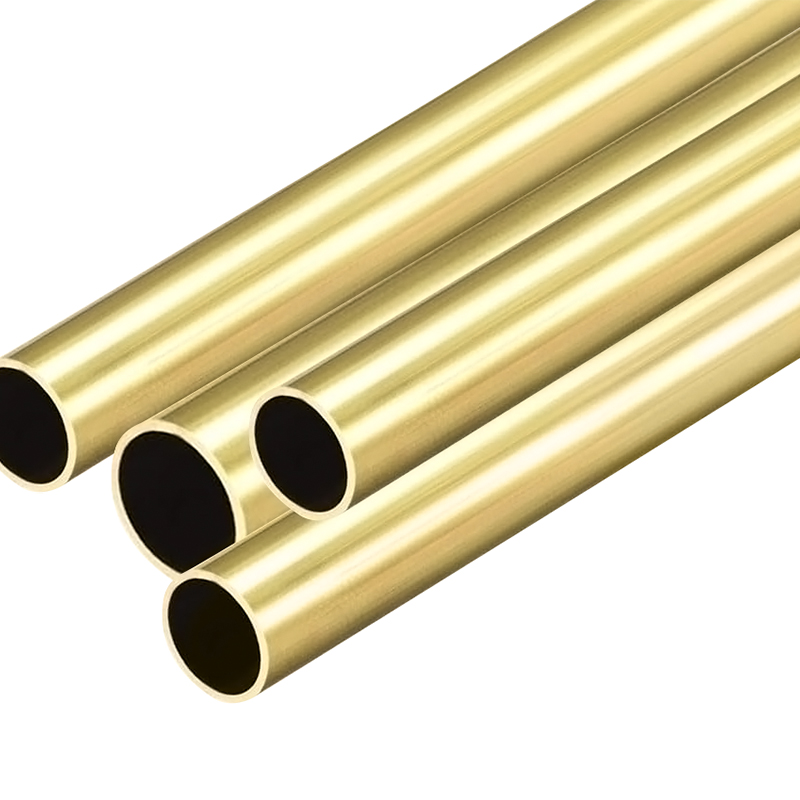 Brass Tube with Dimensional Accuracy and Surface CleanlinessThis brass tube, available in H62, H63, and H65 grades with OD 1.8-80mm and wall 0.3-12mm, ensures consistent dimensions and cleanliness for reliable brazing in high-pressure systems.View Product → products in standard alloys like H62 or H65, and that can provide brazing-ready tube assemblies with consistent end preparation. The same factory that supplies the brass tubing often has the process knowledge to recommend the correct filler and joint design for your specific application.
For applications involving high-pressure systems or critical heat transfer—such as in condensers or evaporators—the tube's dimensional accuracy and surface cleanliness directly affect braze quality. Sourcing from a facility that controls these variables in-house reduces your risk of field failures.
Successful brazing of brass comes down to three non-negotiable steps. First, choose the correct silver-bearing filler metal and apply a high-temperature flux that matches the brass grade. Second, design the joint with the proper clearance and lap length to allow capillary action to do its work. Third, heat evenly and stop immediately once the filler flows. The best brazes are invisible inside the joint—visible filler on the outside usually signals too much heat or too much filler.
If you need 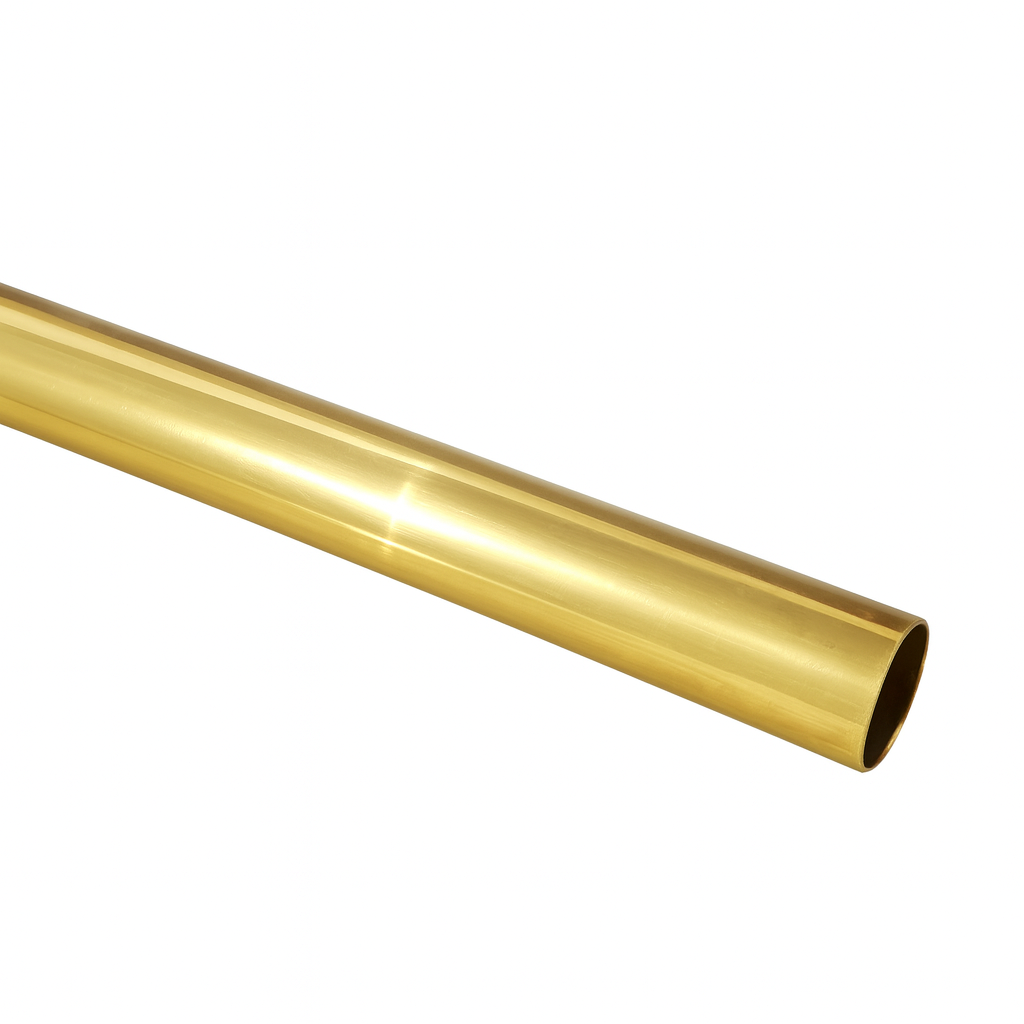 H65 (C27000) Brass Tube for Consistent Brazing ControlH65 brass tube offers a balance of strength and ductility with stable wall thickness and alloy composition, making it easier to control brazing parameters for tight-tolerance assemblies.View Product → and assemblies that meet tight tolerances, consider working with a manufacturer that controls both material quality and brazing parameters. When the brass tube itself is consistent in wall thickness and alloy composition, your brazing process becomes far easier to control. That consistency is the difference between a joint that looks good on the bench and one that holds pressure for years in the field.

Brass is an alloy of copper and zinc. It has good processing and mechanical properties, so it is widely used in the manufacture of tubes.Because it ha...
See Details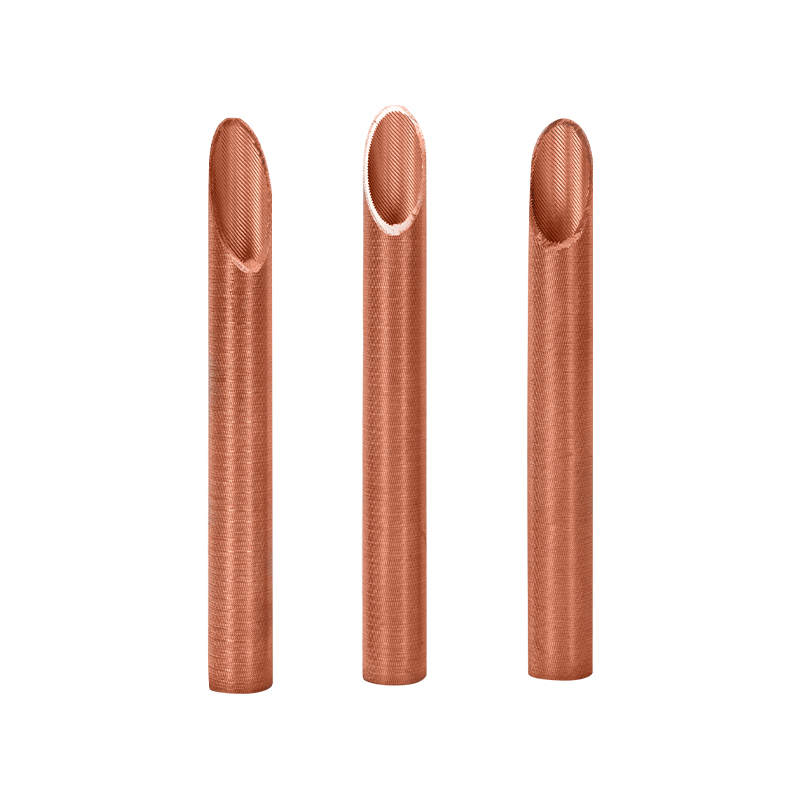
The copper evaporator tube adopts a unique fin design, and the external fins are equipped with specially designed interconnected channels, so that eac...
See Details
H62 (T27600) Brass Tube is a brass alloy with a copper content of 62% and a zinc content of 38%. Due to its balanced performance in terms of strength ...
See Details
H63 (T27300) Brass Tube is a high-performance brass alloy tube with a copper content of 63% and a zinc content of 37%. Its excellent mechanical proper...
See Details
H65 (C27000) Brass Tube is a brass alloy with approximately 65% copper and 35% zinc content. Its properties fall between those of H68 and H62 brass ...
See Details
H68 (T26300) Brass Tube is a brass alloy with approximately 68% copper and 32% zinc. It stands out among many brass alloys due to its excellent overal...
See Details
 Tangpu Industrial Zone, Shangyu District, Shaoxing City, Zhejiang Province, China
 +86-13567501345
© Zhejiang Jingliang Copper-Tube Products Co., Ltd All rights reserved.

