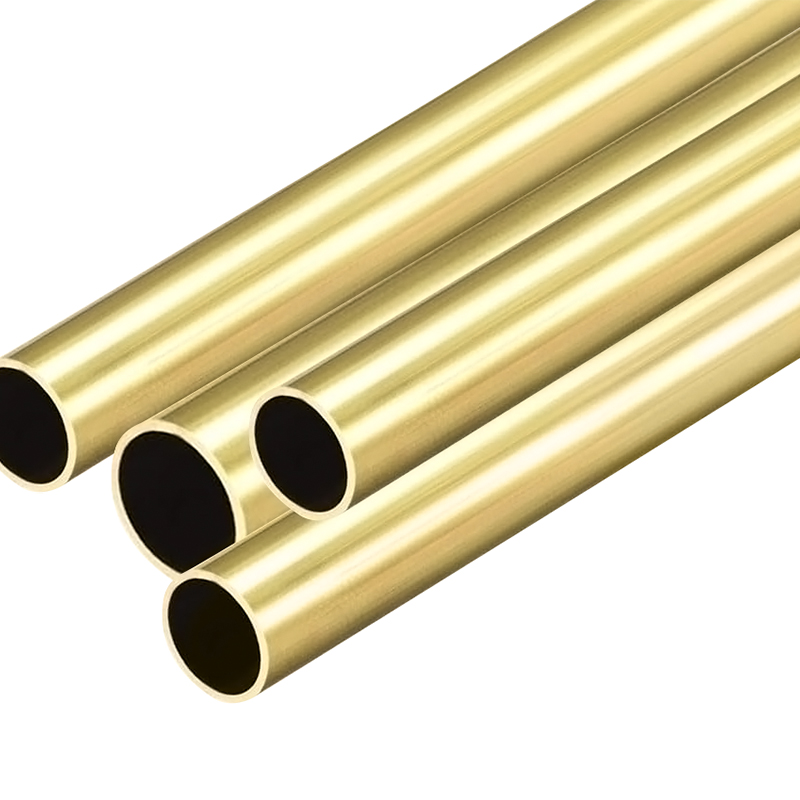
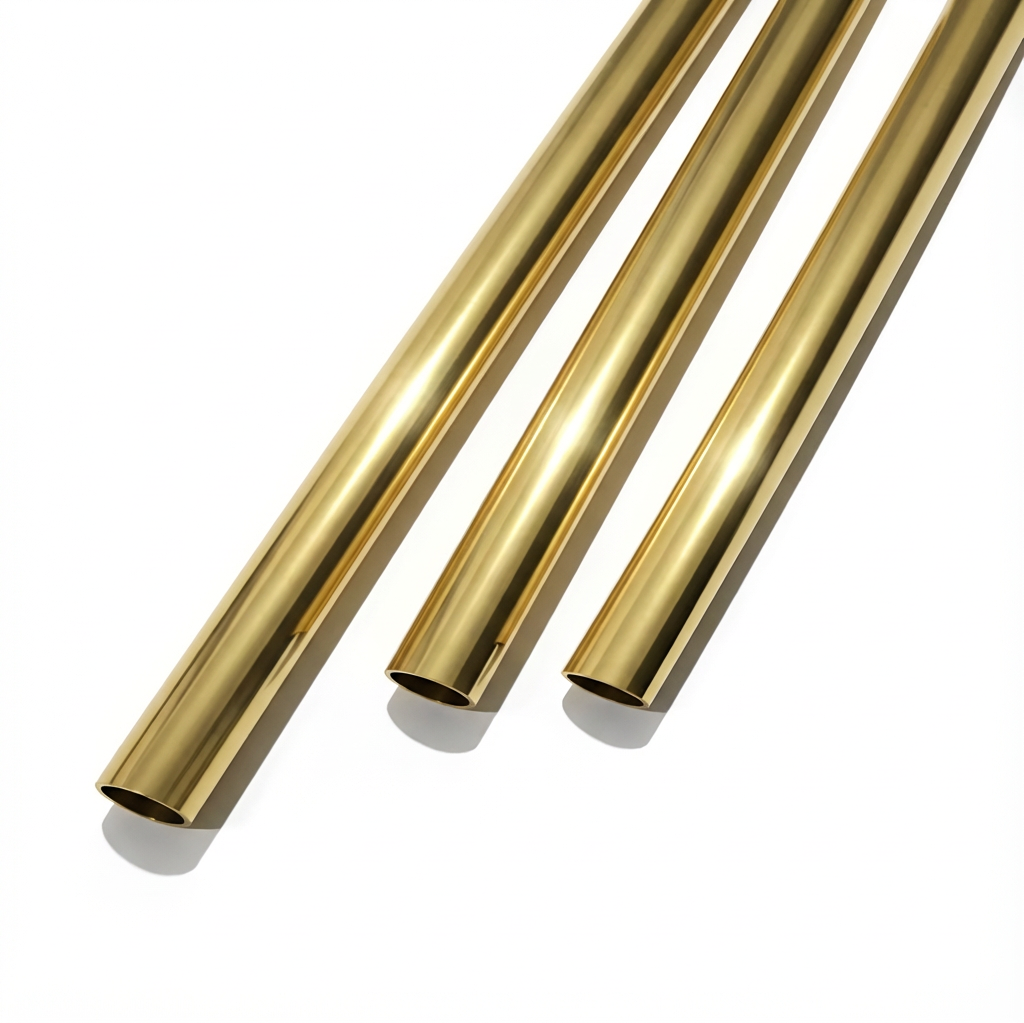
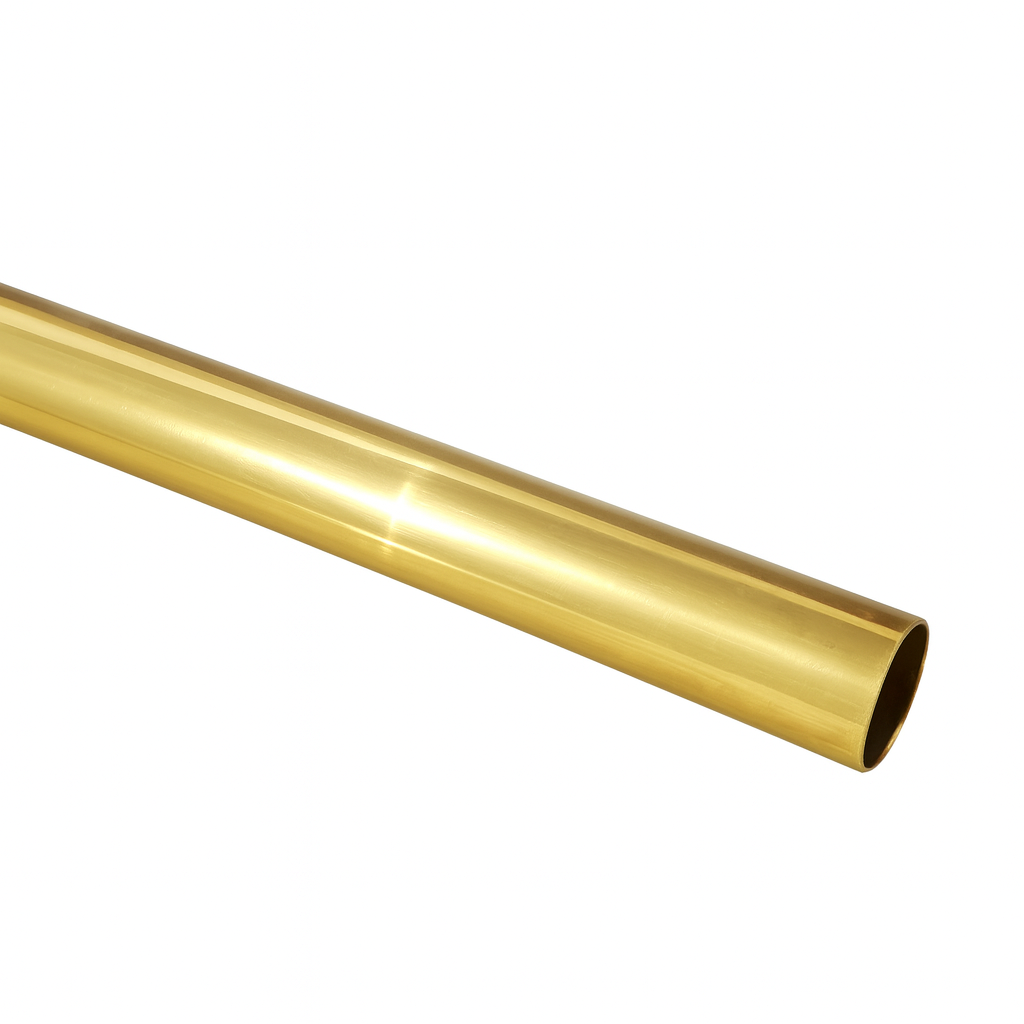
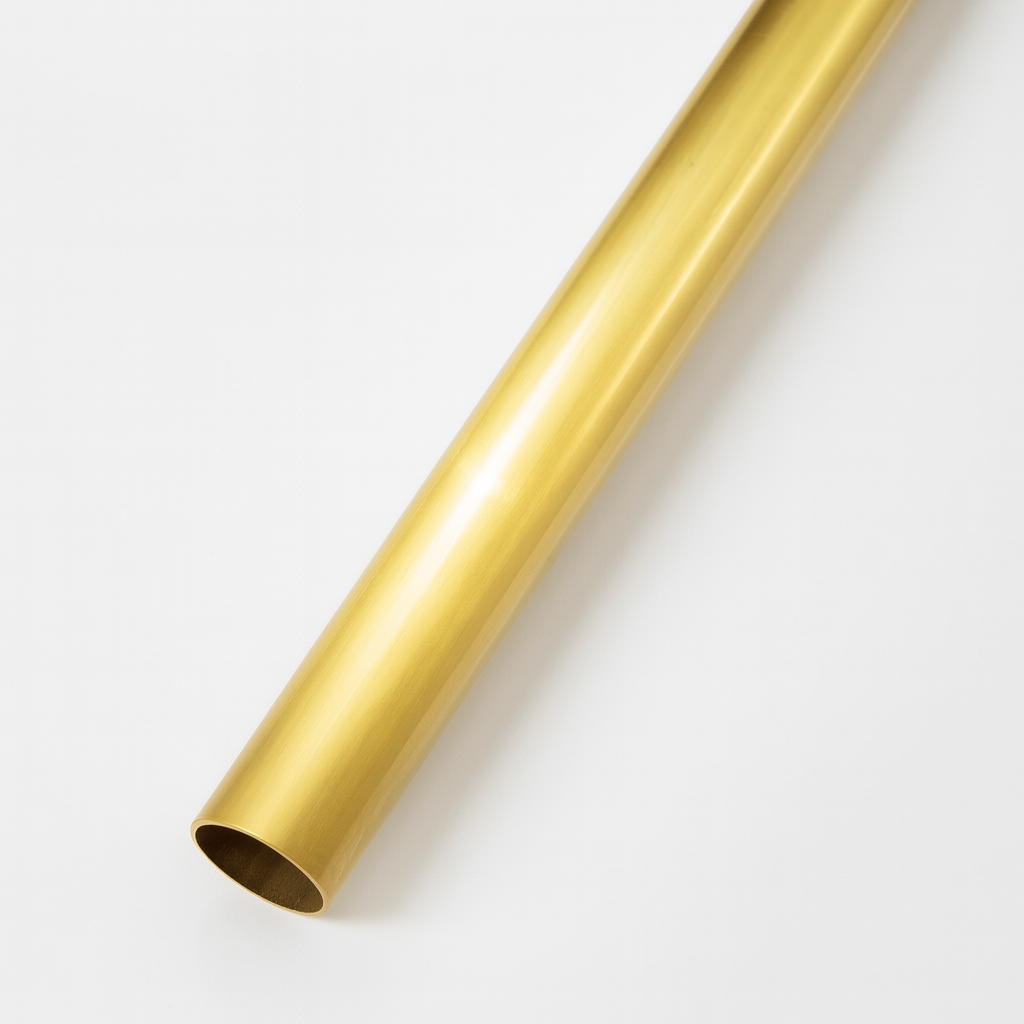
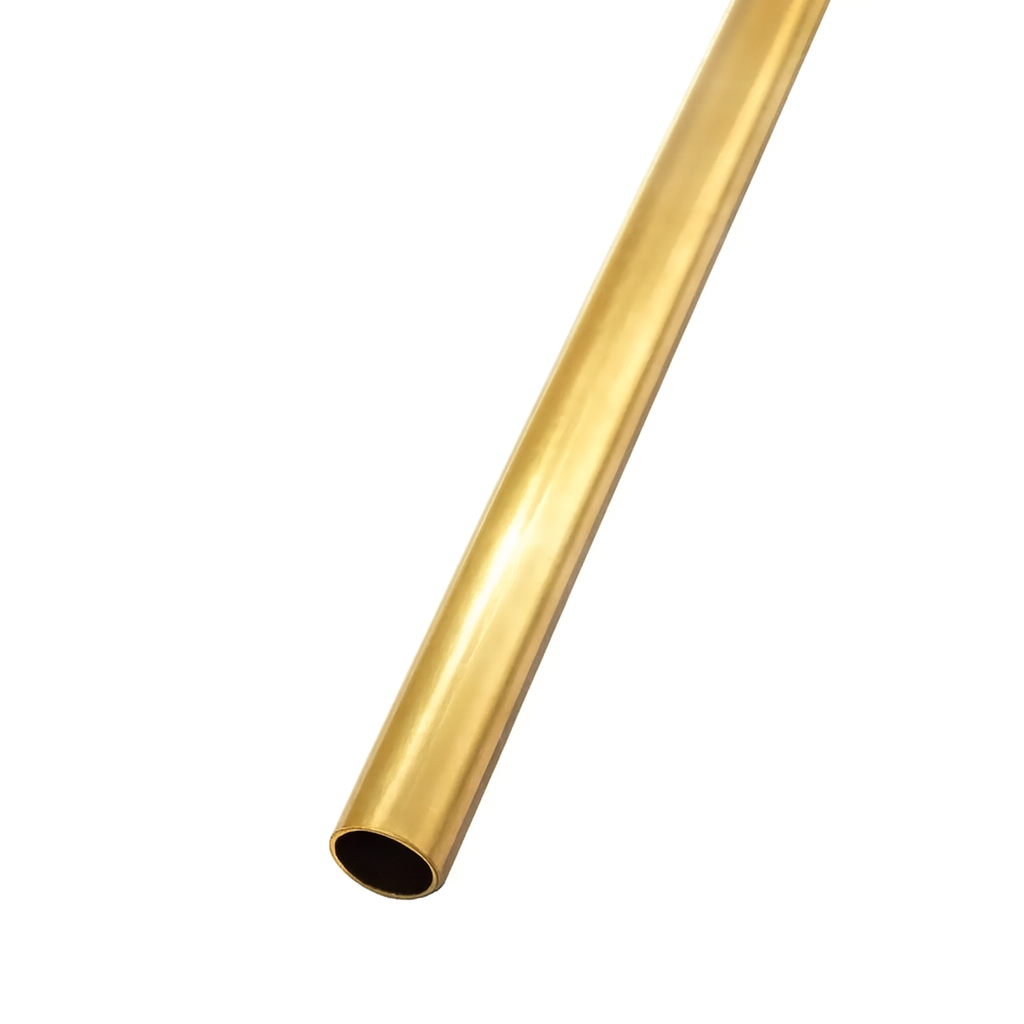
A brass tube is a hollow cylindrical component made from a copper-zinc alloy, valued for its corrosion resistance, machinability, and aesthetic appeal. Whether you're working on plumbing, instrumentation, decorative fabrication, or model engineering, selecting the right brass tube depends on wall thickness, alloy grade, and dimensional tolerance. This guide covers everything you need to make that decision confidently.
Brass tubes are hollow profiles extruded or drawn from brass — typically an alloy of 60–70% copper and 30–40% zinc. The exact ratio determines the alloy grade, which in turn affects strength, ductility, and corrosion performance. Common cross-section shapes include round, square, and rectangular, with round being the most widely used.
Unlike brass rods (solid) or brass pipes (designed for fluid transport with pressure ratings), brass tubes are defined by their outside diameter (OD), inside diameter (ID), and wall thickness — and are used in structural, mechanical, and decorative applications.
Not all brass tubes are made the same. The alloy grade significantly affects performance in different environments. Here are the most frequently used grades:
| Alloy (UNS) | Composition | Key Properties | Typical Uses |
|---|---|---|---|
| C26000 (Cartridge Brass) | 70% Cu, 30% Zn | Excellent ductility, good formability | Instrumentation, heat exchangers |
| C27000 (Yellow Brass) | 65% Cu, 35% Zn | Good strength, cost-effective | Architectural, decorative trim |
| C36000 (Free-Cutting Brass) | 61.5% Cu, 35.5% Zn, 3% Pb | Superior machinability | Fittings, valves, precision parts |
| C28000 (Muntz Metal) | 60% Cu, 40% Zn | High strength, marine resistance | Marine hardware, condenser tubes |
| C68700 (Admiralty Brass) | 71% Cu, 28% Zn, 1% Sn | Excellent seawater corrosion resistance | Heat exchangers, condensers |
For most general-purpose work, C26000 and C27000 are the go-to choices. If machinability is the priority, C36000 performs best. For marine or high-moisture environments, C68700 is preferred.
Brass tubes are sold by outside diameter (OD) and wall thickness. Inside diameter is derived: ID = OD − (2 × wall thickness). Standard lengths are typically 12 inches, 1 meter, or 6 meters depending on the supplier.
Metric sizes follow similar progressions in millimeters: 3 mm, 4 mm, 5 mm, 6 mm, 8 mm, 10 mm, 12 mm, 16 mm, 20 mm, and 25 mm OD are commonly available. Thinner walls (under 0.035") are used for lightweight or decorative work; thicker walls (0.065" and above) are better for structural or pressure-bearing applications.
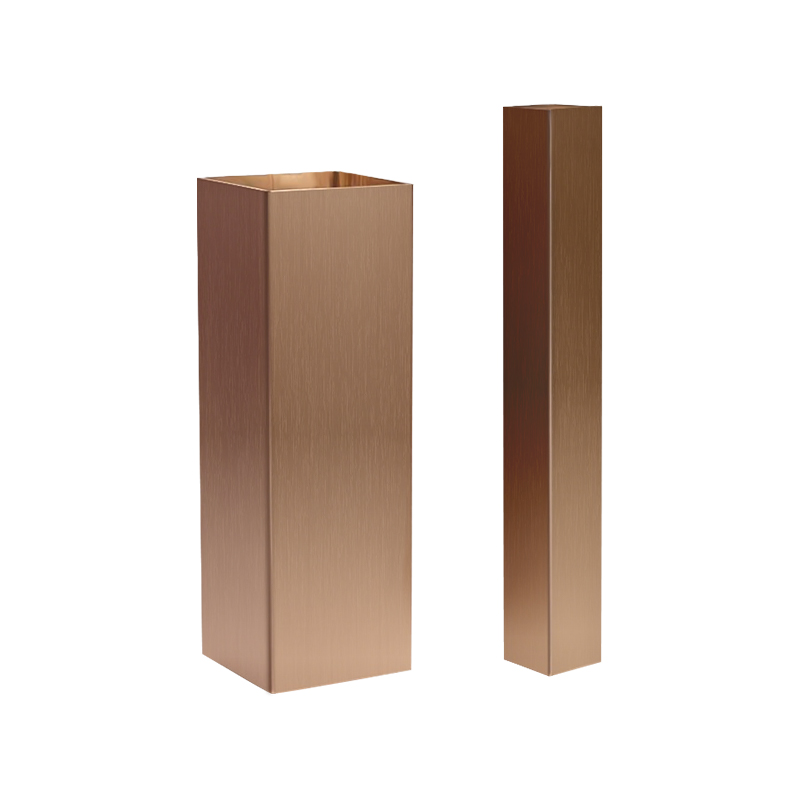
Square brass tubes are common in furniture framing and architectural trim. Typical sizes range from 1/4" × 1/4" to 2" × 2", with wall thicknesses from 0.028" to 0.125". Rectangular options such as 1/2" × 1" and 1" × 2" are also stocked by most metal suppliers.
Brass tubes are used across a wide range of industries and hobby applications. Understanding where each type excels helps you pick the right spec.
Brass resists dezincification and biofouling, making it suitable for potable water lines, gas fittings, and hydraulic systems. Admiralty brass (C68700) is particularly valued in heat exchanger and condenser tubing due to its resistance to seawater corrosion. In HVAC systems, brass tubes are often used in refrigerant lines and expansion devices.
Brass tubes serve as conduit sleeves, connector housings, and RF shielding enclosures. Their electrical conductivity (about 28% IACS for C26000) is lower than pure copper but sufficient for grounding and shielding applications. They are also used in antenna elements and coaxial fittings.
The golden hue of yellow brass makes it a preferred material for handrails, curtain rods, furniture legs, lamp stems, and interior trim. C27000 is common here because it balances cost with a warm aesthetic. Surface finishing options include polishing, lacquering, brushing, and antique patination.
Hobbyists building model steam engines, telescopes, scientific instruments, or custom jewelry frequently use thin-wall brass tubes in small diameters (1/16" to 3/8"). These are easy to cut with a hobby knife or tube cutter and can be soldered with standard silver solder or low-temp solder paste.
Thicker-wall brass tubes are found in bearing sleeves, bushing stock, pneumatic cylinders, and precision instrument housings. C36000's machinability rating of 100 (used as the benchmark for all other metals) makes it the default choice when complex turning or threading operations are required.
Brass is a relatively easy metal to work with, but clean cuts and proper technique matter for both appearance and function.
Bending without kinking requires support inside the tube. Use a tube bender (spring or mandrel type) for smooth curves. For cold-drawn tubes, the minimum bend radius is typically 3× the OD to avoid cracking. Annealing the tube (heating to ~450°C / 840°F and cooling slowly) increases ductility and allows tighter bends.
Brass tubes can be joined by silver brazing (BAg alloys, ~600°C), soft soldering (Sn-Ag, ~220°C), press fitting, or mechanical compression fittings. For hobby use, soft soldering with flux is sufficient. For pressure systems, silver brazing is the standard. Avoid zinc-heavy solders, which can cause dezincification at the joint over time.
Choosing between materials often comes down to cost, environment, and mechanical requirements. Here's a direct comparison:
| Property | Brass Tube | Copper Tube | Stainless Steel Tube |
|---|---|---|---|
| Machinability | Excellent (up to 100%) | Good (~80%) | Moderate (~45%) |
| Corrosion Resistance | Good (varies by alloy) | Very good | Excellent |
| Tensile Strength | ~340–540 MPa | ~220–380 MPa | ~515–1000 MPa |
| Electrical Conductivity | ~28% IACS | ~100% IACS | ~2.5% IACS |
| Cost (relative) | Medium | Medium-High | High |
| Aesthetic Appeal | Gold/warm tone | Reddish-orange | Neutral/silver |
Choose brass when machinability and aesthetics matter most. Choose copper for high-conductivity electrical work or soft soldering. Choose stainless steel when strength and extreme corrosion resistance are the priority.
Use this step-by-step process to narrow down the correct specification:
Brass develops a natural patina (oxidation layer) over time, which some find desirable and others don't. To maintain the original finish:
Brass tubes are available from several types of sources, each suited to different volume and precision needs:
When ordering online, always confirm the alloy designation, OD, wall thickness, and temper (annealed vs. hard-drawn) before purchase. Mill certificates (MTRs) should be available for any material going into pressure or safety-critical applications.
Content
What is a thick-walled copper tube? Thick-walled copper tube, also known as seamless thick-walled copper tube, is a high-performance metal tube made o...
See Details
Overview and Importance of Copper Capillary Tube In modern industrial equipment and precision control systems, miniaturization and high precision have...
See Details
What is a copper tube? Analysis of material composition and basic characteristics Definition of copper tube Copper tube is a tubular object made of co...
See Details
Understanding Copper Square Tubes: Composition, Grades, and Typical Applications Copper square tubes are specialized extrusions that combine the super...
See Details