 English
 Español
 中文
中文News
Home / News / Industry News / Silver-Copper Tubes: A High-End Breakout in a Niche Market—Can This Segment Become a New Profit Engine for the Copper Tube Industry?
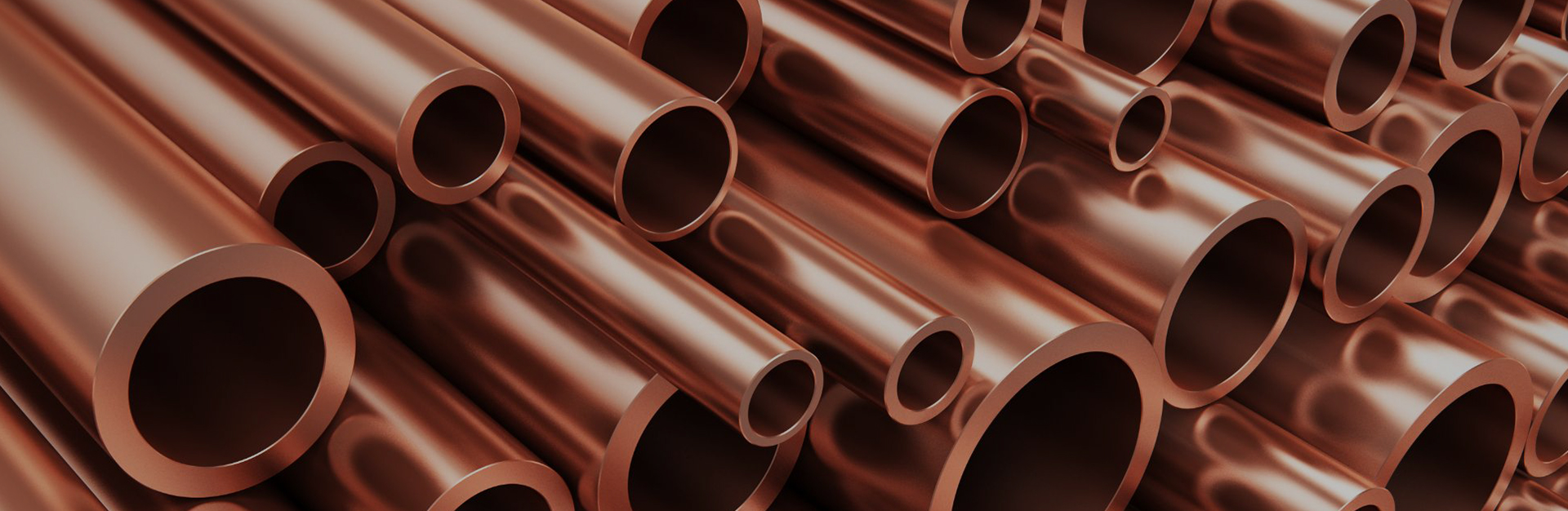
Subtitle: While ordinary copper tubes are trapped in price wars, silver-copper tubes achieve counter-trend growth with high value-added applications in medical gases and semiconductors—how can this segment, accounting for less than 5% of total industry capacity, achieve gross margins exceeding 30%?
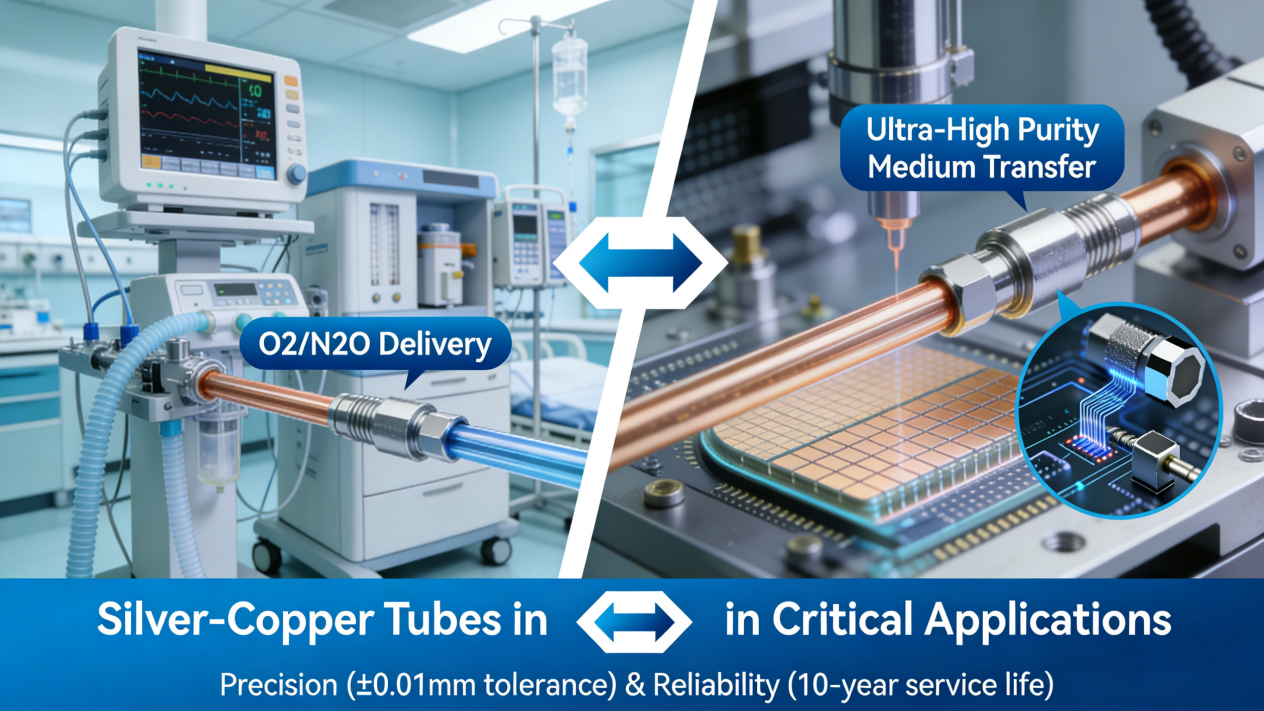
In 2025, silver-copper tubes (including silver-copper alloy tubes) account for less than 5% of the global copper tube market but contribute over 15% of its profits . Unlike ordinary copper tubes, which are primarily used in construction and air conditioning, silver-copper tubes serve high-end sectors such as medical gas transmission, semiconductor equipment, and aerospace pipelines . Their prices are 3–5 times higher than ordinary copper tubes, with gross margins reaching 25%–30%.
This demand surge stems from technological advancements. In the medical field, the antibacterial properties of silver ions make silver-copper tubes the preferred choice for hospital gas supply systems, with a penetration rate of 60% in new hospital projects in Europe and North America . The semiconductor sector requires ultra-high-purity copper tubes (oxygen content ≤5 ppm) with exceptional resistance to bending fatigue. The addition of silver significantly enhances tube lifespan and stability, making these tubes critical for high-precision applications.
Table: Application Scenarios and Profit Comparison of Silver-Copper Tubes vs. Ordinary Copper Tubes (2025)
|
Indicator |
Ordinary Copper Tubes (AC/Construction) |
Silver-Copper Tubes (High-End Fields) |
Difference Multiple |
|
Price Range |
$7,000–9,000/ton |
$20,000–40,000/ton |
3–5x |
|
Gross Margin |
3%–5% |
25%–30% |
6–8x |
|
Technical Barrier |
Low (standardized production) |
High (purity/precision control) |
Vastly different entry thresholds |
|
Demand Growth Rate |
2%–3% annually |
12%–15% annually |
~5x difference |
The core competitiveness of silver-copper tubes lies in material formulation and process control. Jiangxi Nailuo Copper Industry’s B10 nickel-silver alloy tube, by adding 10% nickel and 1.5% silver, improves corrosion resistance in seawater by 50% and extends service life to over 30 years, making it a key material for shipbuilding and marine engineering.
Purity control is another critical differentiator. Semiconductor-grade silver-copper tubes require copper purity ≥99.99%, with silver content fluctuations controlled within ±0.01% . Germany’s Wieland Group uses vacuum melting + vertical continuous casting technology to reduce internal impurities to below 0.001%, enabling product prices 8 times higher than ordinary copper tubes . Domestic Chinese companies, such as those in Yingtan, have broken foreign technological monopolies by developing methods like the "ultra-low oxygen split horizontal continuous casting process," reducing the cost of high-end silver-copper tubes by 40%.
The global silver-copper tube market exhibits a clear technological gradient :
Europe: Dominates the highest-end segments like medical and semiconductors. Germany’s Wieland and KME Group hold 60% of the global high-purity silver-copper tube market.
North America: Focuses on aerospace and defense. U.S.-based Materion produces silver-copper alloy tubes for rocket engine cooling systems.
China: Excels in niche markets like marine-grade B10 nickel-silver tubes and new energy battery materials. Yingtan-based companies account for 25% of the global market share for marine-grade silver-copper tubes .
The rise of Chinese companies benefits from industrial chain collaboration. Yingtan City’s "copper-based new materials cluster" integrates upstream smelting, midstream processing, and downstream applications, reducing R&D cycles by 30% and costs by 20% .
Silver-copper tubes face dual challenges from new materials and process innovations . In the medical field, antibacterial-coated stainless steel tubes can achieve similar antibacterial effects at a 30% lower cost. In semiconductors, aluminum silicon carbide composites show better thermal conductivity in some scenarios.
However, silver-copper tubes remain irreplaceable in terms of reliability. For medical gas transmission, their total lifecycle cost is lower—30 years without replacement, whereas alternative materials may require mid-term maintenance. In high-temperature semiconductor environments, the creep resistance of silver-copper tubes is twice that of most new materials.
The competition logic of silver-copper tubes is fundamentally different from that of ordinary copper tubes: scale effects are being replaced by technical barriers as the primary competitive factor, and price sensitivity is giving way to reliability prioritization . Over the next five years, as high-end demand from medical, semiconductor, and new energy sectors continues to grow, the silver-copper tube market is expected to maintain an annual growth rate of over 10%, becoming a rare "profit blue ocean" in the copper tube industry .
For companies, the key to breaking through lies in focusing on specific segments, binding high-end customers, and continuous process innovation. As the chief engineer of Jiangxi Nailuo Copper Industry stated: "In the silver-copper tube market, achieving 90% excellence may not ensure survival—99% excellence is necessary for profitability."This "quality-focused strategy" is the core logic for niche markets to compete against mass production
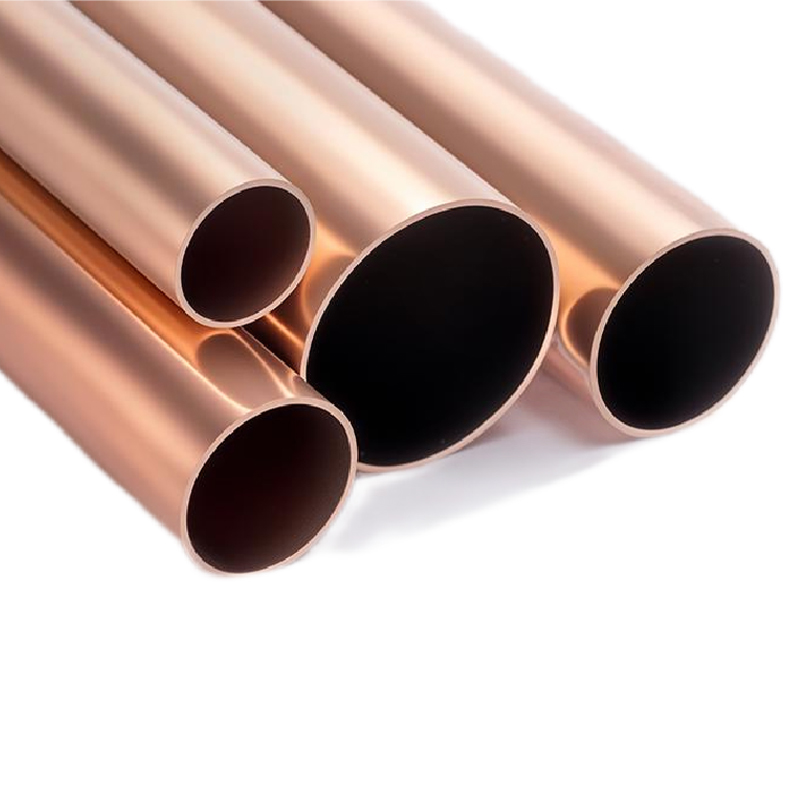
The Copper Water Tube produced by our company is a high-performance copper tube suitable for hot and cold water systems and heating applications. It h...
See Details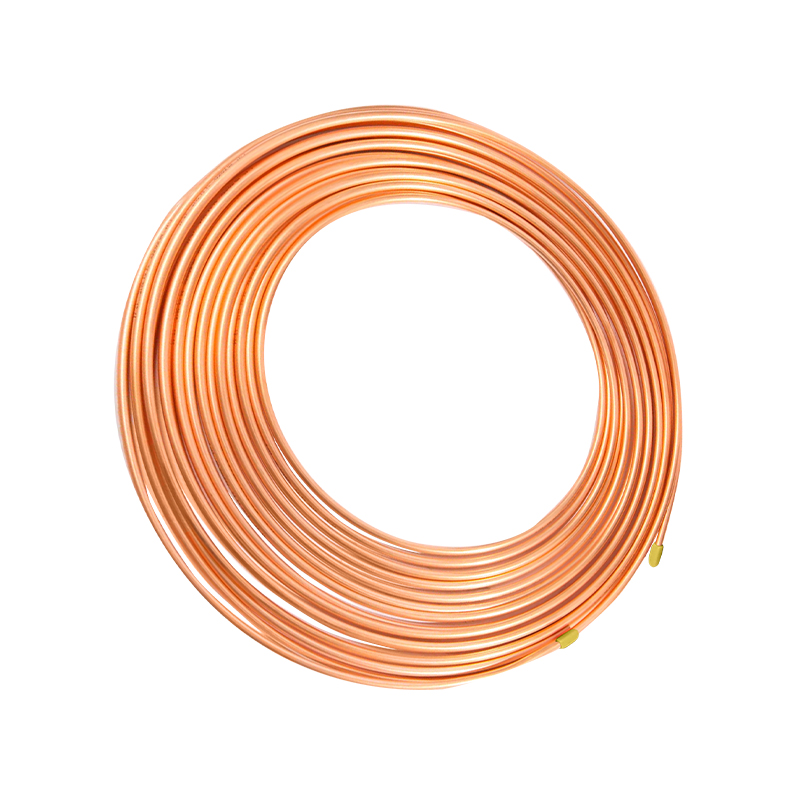
Copper capillary tube is usually manufactured by precision machining, and its dimensional accuracy can reach one thousandth of an inch. This ultra-hig...
See Details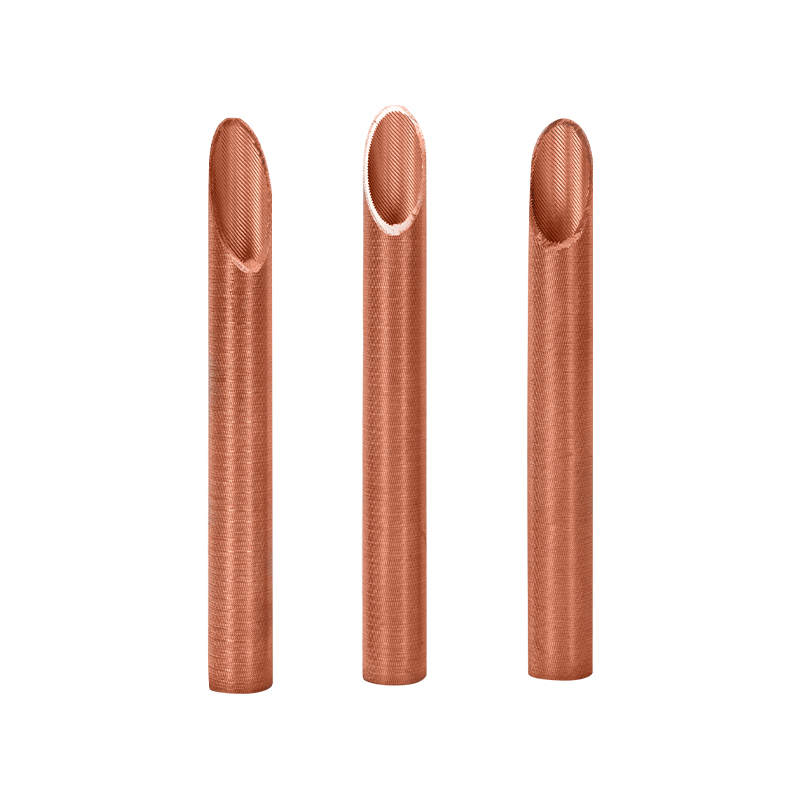
The copper evaporator tube adopts a unique fin design, and the external fins are equipped with specially designed interconnected channels, so that eac...
See Details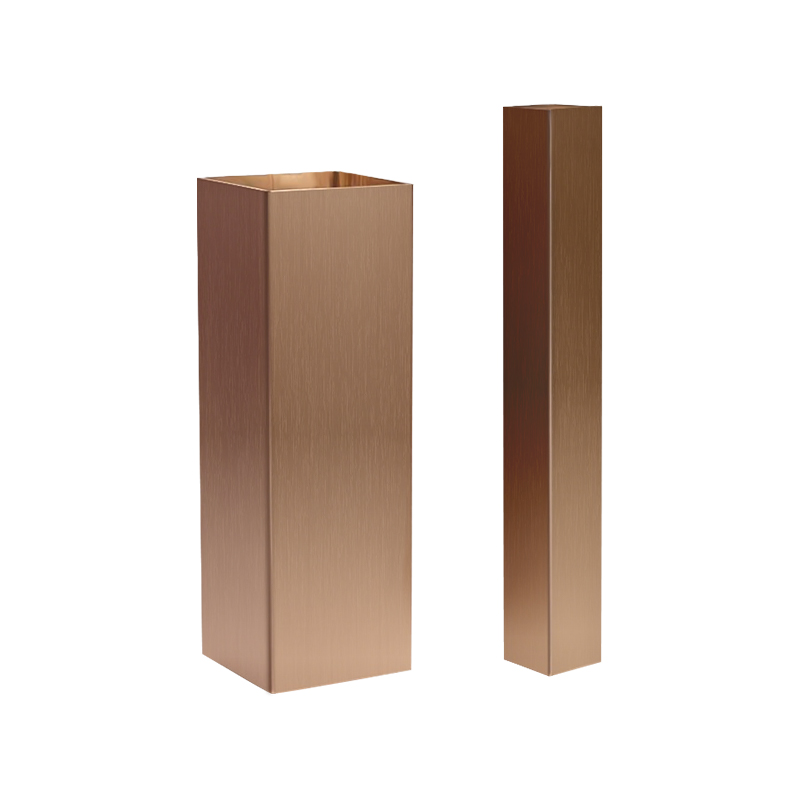
Copper square tube is a metal tube with a hollow square cross-section. It is made of high-purity copper or copper alloy materials through multiple pre...
See Details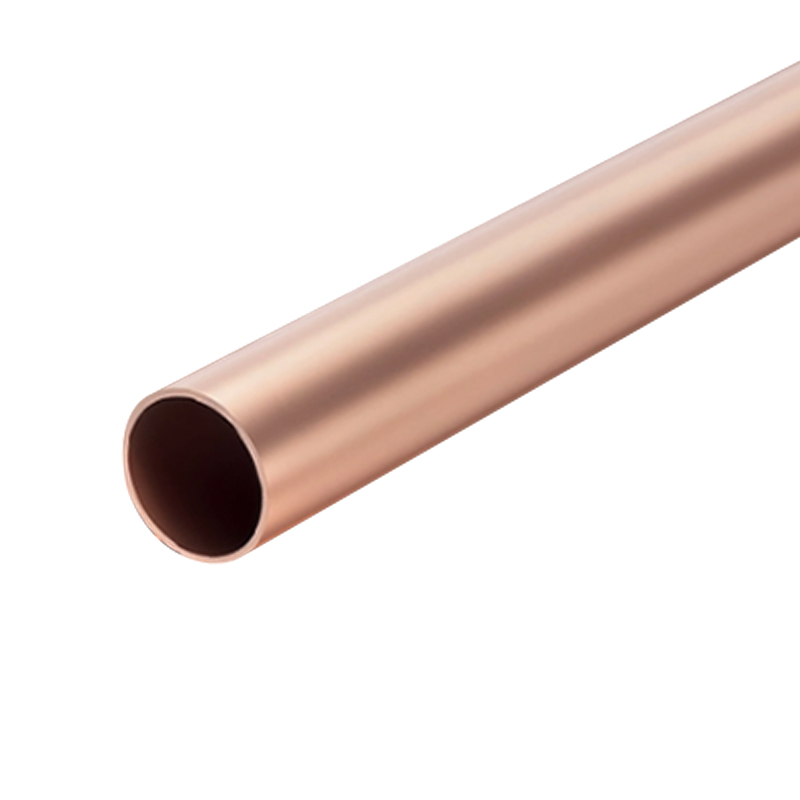
Copper Tube is made of high-purity copper material with a copper content of not less than 99.9%. The main material codes are T11050 and C12200(DHP), a...
See Details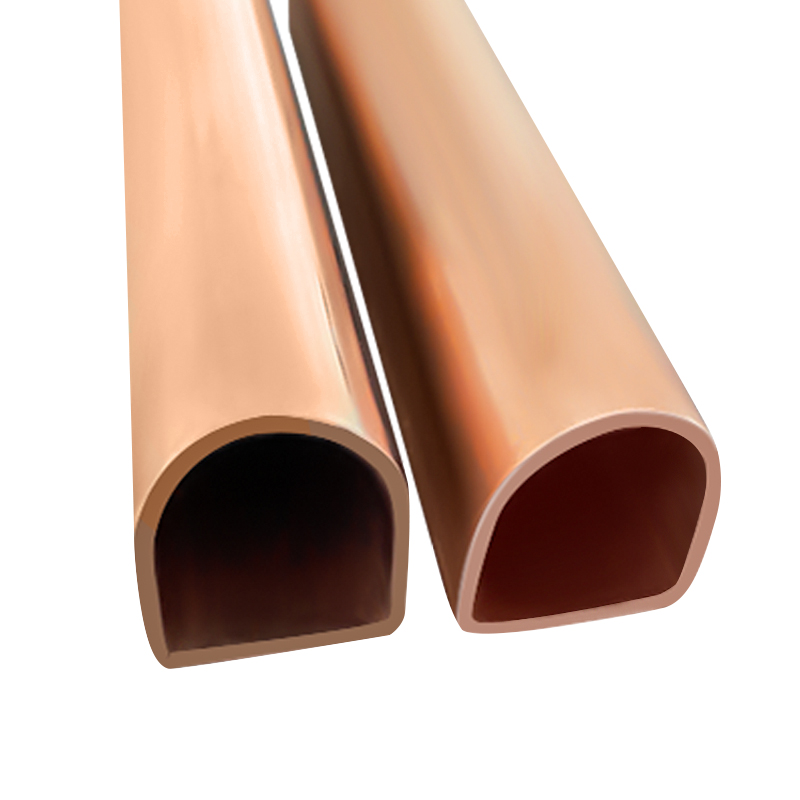
Special-shaped copper tube refers to all copper tubes with cross sections other than circular, including hexagonal, semi-elliptical, octagonal, etc., ...
See Details
 Tangpu Industrial Zone, Shangyu District, Shaoxing City, Zhejiang Province, China
 +86-13567501345
© Zhejiang Jingliang Copper-Tube Products Co., Ltd All rights reserved.

