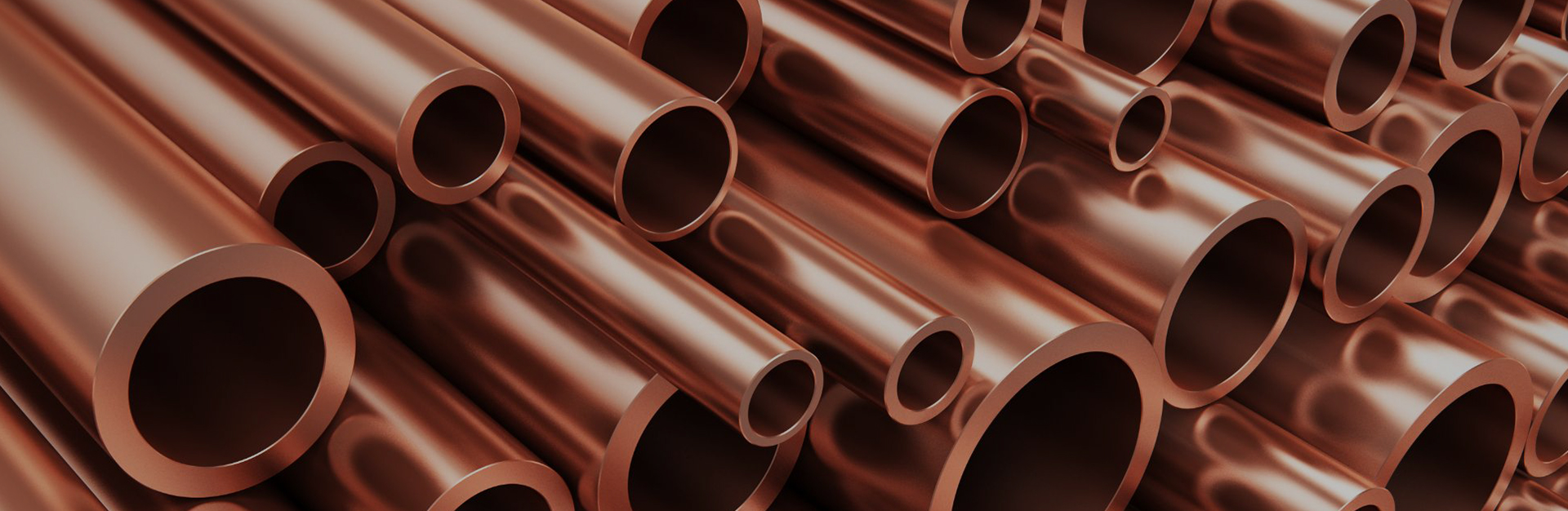
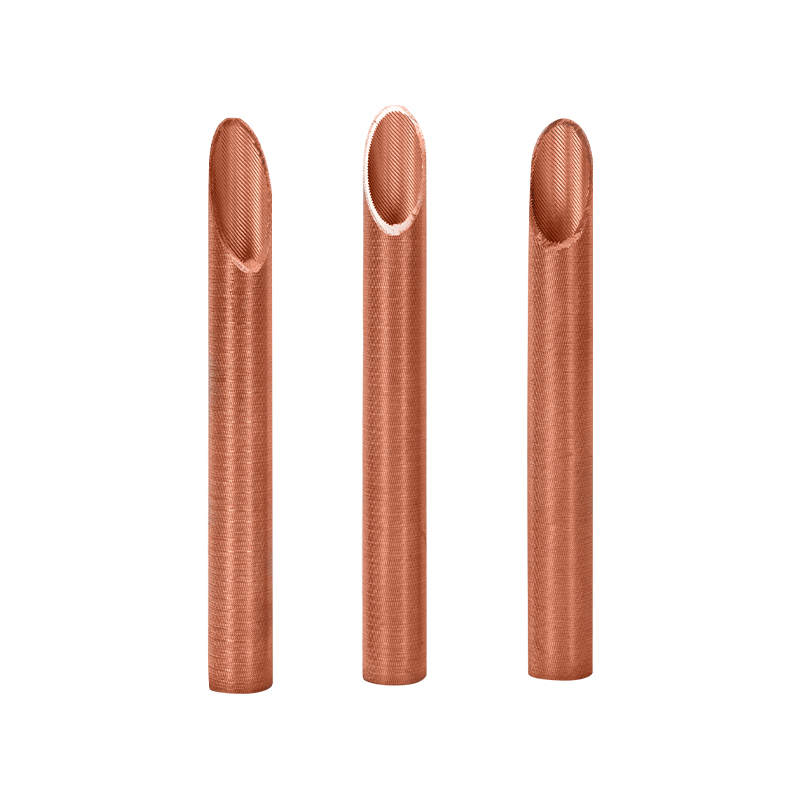
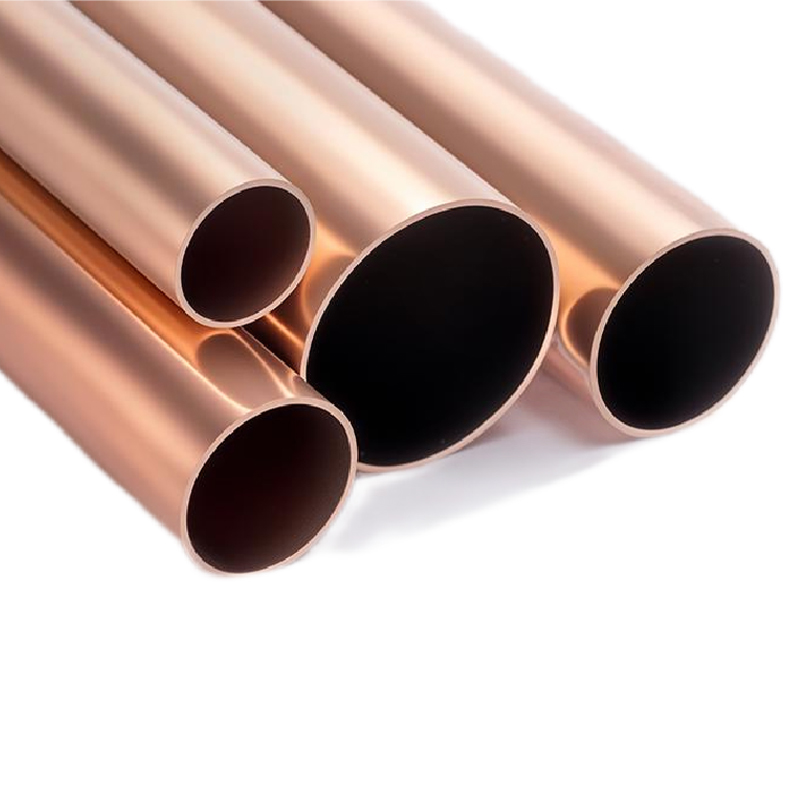
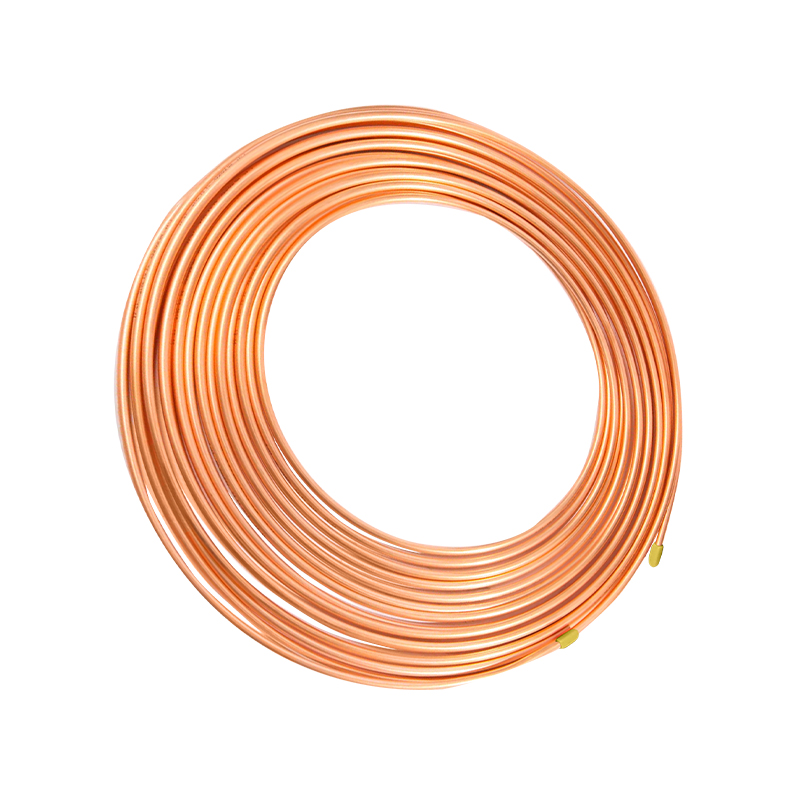
Fin copper tubes are the core heat-transfer component in HVAC, refrigeration, and industrial heat exchangers. They consist of a copper tube with external fins—typically aluminum or copper—that dramatically increase the surface area available for heat exchange. If you are sourcing these components, the short answer is: choose a copper tube factory that offers verified dimensional tolerances (wall thickness deviation ≤ ±0.05 mm), fin pitch options between 1.0 mm and 3.0 mm, and certifications such as ASTM B75 or EN 12449. Everything else—pricing, lead time, customization—flows from those baseline quality criteria.
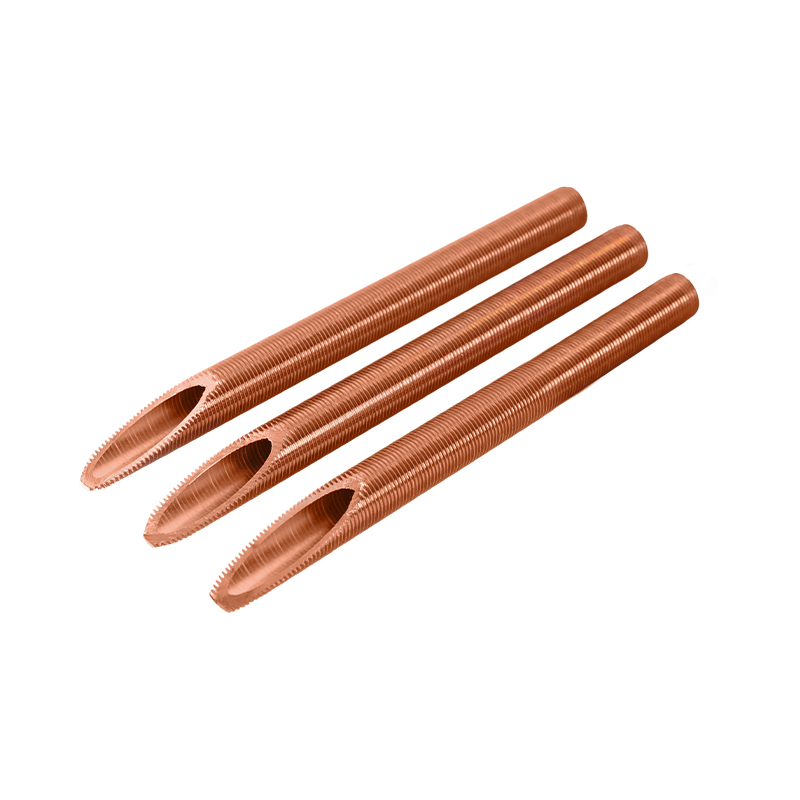
A fin copper tube is a bare copper tube—usually made from C10200 (oxygen-free) or C12200 (phosphorus deoxidized) copper—onto which external fins are mechanically bonded, extruded, or integrally formed. The fins serve one purpose: to multiply the effective heat-transfer surface area without increasing the tube footprint.
For example, a plain 3/8-inch (9.52 mm) copper tube has roughly 30 cm² of outer surface per meter. Adding aluminum fins at a 2 mm pitch increases that surface area to approximately 600–900 cm² per meter—a 20× to 30× improvement. This directly reduces the size and weight of heat exchangers while maintaining or improving thermal performance.
Heat from a refrigerant or fluid inside the tube conducts outward through the copper wall, then spreads across the fin surface, where it is dissipated into the surrounding air or liquid medium. Copper is chosen because its thermal conductivity is 385–400 W/(m·K), roughly twice that of aluminum and eight times that of stainless steel, making it the most efficient tube material for this application.
Not all fin copper tubes are the same. The fin geometry, material, and bonding method determine suitability for different applications. Below are the main categories:
| Type | Fin Material | Fin Pitch Range | Typical Application |
|---|---|---|---|
| L-foot / LL-foot Fin Tube | Aluminum | 2.0–4.0 mm | Air coolers, condensers |
| Embedded / Grooved Fin Tube | Aluminum or Copper | 1.0–3.0 mm | High-pressure heat exchangers |
| Extruded Fin Tube | Aluminum | 2.5–5.0 mm | Industrial process heating |
| Integral Copper Fin Tube | Copper (same as tube) | 1.0–2.5 mm | Marine, corrosive environments |
| Spiral Wound Fin Tube | Aluminum or Steel | 3.0–6.0 mm | Boilers, gas heaters |
For HVAC and refrigeration—the largest global market segments—L-foot aluminum fin tubes on copper pipe are the dominant choice, balancing cost, corrosion resistance, and thermal performance.
When requesting quotes from a copper tube factory, vague specifications lead to mismatched products. Define each of these parameters in your purchase order:
The global copper tube manufacturing market is concentrated in China, Japan, South Korea, and Germany, with China accounting for an estimated 55–60% of global ACR copper tube output as of 2024. Factory quality, however, varies enormously. Use the following checklist to evaluate suppliers:
A credible copper tube factory should hold at minimum: ISO 9001 for quality management, and product-level compliance with ASTM B75/B280 (USA), EN 12449/12451 (Europe), or GB/T 17791 (China). For export markets, ask for the specific test reports, not just certificates—some factories display outdated certifications.
Leading factories operate continuous casting and rolling (CCR) lines capable of producing 5,000–20,000 metric tons per year. Fin-rolling machines should achieve fin pitch accuracy within ±0.1 mm. Ask whether the factory owns its fin-winding equipment or subcontracts that step—subcontracting adds variability.
Mandatory tests for fin copper tubes include:
For standard sizes, reputable factories quote MOQs of 500–2,000 kg per SKU with lead times of 15–30 days ex-factory. Custom fin geometries typically require 3,000–5,000 kg MOQ and 45–60 days. Factories offering any size at any quantity with 7-day lead times are usually trading houses, not manufacturers—they lack direct process control.
Understanding end-use requirements helps procurement teams write tighter specifications and helps factories recommend the correct product variant.
Copper commodity prices dominate the cost structure of fin copper tubes—raw material typically represents 65–75% of ex-factory price. As of mid-2024, standard L-foot aluminum-finned copper tubes (9.52 mm OD, 0.35 mm wall, 2 mm fin pitch) were trading in the range of USD 6.50–9.00/kg FOB Chinese ports, depending on order volume and specification complexity.
Key cost drivers to negotiate with your copper tube factory:
Experienced procurement engineers watch for these warning signs during supplier qualification:
The fin copper tube industry is shifting on two fronts. First, inner-grooved copper tubes (microfin tubes) are increasingly paired with external fins to achieve even higher heat-transfer coefficients—up to 2× a smooth bore at the same fin geometry—allowing heat exchangers to be downsized by 15–25%. Second, environmental regulations in the EU and increasingly in China are pushing factories toward closed-loop water cooling, reduced acid pickling, and recovery of copper scrap within the production process. Leading factories now report copper yield rates above 97%, minimizing waste.
For buyers with ESG commitments, ask prospective copper tube factory partners for their scrap recovery rate, energy consumption per metric ton of output (benchmark: 800–1,200 kWh/ton for drawn copper tube), and whether they participate in any recognized responsible sourcing framework such as the Copper Mark.
Content
The copper evaporator tube adopts a unique fin design, and the external fins are equipped with specially designed interconnected channels, so that eac...
See Details
The Copper Water Tube produced by our company is a high-performance copper tube suitable for hot and cold water systems and heating applications. It h...
See Details
Copper capillary tube is usually manufactured by precision machining, and its dimensional accuracy can reach one thousandth of an inch. This ultra-hig...
See Details
Fin copper tube is a highly efficient heat exchange element. Its structural feature is that uniform fins are formed on the outer wall of the copper tu...
See Details
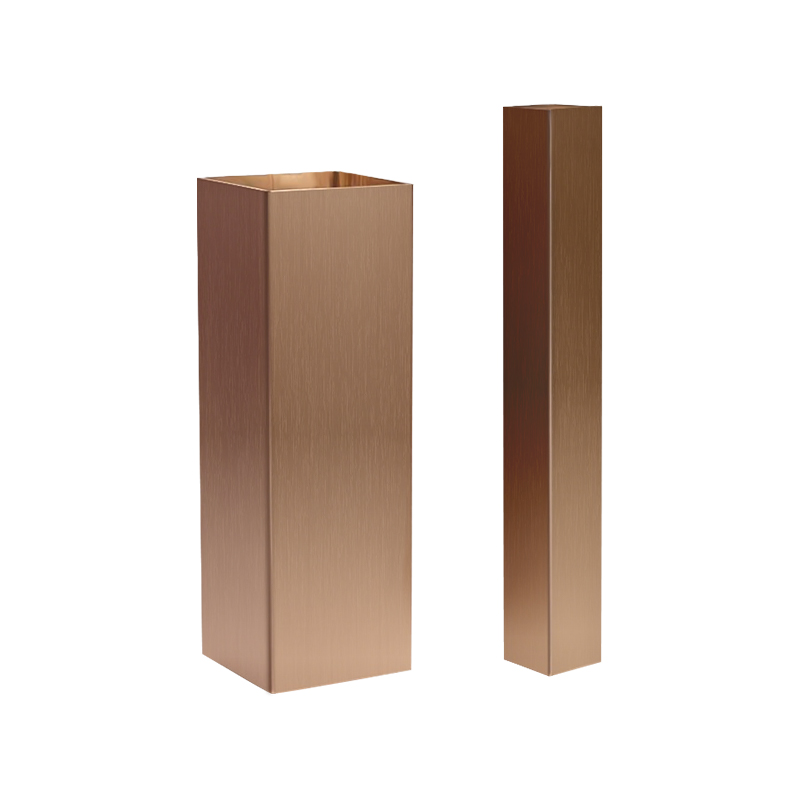
Copper square tube is a metal tube with a hollow square cross-section. It is made of high-purity copper or copper alloy materials through multiple pre...
See Details
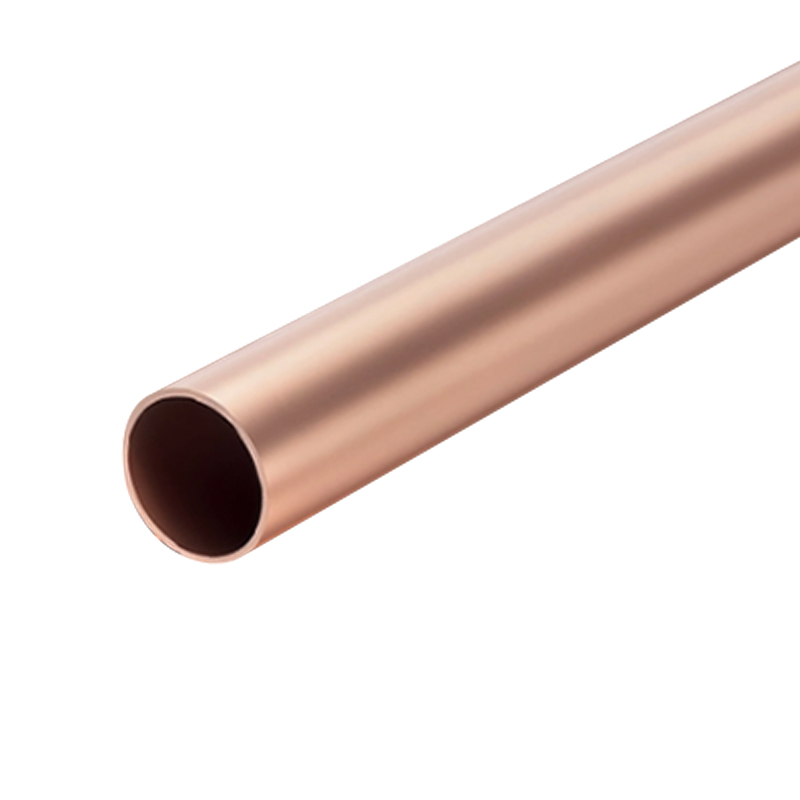
Copper Tube is made of high-purity copper material with a copper content of not less than 99.9%. The main material codes are T11050 and C12200(DHP), a...
See Details