 English
 Español
 中文
中文News
Home / News / Industry News / High-Frequency Brazing vs. Flame Welding: Which Technology Will Reshape the Future of Global Copper Tube Connections?
Subtitle: As the global copper tube industry faces unprecedented demands for precision, sustainability, and efficiency, a quiet revolution in joining technologies is reshaping manufacturing landscapes. But which method will dominate: the established flame welding or the innovative high-frequency brazing?
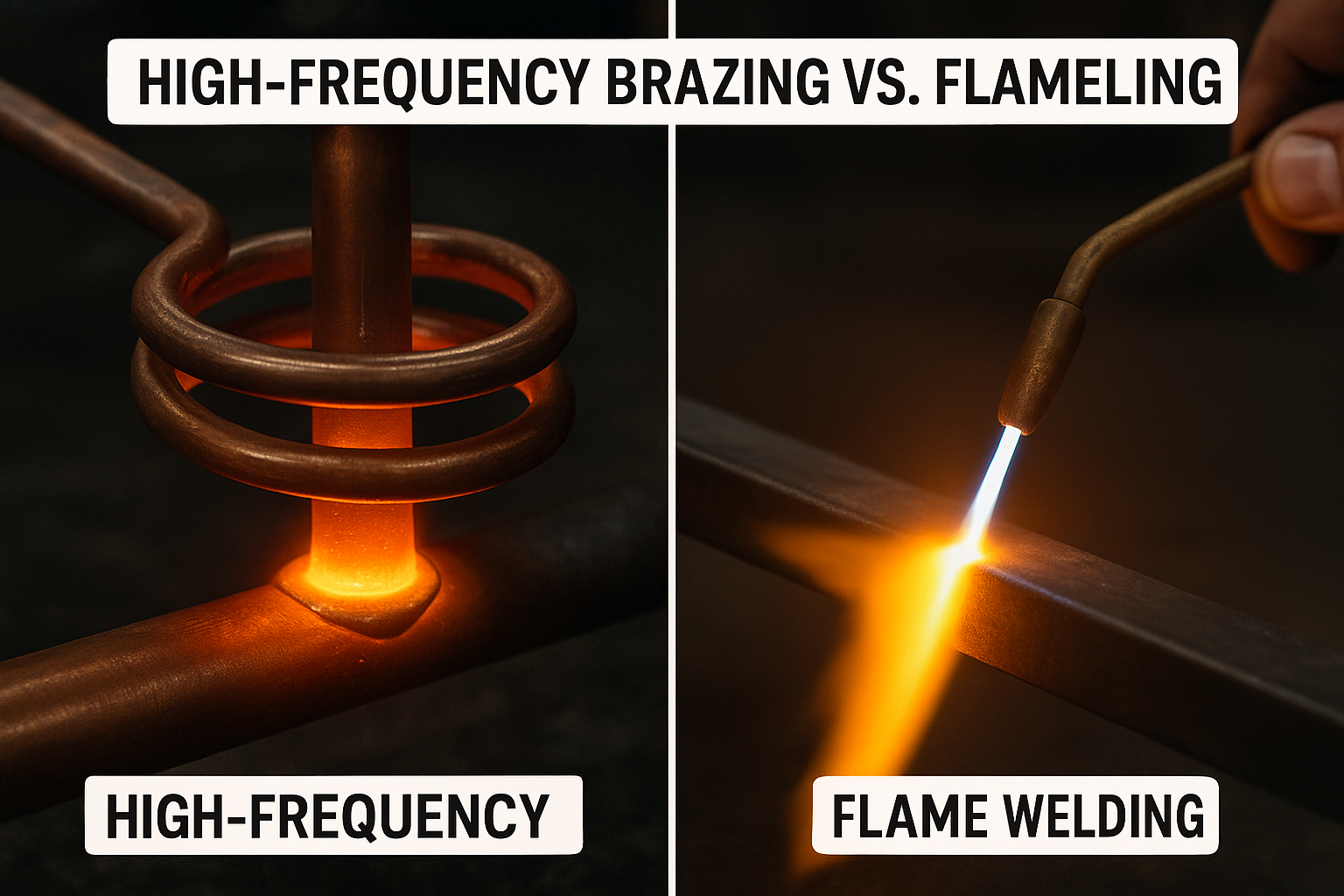
The global copper tube industry, long reliant on traditional flame welding, is at a crossroads. Two distinct technological paths are emerging:
The stakes are high. With copper tubes integral to sectors ranging from HVACR (heating, ventilation, air conditioning, and refrigeration) to medical gas systems and electric vehicle battery cooling, the joining method directly impacts product safety, energy consumption, and lifecycle costs. As global demand for copper tubes continues, the industry’s technological choice will reverberate across supply chains.
Table 1: Key Technical and Economic Comparison Between High-Frequency Brazing and Flame Welding
|
Parameter |
Flame Welding |
High-Frequency Brazing |
Advantage Impact |
|
Temperature Control |
±200°C fluctuation |
±10°C precision |
Prevents overheating, preserves material integrity |
|
Process Speed |
60+ seconds/joint |
15–30 seconds/joint |
3x faster production cycles |
|
Energy Efficiency |
<30% utilization |
>85% utilization |
80% lower energy cost/joint |
|
Defect Rate |
5–8% (typical) |
<1% (with AI inspection) |
Reduces rework and recalls |
|
Operator Dependency |
High (6-month training) |
Low (2-4 weeks training) |
Cuts labor costs by up to 70% |
|
CO₂ Emissions/Joint |
High (gas combustion) |
Negligible (electric) |
Supports ESG goals |
Global Regulatory Pressures
Economic Imperatives
The adoption of these technologies varies significantly by region, reflecting different industrial priorities and cost structures.
|
Region |
Dominant Technology |
Key Drivers |
Leading Players |
|
Asia-Pacific |
Hybrid (significant flame welding use) |
Cost sensitivity, high volume production |
Hailiang Group, Golden Dragon |
|
Europe |
High adoption of high-frequency brazing |
Green regulations, premium segments |
Wieland, KME Group, Luvata |
|
North America |
Mixed adoption, shifting to brazing |
Reliability focus, liability concerns |
Mueller Industries, Cerro Flow Products |
Europe’s Regulatory Leap
EU mandates are making high-frequency brazing the default for contractors seeking compliance. The focus on circular economy principles and carbon reduction aligns perfectly with the benefits of brazing.
Asia’s Pragmatic Balance
In China and Southeast Asia, where copper tube production and consumption are high, manufacturers often retain flame welding for very cost-sensitive, high-volume products but are increasingly adopting brazing for premium applications requiring higher reliability.
Precision Engineering
Material Science Innovations
Carbon Footprint Reduction
High-frequency brazing significantly slashes energy use per joint compared to flame welding. For a large-scale operation, this translates to substantial reductions in CO₂ emissions, supporting corporate and regulatory sustainability targets . The push for sustainability is a key reason recycled copper use is growing, as its production consumes up to 85% less energy than primary production.
Circular Economy Alignment
High-frequency brazing supports remanufacturing and repair. Copper tubes reclaimed from retired systems can be re-brazed without quality loss, supporting circular economy goals and reducing the need for virgin material.
Flame Welding’s Labor Intensity
Traditional welding requires significant skill and months of training, and the pool of skilled artisans is aging in many regions, creating a potential skills gap .
High-Frequency Brazing’s Automation Edge
PLC-controlled brazing systems are easier to operate and require less specialized training, sometimes only 2–4 weeks. This reduces dependence on highly specialized welders and can lower labor costs
Short-Term (2025–2027)
Long-Term (2028–2030)
The copper tube joining debate is less about outright replacement and more about strategic coexistence. While flame welding's simplicity and low entry cost ensure its place in specific contexts, high-frequency brazing's precision, safety, and sustainability make it the definitive choice for high-stakes, high-volume, and efficiency-driven applications. The most successful manufacturers will be those who can strategically integrate brazing into their primary processes for its quality and efficiency benefits while maintaining the flexibility to use flame welding where it makes the most economic sense.
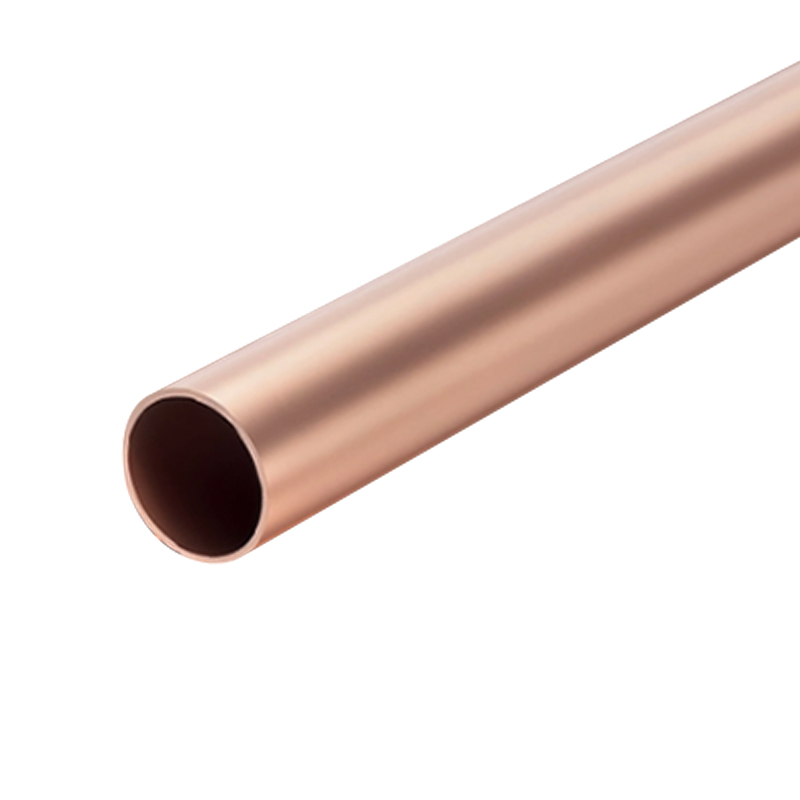
Copper Tube is made of high-purity copper material with a copper content of not less than 99.9%. The main material codes are T11050 and C12200(DHP), a...
See Details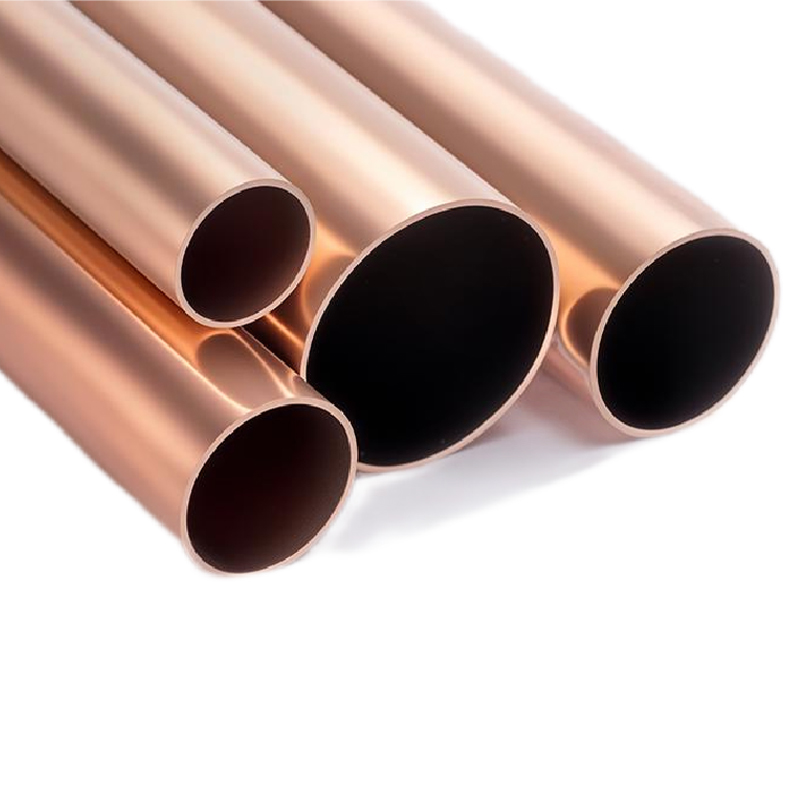
The Copper Water Tube produced by our company is a high-performance copper tube suitable for hot and cold water systems and heating applications. It h...
See Details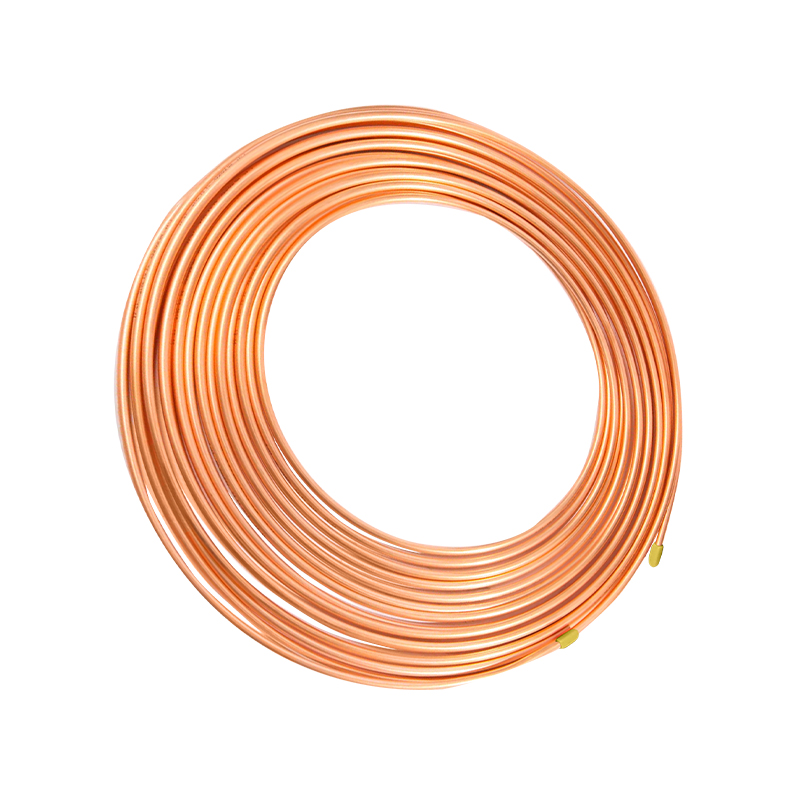
Copper capillary tube is usually manufactured by precision machining, and its dimensional accuracy can reach one thousandth of an inch. This ultra-hig...
See Details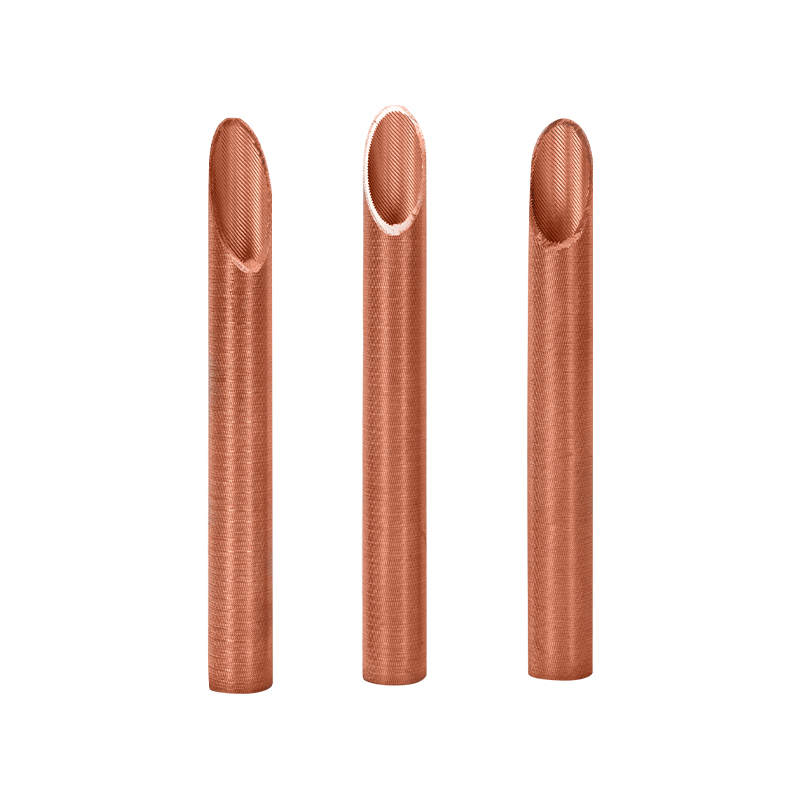
The copper evaporator tube adopts a unique fin design, and the external fins are equipped with specially designed interconnected channels, so that eac...
See Details
Copper square tube is a metal tube with a hollow square cross-section. It is made of high-purity copper or copper alloy materials through multiple pre...
See Details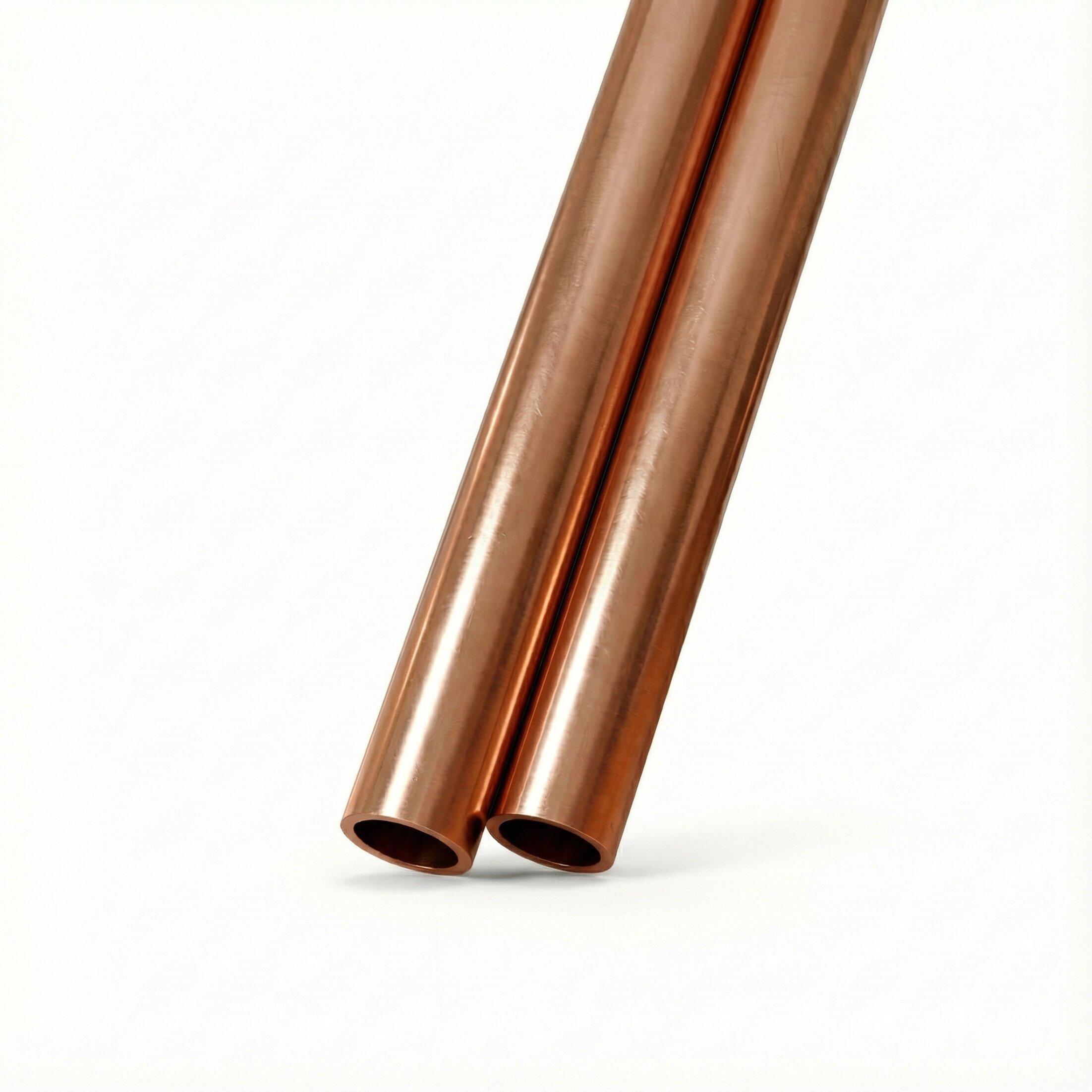
High Conductivity Copper Tube is a conductive copper tube made from high-purity T2 copper material, primarily used in equipment and components requiri...
See Details
 Tangpu Industrial Zone, Shangyu District, Shaoxing City, Zhejiang Province, China
 +86-13567501345
© Zhejiang Jingliang Copper-Tube Products Co., Ltd All rights reserved.

