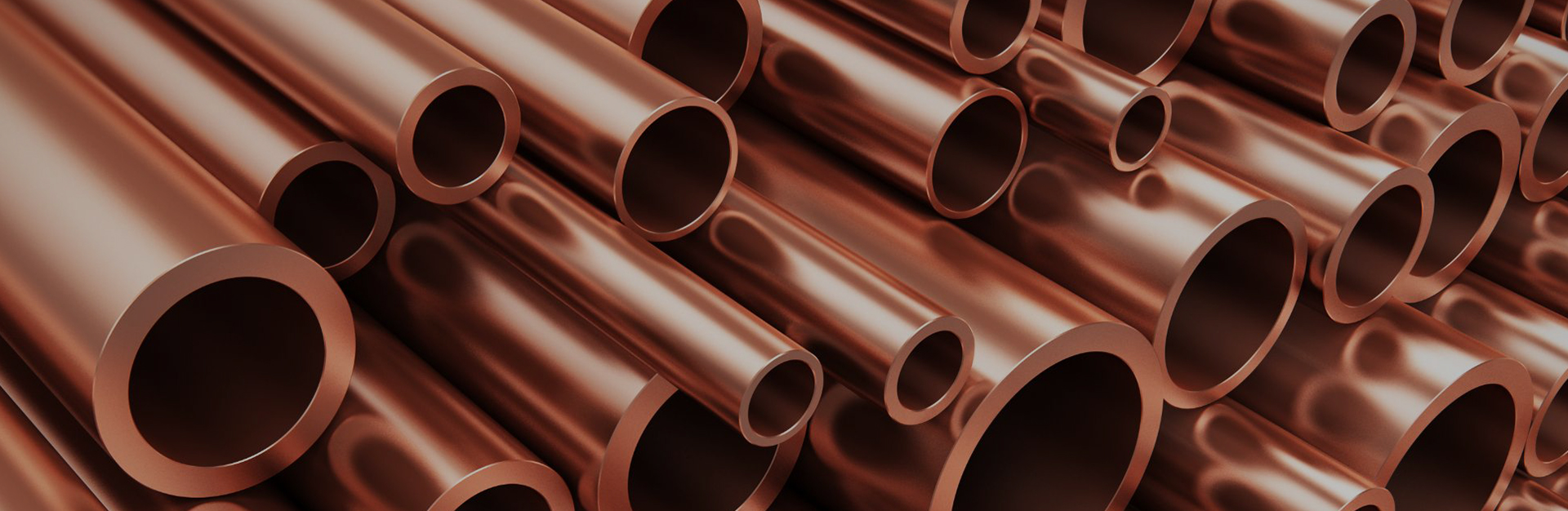
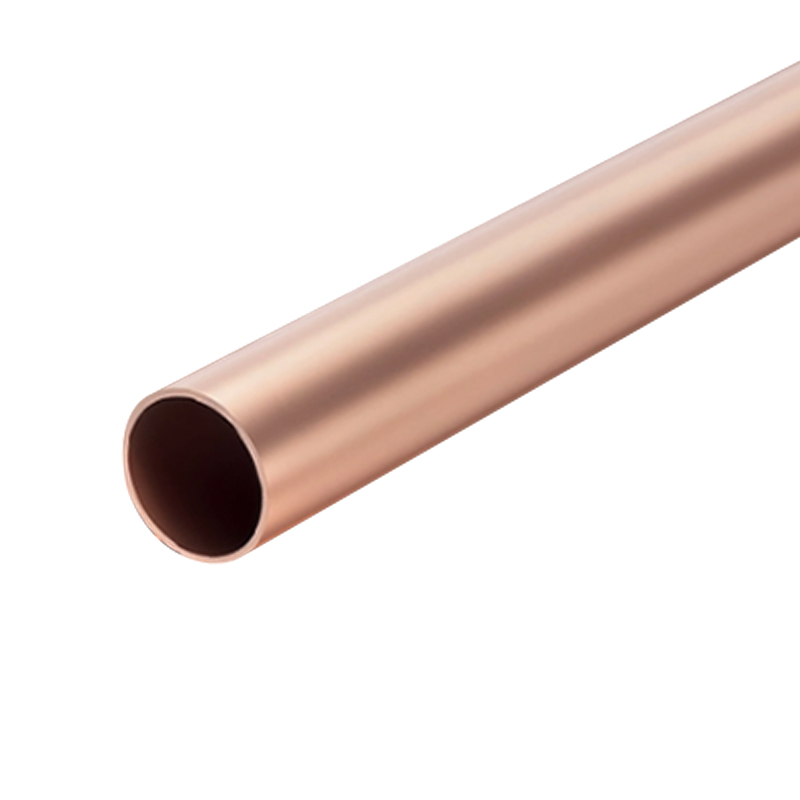
A high purity copper tube is a seamless, hollow copper section refined to 99.95% Cu or higher, with the highest grades reaching 99.999% (5N) or 99.9999% (6N). This is not a marketing label — it is a measurable classification based on the "number of nines" in the purity percentage, and it directly determines how well the tube conducts electricity and heat, resists hydrogen embrittlement, and performs in vacuum or cryogenic environments.
The short answer for anyone choosing between grades: if the application involves electrical conduction, vacuum sealing, cryogenics, or semiconductor manufacturing, specify oxygen-free high purity copper tube (OFHC/OFE, C10100 or C10200) rather than standard commercial copper pipe. The purity gap between 99.9% commercial copper and 99.99%+ oxygen-free copper is small on paper but large in performance — a few hundred parts per million of oxygen or sulfur can measurably reduce conductivity and cause embrittlement at high temperatures.
| Grade | Purity | UNS / Common Name | Typical Application |
|---|---|---|---|
| Commercial (3N) | 99.9% | C12200 | Plumbing, general HVAC |
| High Purity (4N) | 99.99% | C10100 / C10200 | Electrical wiring, heat exchangers |
| Ultra-High Purity (5N) | 99.999% | OFE-grade | Semiconductor tooling, vacuum systems |
| Research Grade (6N) | 99.9999% | Specialty electronics | IC bonding, precision instrumentation |
A hollow copper tube is fundamentally different from a solid copper rod or bar in what it enables: the bore itself becomes a functional pathway for fluid, gas, or vacuum, while the wall simultaneously carries heat or current. This dual role is why hollow copper tube is the standard form factor in cryogenic cooling loops, vacuum feedthroughs, RF waveguide assemblies, and liquid-cooled heat exchangers, where the tube wall has to perform, not just contain.
In cryogenic systems specifically, hollow copper tube segments are frequently vacuum-brazed into octagonal or cylindrical assemblies to form thermal shields and cold-head extensions, because the joint must remain leak-tight at both room temperature and near-absolute-zero operating conditions.
Purity and conductivity are directly linked because impurity atoms distort copper's crystal lattice, scattering the electrons and phonons responsible for carrying current and heat. Oxygen-free high purity copper tube (C10100/C10200) typically reaches 101% IACS electrical conductivity and approximately 390–401 W/m·K thermal conductivity, both at or slightly above the international annealed copper standard used as the industry benchmark.
Oxygen is the impurity that causes the most trouble in copper tube specifically, because at elevated brazing or welding temperatures, residual oxygen reacts with hydrogen in the furnace atmosphere to form steam trapped inside the metal — a failure mode known as hydrogen embrittlement that cracks the tube wall from the inside. This is why oxygen-free grades hold oxygen content below 5–10 ppm, compared to several hundred ppm in standard deoxidized copper pipe.
| Impurity | Primary Risk | Controlled To |
|---|---|---|
| Oxygen (O) | Hydrogen embrittlement during brazing | < 5–10 ppm |
| Sulfur (S) | Reduced ductility, grain boundary weakness | < 0.1 ppm (5N grade) |
| Iron (Fe) | Increased electrical resistivity | Trace level only |
| Lead (Pb) | Hot-working cracking | Trace level only |
Procurement teams should reference a specific ASTM, ASME, or ISO standard rather than the generic term "high purity copper tube," because the standard defines dimensional tolerance, temper, and chemical composition testing method. The most commonly cited standards are listed below.
Regional equivalents include EN 12735-1 in Europe, JIS H3300 in Japan, and GB/T 1527 in China. When sourcing internationally, confirm which standard the supplier's mill certificate references, since tolerance bands and testing methods differ between them even for nominally equivalent purity grades.
Application requirements, more than any single number, determine which grade and standard to specify. The following breakdown reflects how purity level maps to real industrial use.
Semiconductor cooling systems, IC bonding wire feedstock, and cleanroom process equipment require 5N to 6N copper tube because even trace contaminants can interfere with microscopic fabrication tolerances. The tube's inner bore must remain free of cuprous oxide, since flaking oxide can contaminate sensitive process gas streams.
Cryostats, vacuum feedthroughs, and superconducting magnet cooling loops rely on OFHC copper tube for its combination of high thermal conductivity at cryogenic temperatures and reliable vacuum-brazed joint integrity. Diffusion-bonded and electron-beam-welded joints in these systems depend on an oxide-free bore surface to form a leak-tight seal.
Liquid-cooled heat sinks for power substations and industrial electronics use 4N copper tube, where the near-101% IACS conductivity minimizes resistive heating along busbar-style tube runs while the hollow bore carries coolant directly through the thermally active component.
Hospital medical gas lines under ASTM B819 and refrigeration circuits under ASTM B280 require tube that is internally clean, dehydrated, and sealed at the factory, since any residual oil, moisture, or particulate inside the bore can compromise gas purity or refrigerant performance downstream.
High purity copper tube starts as electrolytically refined cathode copper, then goes through hot extrusion or piercing to form a hollow billet, followed by multiple cold-drawing passes through progressively smaller dies to reach final outer diameter and wall thickness. Between drawing passes, the tube is annealed in a controlled, often hydrogen-free or inert atmosphere to restore ductility without reintroducing oxygen or hydrogen contamination.
Verification is not optional at this purity level. Reputable mills perform batch testing using ICP-MS (inductively coupled plasma mass spectrometry) and XRF (X-ray fluorescence) spectroscopy to confirm trace element content down to parts-per-million or parts-per-billion levels, and issue a mill certificate or Certificate of Analysis (COA) documenting the results for each production lot.
Buyers evaluating a supplier should request three documents before placing an order: the chemical composition COA referencing the specific ASTM or ISO standard, a dimensional inspection report covering straightness and wall-thickness tolerance, and — for vacuum or cryogenic applications — a statement confirming the tube was tested or rated for hydrogen embrittlement resistance.
Specifying a higher purity grade than the application needs adds cost without adding usable performance, since the conductivity gain between 5N and 6N copper is marginal for most engineering purposes and only matters in specialized electronics. The framework below simplifies the decision to three questions.
For most industrial electrical and thermal applications — busbars, heat exchanger cores, transformer windings — 4N (99.99%) oxygen-free copper tube represents the practical performance-to-cost sweet spot, delivering essentially the same conductivity as higher grades at meaningfully lower material cost.
Content
Copper Tube is made of high-purity copper material with a copper content of not less than 99.9%. The main material codes are T11050 and C12200(DHP), a...
See Details
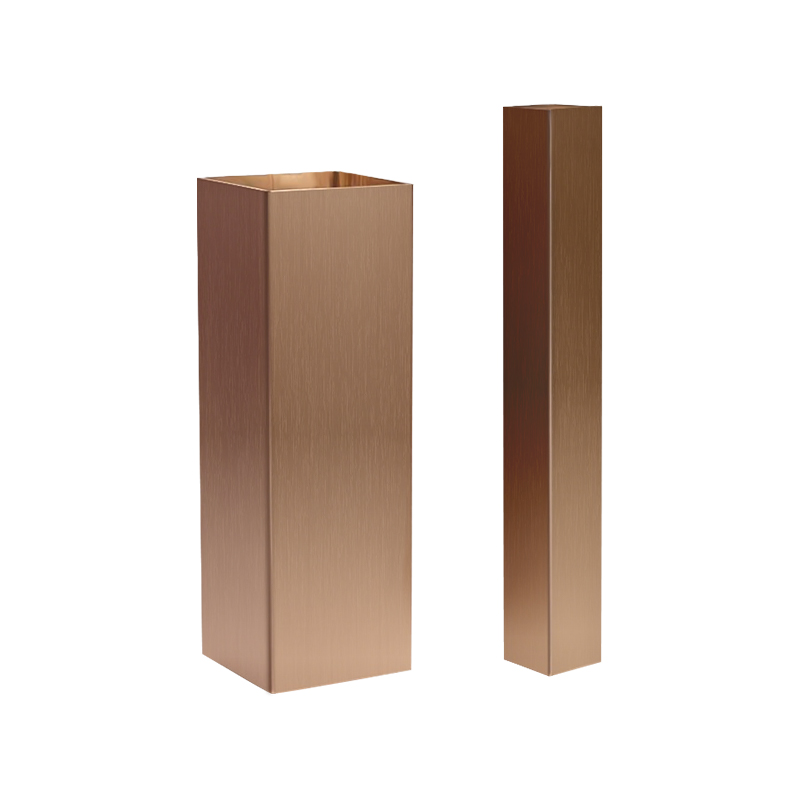
Copper square tube is a metal tube with a hollow square cross-section. It is made of high-purity copper or copper alloy materials through multiple pre...
See Details
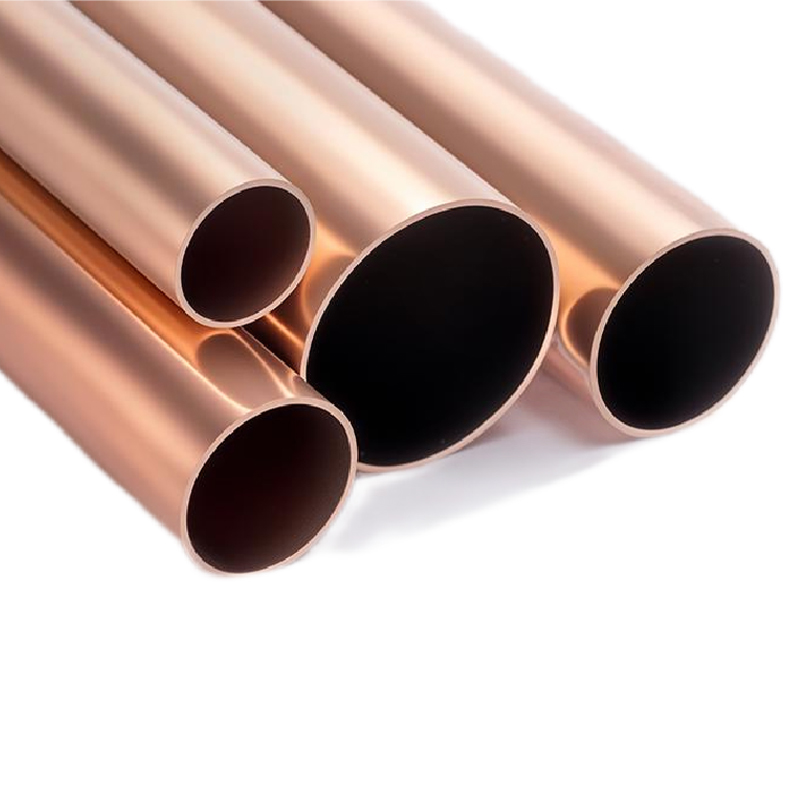
The Copper Water Tube produced by our company is a high-performance copper tube suitable for hot and cold water systems and heating applications. It h...
See Details
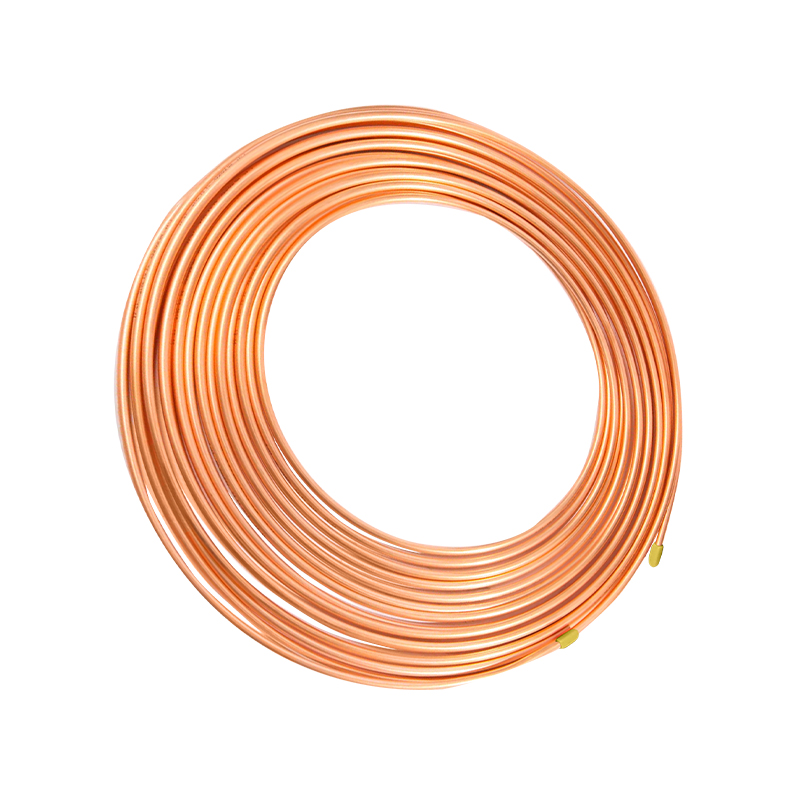
Copper capillary tube is usually manufactured by precision machining, and its dimensional accuracy can reach one thousandth of an inch. This ultra-hig...
See Details
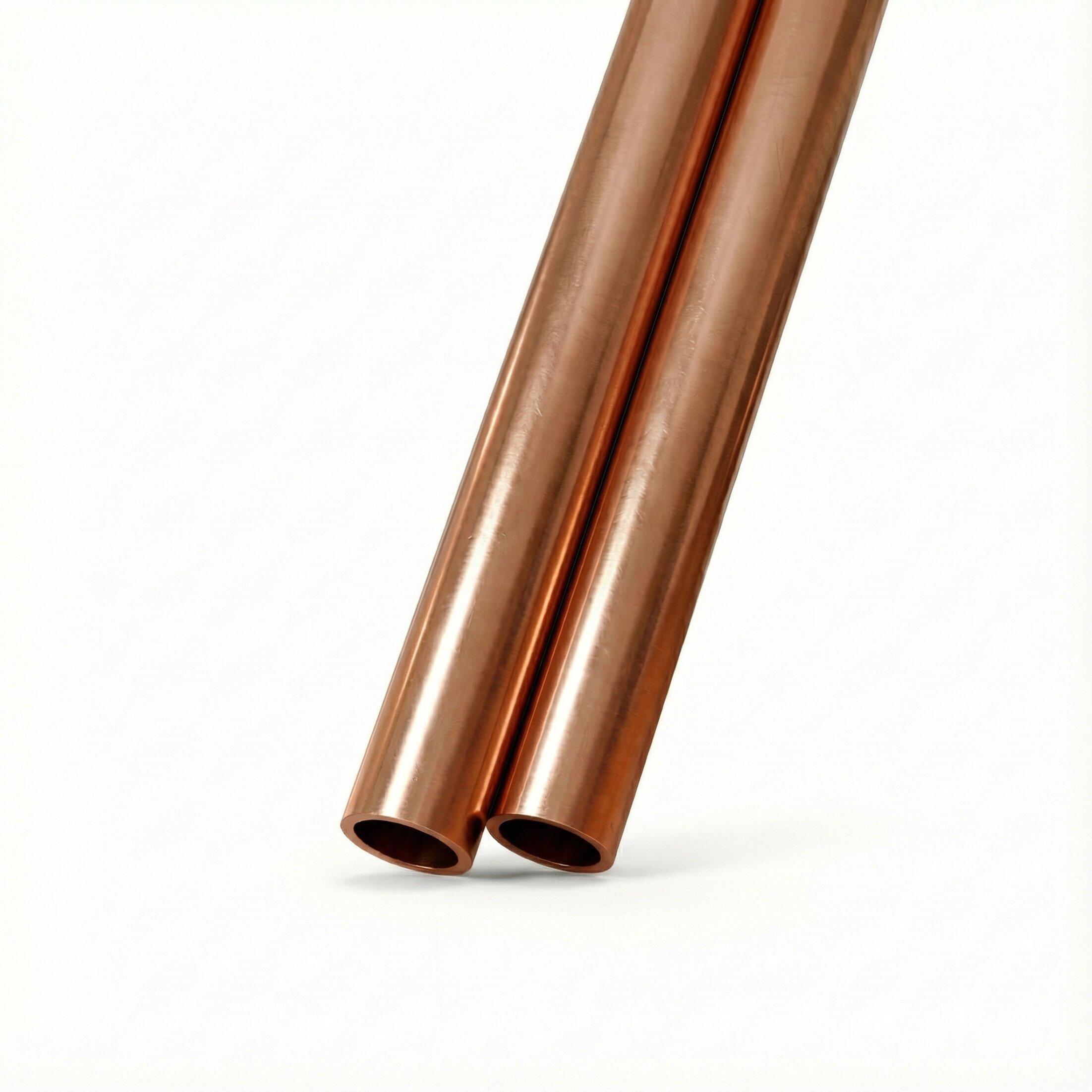
High Conductivity Copper Tube is a conductive copper tube made from high-purity T2 copper material, primarily used in equipment and components requiri...
See Details
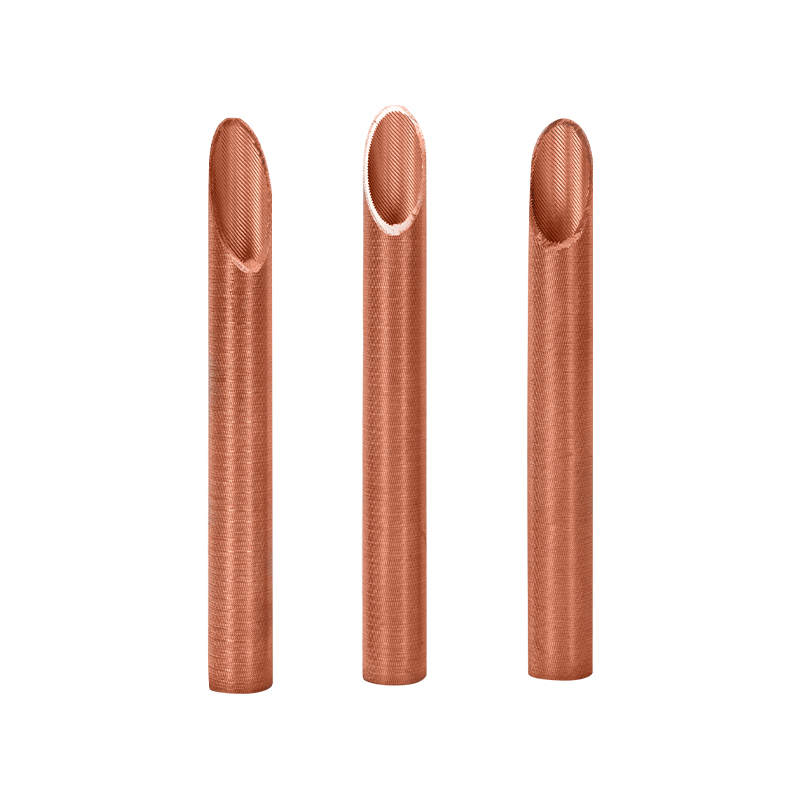
The copper evaporator tube adopts a unique fin design, and the external fins are equipped with specially designed interconnected channels, so that eac...
See Details