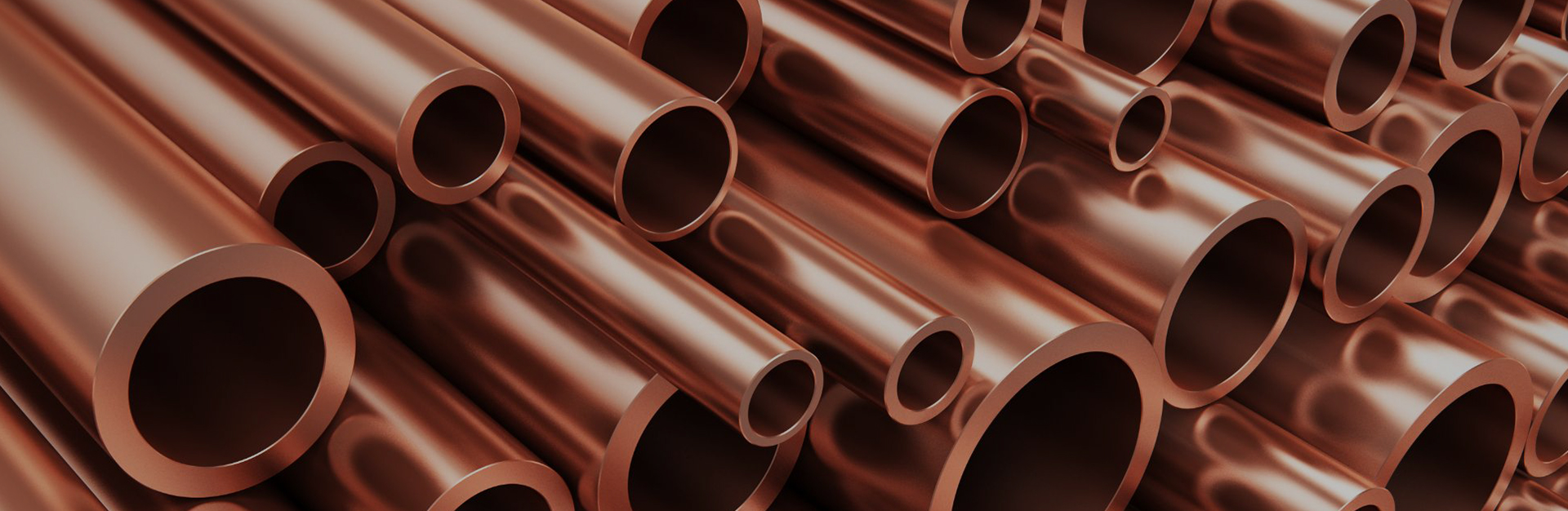
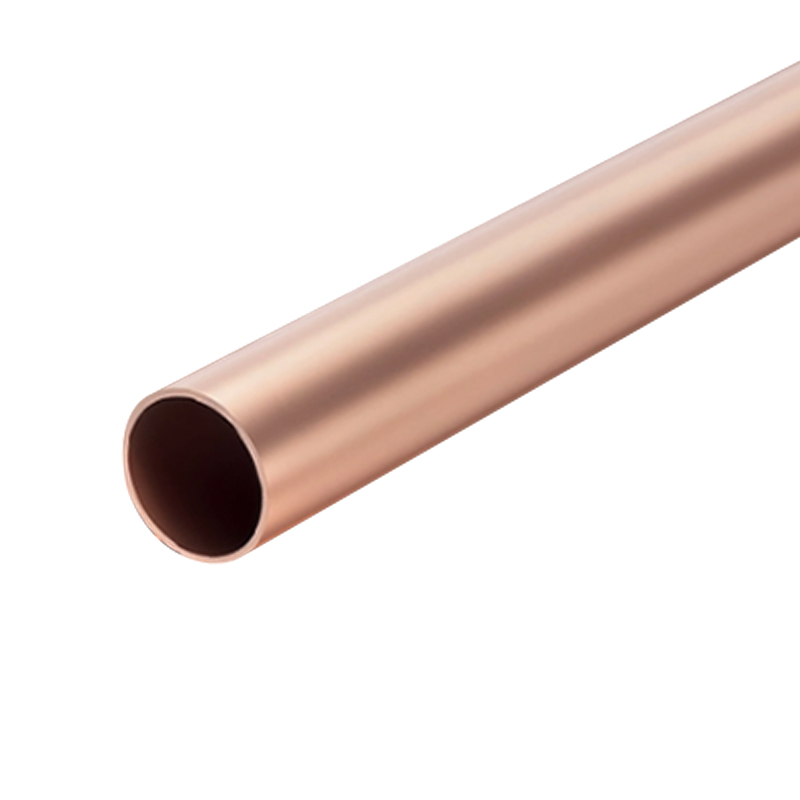
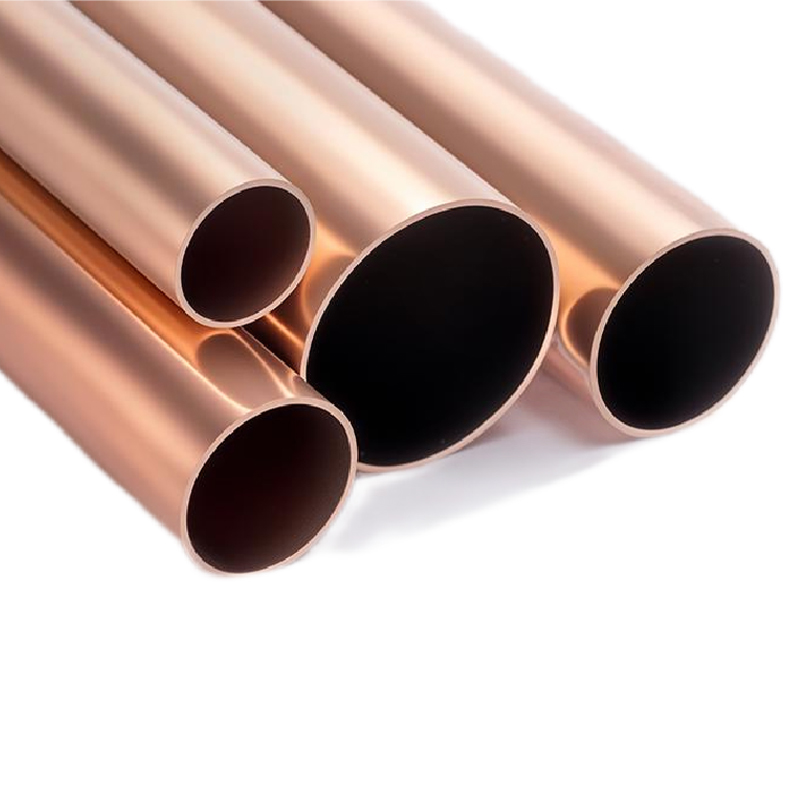
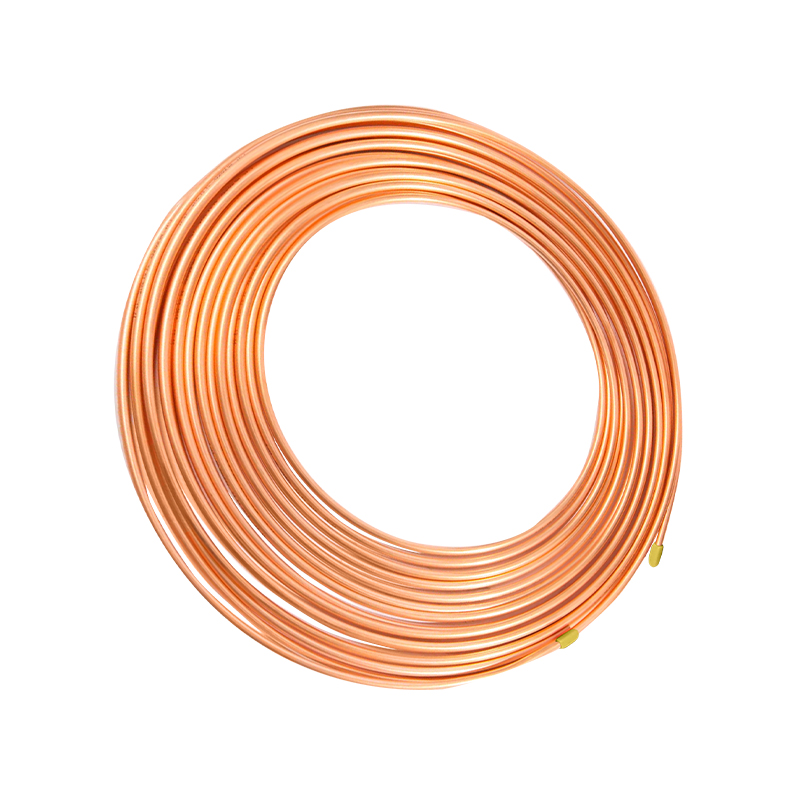
A copper tube is a seamless or welded hollow cylinder made primarily from refined copper or copper alloys, used to convey fluids, gases, or refrigerants across industrial and residential systems. The material grade—whether DHP, TP2, Cu-DHP, or high conductivity copper—directly determines pressure resistance, thermal conductivity, corrosion behavior, and suitability for specific environments. Choosing the wrong grade can lead to premature failure, reduced system efficiency, or non-compliance with international standards.
Modern copper tube factories produce dozens of variants tailored to HVAC, plumbing, refrigeration, medical gas, and precision engineering applications. Understanding the distinctions between grades and tube types is the first step toward correct specification.
The most widely used copper tube grades in global manufacturing are defined by their deoxidation method and residual phosphorus content. Each grade has a distinct chemical profile and application range.
DHP copper tube contains 0.015–0.040% phosphorus as a deoxidizing agent. This makes it highly resistant to hydrogen embrittlement during brazing or welding, making it the standard choice for plumbing and heating systems. It complies with ASTM B88 and EN 1057 standards and is available in soft, half-hard, and hard tempers.
TP2 is the Chinese equivalent of DHP copper, widely manufactured in copper tube factories across China. It shares the same phosphorus deoxidation chemistry and is predominantly used in air conditioning refrigerant lines, solar water heaters, and heat exchangers. TP2 tubing must meet GB/T 18033 for refrigeration and GB/T 1527 for general copper tubes.
Cu-DHP is the material designation under EN standards, while CW024A is the EN numeric code for the same phosphorus-deoxidized copper. These designations are used interchangeably in European procurement. CW024A copper tube is specified under EN 13348 for refrigeration and air conditioning, and under EN 1057 for sanitary and heating installations. Minimum copper purity is 99.90%.
High conductivity copper tube is made from electrolytic tough pitch (ETP) copper with electrical conductivity ≥ 100% IACS. It is used in busbars, electrical grounding systems, and heat sinks where thermal or electrical conductivity is paramount. However, it is not suitable for hydrogen-atmosphere brazing due to its oxygen content.
| Grade | Standard | P Content | Typical Application |
|---|---|---|---|
| DHP | ASTM B88 | 0.015–0.040% | Plumbing, HVAC, medical gas |
| TP2 | GB/T 18033 | 0.015–0.040% | ACR lines, solar heaters |
| Cu-DHP / CW024A | EN 13348 / EN 1057 | 0.015–0.040% | Refrigeration, sanitary |
| High Conductivity (ETP) | ASTM B170 / EN 13600 | < 0.001% | Electrical, thermal systems |
Copper water tube used in plumbing is standardized under ASTM B88 into three wall-thickness categories: Type K, Type L, and Type M. The correct selection depends on pressure requirements, installation environment, and local building codes.
Thick wall copper tube (Type K) withstands pressures exceeding 1,000 psi in smaller diameters and is preferred where mechanical damage risk is elevated, such as underground or in concrete slabs.
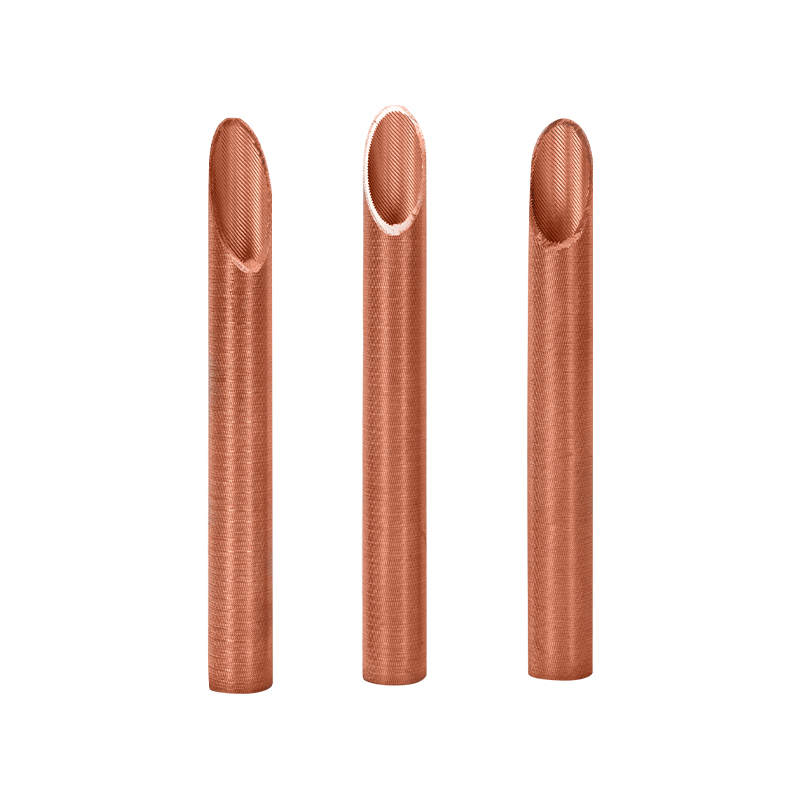
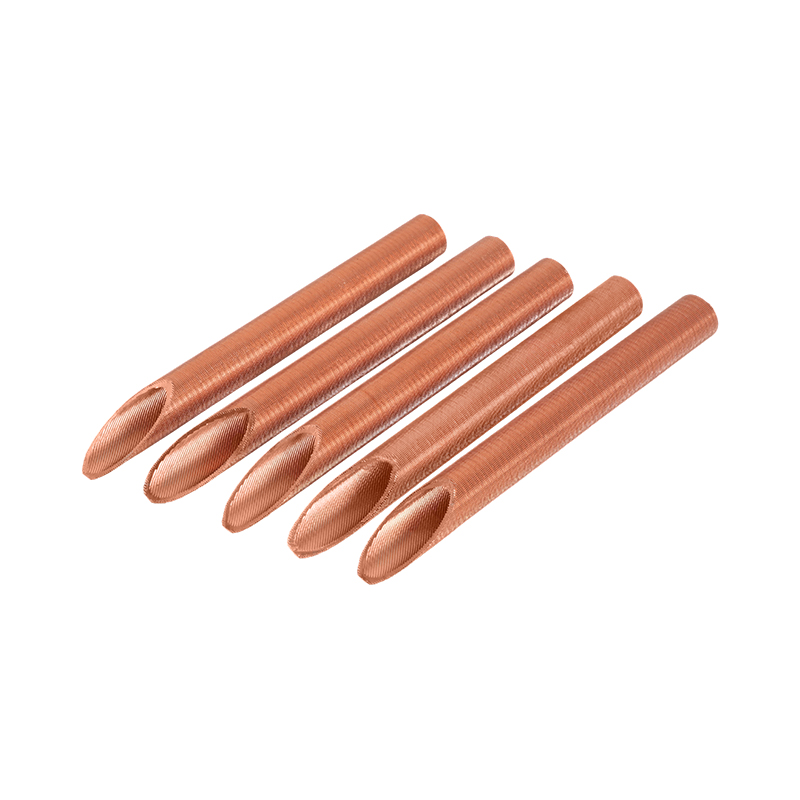
Inner grooved tube—also called internally enhanced tube—features helical grooves machined or rolled into the inner wall surface. These grooves increase the effective heat transfer surface area by 50–80% compared to smooth-bore tubes of the same outer diameter, making them indispensable in modern heat exchangers, condensers, and evaporators.
Inner grooved tubes are used extensively in copper condenser tubes and copper evaporator tubes for residential and commercial air conditioning units. The enhanced geometry promotes refrigerant nucleate boiling in evaporators and improves condensation film drainage in condensers, both of which increase the coefficient of performance (COP) of the system.
Condenser and evaporator tubes are purpose-engineered for opposite sides of the refrigeration cycle. Their material, geometry, and wall thickness must be matched to the operating refrigerant, pressure, and heat load.
Used on the high-pressure side of refrigeration systems, condenser tubes must withstand pressures up to 4.5 MPa for refrigerants like R410A. They are typically produced from TP2 or CW024A copper in OD sizes from 7 mm to 25.4 mm with wall thicknesses of 0.35–0.80 mm. Inner grooved versions reduce condenser surface area requirements by up to 30%, enabling more compact heat exchanger designs.
Evaporator tubes operate at lower pressures (typically 0.3–1.5 MPa) but require excellent nucleate boiling performance. Thin-wall inner grooved tubes with fine groove pitch are standard. For industrial chillers and large-scale cooling, flooded evaporator tubes with enhanced external surfaces (fin copper tube) are also used to boost the overall heat transfer coefficient.
Beyond inner grooved geometry, copper tube factories produce several surface-enhanced variants to meet specialized heat transfer and structural requirements.
Fin copper tube features external longitudinal or helical fins formed integrally with the tube wall. Fin density typically ranges from 16 to 40 fins per inch (FPI). These tubes are common in shell-and-tube heat exchangers, where the fin side contacts a lower-conductivity fluid (e.g., water or process gas) and the smooth bore side carries the primary refrigerant or steam. The fin surface can increase external heat transfer area by 3–8 times compared to a plain tube.
Embossed copper tube has raised patterns or dimples pressed into the outer surface, increasing surface turbulence and contact area. It is widely used in solar collectors, underfloor heating manifolds, and decorative plumbing fixtures. The embossing process also increases tube rigidity without adding wall thickness, which is useful in thin-wall applications.
Copper capillary tube is a thin-walled, small-bore tube used as a fixed refrigerant metering device in domestic refrigerators, window air conditioners, and small heat pumps. Its inner diameter typically ranges from 0.6 mm to 2.5 mm, and length is precisely calibrated to achieve the required pressure drop and refrigerant mass flow rate for a given system design.
Capillary tubes offer advantages over thermostatic expansion valves (TXVs) in low-cost systems: no moving parts, zero maintenance, and reliable operation across wide ambient temperature ranges. However, they are sensitive to contamination—a particle as small as 0.05 mm can cause full blockage—making cleanliness during manufacturing and installation critical.
Key capillary tube specifications include inner diameter (ID), outer diameter (OD), wall thickness, length, and straightness tolerance. Cold rolled copper tube is often used as the starting material to achieve the tight dimensional tolerances required.
Not all copper-based tubes are made from pure copper. Brass tube and copper square tube serve distinct structural and decorative purposes.
Brass tube is an alloy of copper and zinc, typically in proportions of 60–70% copper and 30–40% zinc. Common alloys include C26000 (cartridge brass) and C28000 (Muntz metal). Brass tube offers higher tensile strength (typically 300–500 MPa) than pure copper tube, better machinability, and good corrosion resistance in freshwater and many industrial environments. It is used in hydraulic fittings, heat exchanger shells, marine applications, and decorative hardware.
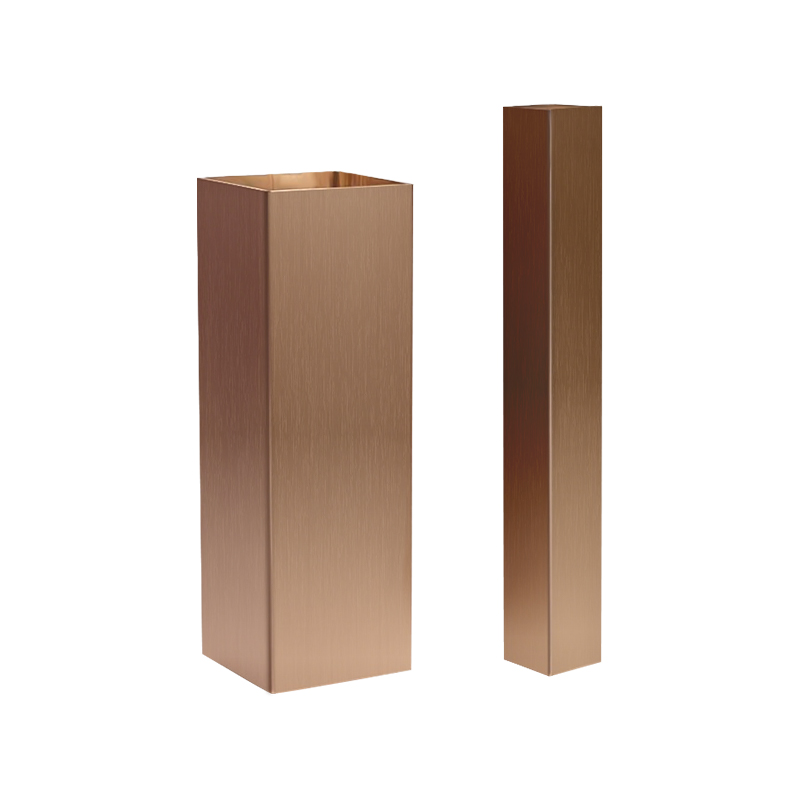
Copper square tube and rectangular copper tube are classified under special shaped copper tube. They are produced by cold drawing round copper tube through a shaped die. Standard sizes range from 10×10 mm to 100×100 mm with wall thicknesses from 1.0 to 5.0 mm. Applications include architectural cladding, electrical busbars, structural brackets, and fluid manifolds where a flat surface contact or bolted connection is required.
Beyond standard round profiles, copper tube factories produce a wide range of special shaped copper tubes—including oval, D-shaped, rectangular, and custom cross-section profiles—for OEM and precision engineering applications.
Special shaped copper tubes are typically cold-drawn to final shape and can maintain dimensional tolerances of ±0.02 mm on critical dimensions. They are used in waveguides, medical instruments, precision heat exchangers, and custom manifold systems. Custom cross-sections can be tooled within 3–6 weeks at most specialized copper tube factories.
Silver copper tube is a copper-silver alloy tube containing 0.03–0.10% silver, which raises the softening temperature of the material by approximately 100°C compared to pure copper. This property is critical in applications where the tube is exposed to sustained elevated temperatures—such as locomotive heat exchangers, power station condensers, and high-temperature steam coils—where pure copper would anneal and lose strength over time. It is specified under ASTM B111 (C10400 or C10500 alloys).
Cold rolled copper tube is produced by passing hot-extruded or drawn tube through a rolling mill at room temperature to achieve tighter dimensional tolerances, improved surface finish, and higher mechanical strength through work hardening.
Compared to hot-drawn tube, cold rolled copper tube achieves:
Cold rolled copper tube is the preferred starting stock for copper capillary tube production and for inner grooved tube rolling, where consistent wall thickness is essential to maintaining groove geometry and refrigerant pressure ratings.
With so many grades, shapes, and surface treatments available, selection must be driven by system requirements rather than lowest cost. The following framework covers the primary decision variables:
Working directly with an experienced copper tube factory allows for custom OD/wall combinations, non-standard lengths, and certified test reports (CTRs) for pressure vessels and regulated installations. Always request mill test certificates (MTC) confirming chemical composition, mechanical properties, and dimensional compliance before accepting a shipment.
Content
Copper Tube is made of high-purity copper material with a copper content of not less than 99.9%. The main material codes are T11050 and C12200(DHP), a...
See Details
The Copper Water Tube produced by our company is a high-performance copper tube suitable for hot and cold water systems and heating applications. It h...
See Details
Copper capillary tube is usually manufactured by precision machining, and its dimensional accuracy can reach one thousandth of an inch. This ultra-hig...
See Details
The copper evaporator tube adopts a unique fin design, and the external fins are equipped with specially designed interconnected channels, so that eac...
See Details
Copper square tube is a metal tube with a hollow square cross-section. It is made of high-purity copper or copper alloy materials through multiple pre...
See Details
The condenser copper tube adopts a proprietary design independently developed by the company, and the ends of the fins are provided with radial and ax...
See Details