 English
 Español
 中文
中文News
Home / News / Industry News / How Do Copper Press Fittings Work? A Complete Guide to Press Connections
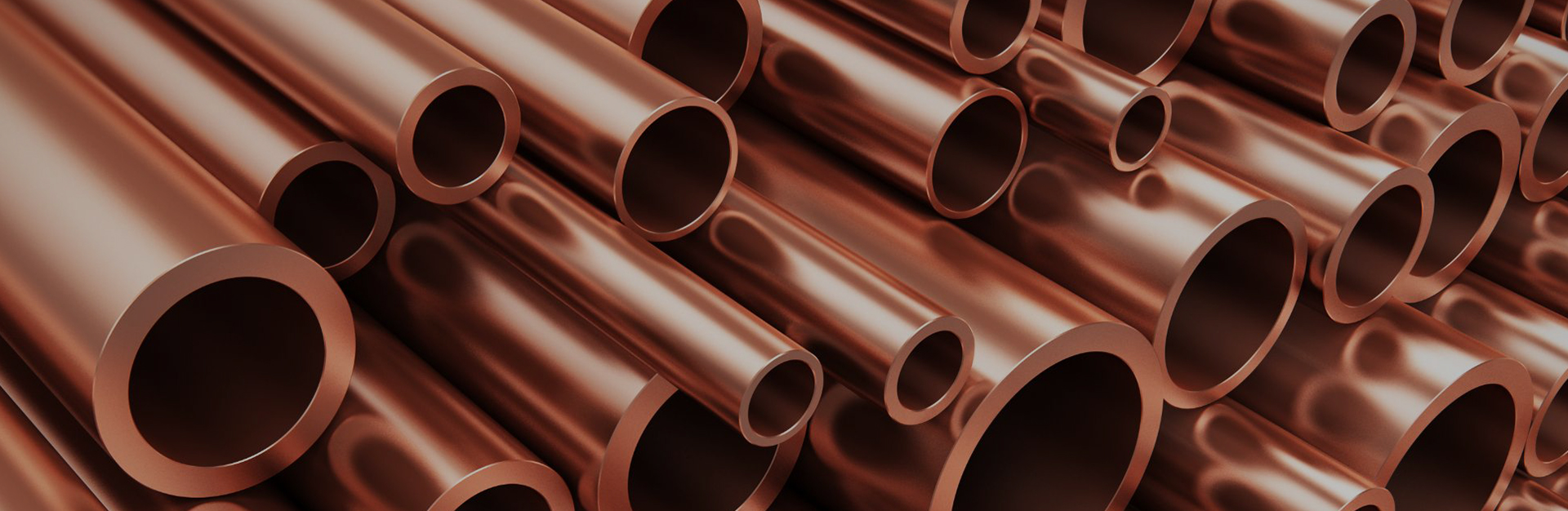
Ask anyone who keeps a press tool on the van why they stopped soldering everything, and you will usually hear a version of the same answer: the joint is fast, it is dry, and it is repeatable. Copper press fittings have grown from a niche alternative into a mainstream way of joining copper tube, covering domestic water lines, heating circuits, gas piping and the refrigerant lines inside air conditioning systems.
The principle is straightforward. Instead of melting filler metal into the joint, a press fitting uses a mechanical crimp and a compressed elastomeric O-ring to create a permanent, leak-tight seal. The tube goes into the fitting, a jaw wraps around it, and the tool closes that jaw to swage the fitting down onto the tube. That is the whole idea. What happens during those few seconds is what separates a joint that lasts for decades from one that weeps behind a finished wall.
Cut a press fitting in half and you will find four working zones, each with a separate job to do.
The sealing element is typically EPDM for potable water and heating, HNBR where refrigerant or gas resistance is needed, and FKM for higher temperature duty. It is not a gasket in the traditional sense. It is a captured elastomer that gets squeezed, never cut, when the joint is pressed.
One design detail is worth knowing: most press fittings are built so that an unpressed joint leaks. That is deliberate. If a connection is missed, the pressure test finds it before the drywall goes up.
The tool does the hard part, but everything before and after the press decides the outcome.
The press jaw does not simply squeeze the fitting around the tube. It forces the copper of the fitting and the tube past their yield point in a controlled, localised way. The metal cold-flows into the contour of the jaw, so the socket and the tube wall lock together in an interference fit that stays under permanent elastic load. You can often see a faint witness line on the outside of the fitting afterwards. That is the material confirming the deformation happened.
The O-ring sits inside that deformed zone, compressed between the tube outside diameter and the fitting groove. It never faces the full line pressure on its own. The mechanical crimp carries the load, and the elastomer only has to bridge the micro-gap between two metal surfaces. That division of labour is why press joints are rated for the same working pressures as soldered joints and are accepted in so many plumbing and mechanical codes.
Different systems use different jaw contours and different fitting geometries. A V-profile jaw creates a narrow, deep crimp, while an M-profile produces a wider, shallower one. Compact fittings for tight spaces carry a shorter press section. The one rule that cannot be bent: the jaw, the fitting and the tool must come from the same system. A jaw that does not match the profile deforms the fitting in the wrong place, and the O-ring never gets compressed properly. Press tools also need periodic calibration, because a tool that no longer reaches full force keeps producing joints that look perfect and fail later.
Press systems place tight demands on the tube itself. Outside diameter tolerance, wall thickness consistency, roundness and surface cleanliness all change how the copper behaves under the jaw. Hard-drawn tube resists deformation and holds the crimp shape well, while fully annealed tube is easier to bend but more sensitive to over-deformation. For water lines, type L and type M tube are common choices. For refrigeration, ACR-grade tube with a clean, dehydrated interior is the norm, because the sealing element and the refrigerant chemistry have to coexist for years without reacting.
All three methods produce a reliable joint when they are done properly. They simply trade different strengths, and the right choice depends on the line, the environment and the crew.
| Consideration | Press | Solder | Braze |
|---|---|---|---|
| Heat source | None, mechanical tool | Torch, 200 to 250 C | Torch, above 450 C |
| Time per joint | 5 to 15 seconds | 30 to 60 seconds plus cooling | One minute or more |
| Wet line tolerated | Often yes | No, tube must be dry | No |
| Seal formed by | Compressed elastomer plus crimp | Capillary filler metal | Metallurgical bond |
| Fire and permit risk | Minimal | Open flame | Open flame, higher risk |
| Skill dependence | Moderate, tool driven | High | High |
| Rework | Cut out and re-press | Heat and re-solder | Cut out and remake |
| Typical duty | Water, heating, gas, refrigerant | Domestic water, low pressure | Refrigerant, high temperature, vibration |
The trade-offs are real. A press tool and a full set of jaws is a serious investment, and the elastomer sets a temperature ceiling that a brazed joint does not have. Soldering and brazing still win in high-temperature steam work and wherever a torch is already the only practical option.
Plumbing press systems seal potable water and heating lines with EPDM elements, at moderate pressures and predictable temperatures. Refrigerant press systems used in split units and VRF piping run HNBR elements and different fitting dimensions, and they usually need a deeper press section because operating pressures and vibration are higher. The tube changes too: it has to arrive clean, round and dry, with caps left on until the moment of assembly.
On the water side we supply hard-drawn copper water tube in straight lengths across the diameter range most press systems are built around. If you are specifying a whole installation, our plumbing copper solutions page groups tube types, tempers and standards together so the tube can be matched to the press system and the local code in one pass.
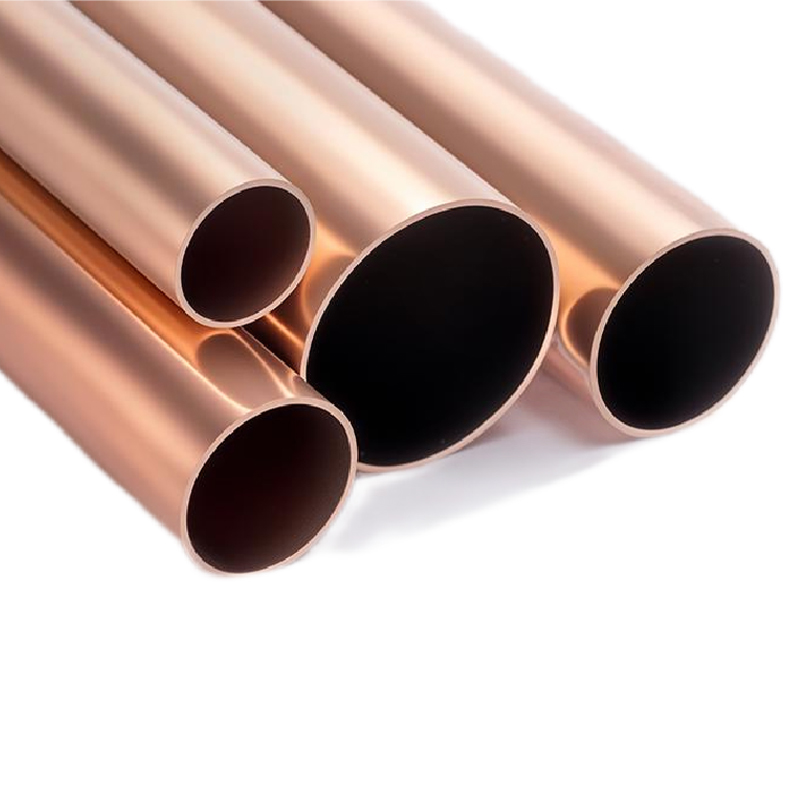 Custom Copper Water Tube for Water and Heating SystemsFor specifiers matching tube to press systems and codes, this custom copper water tube covers hot and cold water and heating with antibacterial and corrosion-resistant properties.View Product →
For refrigeration circuits, the requirement shifts to cleanliness and dimensional consistency, because a press joint on a refrigerant line has to survive pressure cycling, vibration and years of contact with the sealing element.
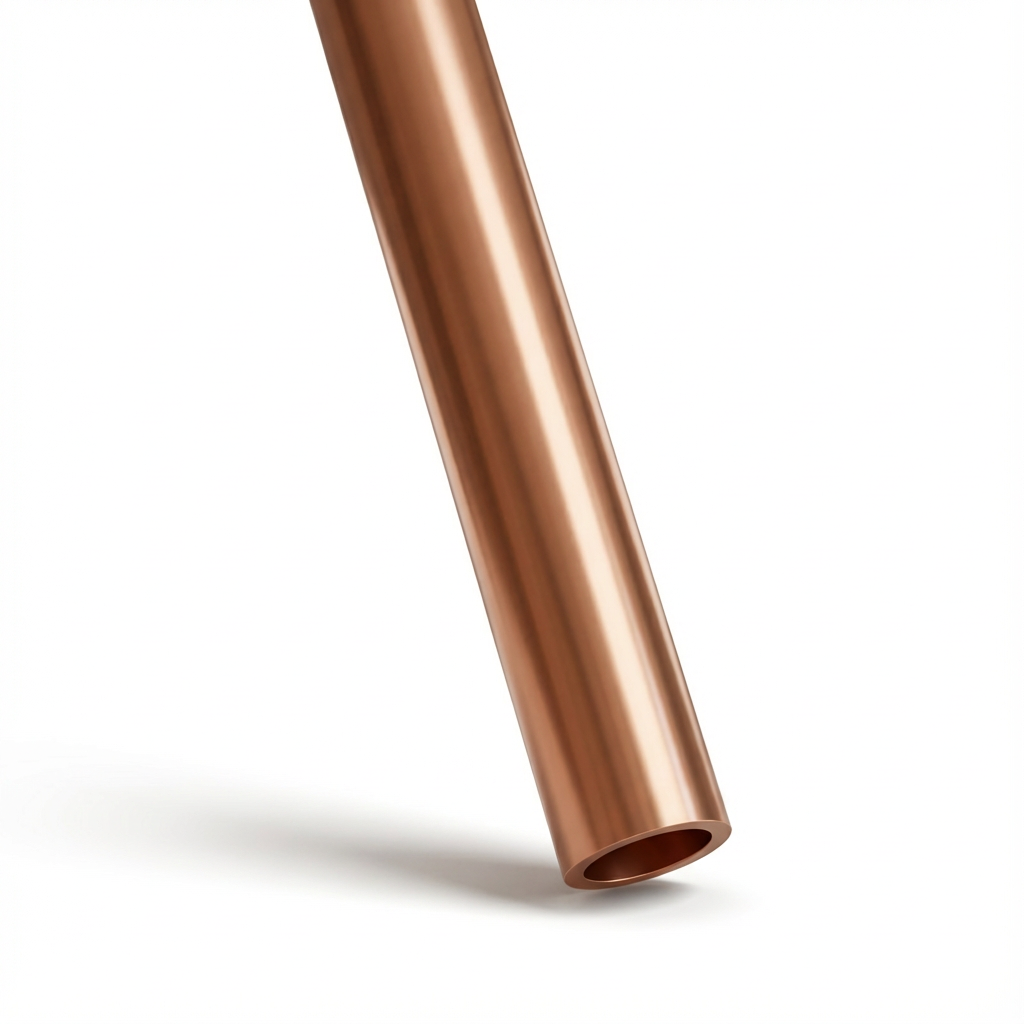 Refrigeration Copper Tube for HVAC and Cooling SystemsFor refrigeration circuits and press-joint systems, this 12–28 mm TP2 copper tube supports high-pressure refrigerant flow, heat transfer and corrosion resistance.View Product →
A press joint is a system, and the tube is the half of that system you buy by the tonne rather than by the box. Outside diameter tolerance, wall consistency, temper and interior cleanliness decide how many joints pass the pressure test the first time and how many need to be cut out and remade.
We have been drawing copper tube since 1994, with melting, extrusion, drawing, finishing and annealing under one roof. That means the tube arriving at your press jaw can be held to the same dimensions batch after batch, whether it is heading for a domestic water riser, a condenser coil or a VRF header. If you want to look at how our tube and connecting components fit together, the copper fittings and connectors range is a good place to start.
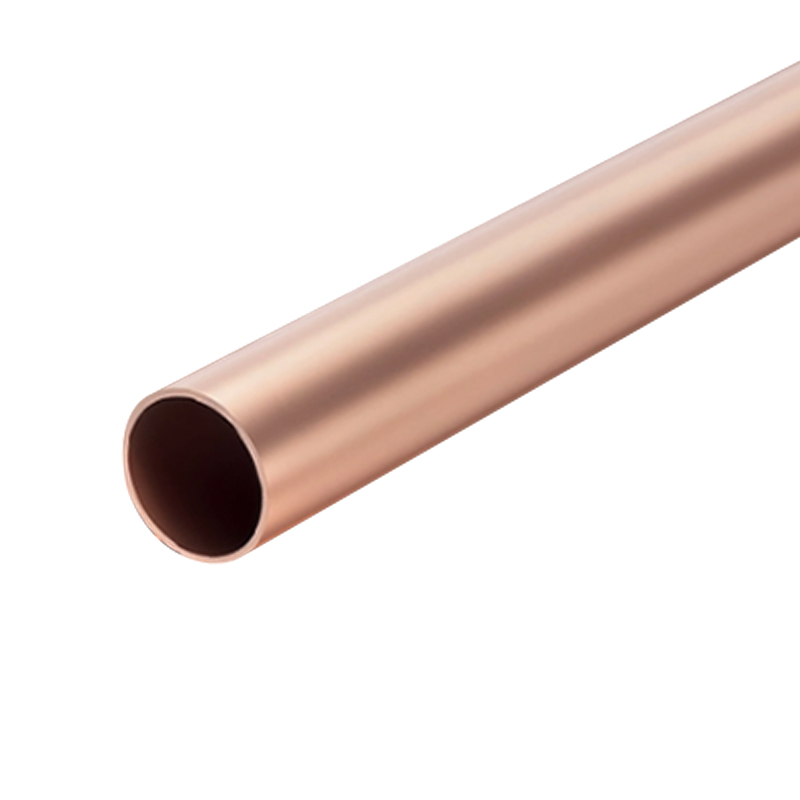 High-Purity Copper Tube for Water, Medical and RefrigerationDrawing on in-house production since 1994, this high-purity copper tube serves water, medical gas and refrigeration applications with customizable dimensions.View Product →
If you are selecting tube for a press system and want to talk through diameter, temper or standard, our team is happy to go through it with you.
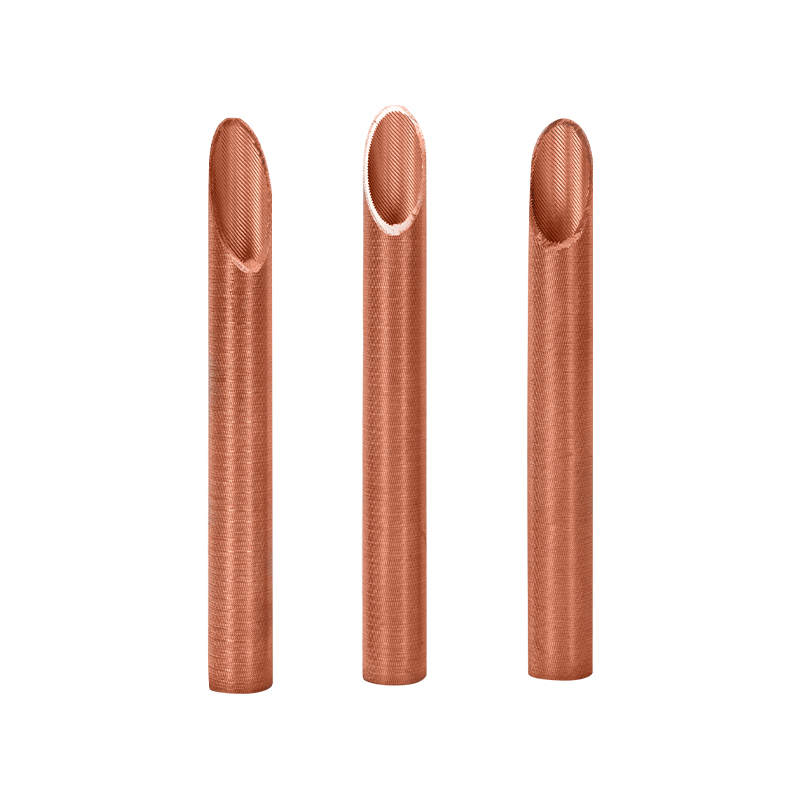
The copper evaporator tube adopts a unique fin design, and the external fins are equipped with specially designed interconnected channels, so that eac...
See Details
Copper Tube is made of high-purity copper material with a copper content of not less than 99.9%. The main material codes are T11050 and C12200(DHP), a...
See Details
The Copper Water Tube produced by our company is a high-performance copper tube suitable for hot and cold water systems and heating applications. It h...
See Details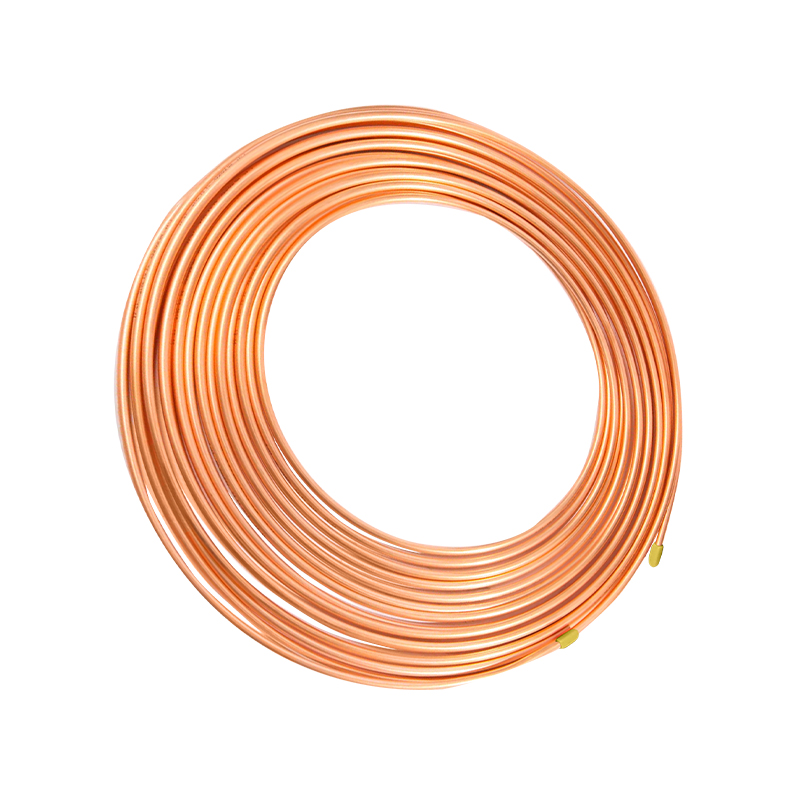
Copper capillary tube is usually manufactured by precision machining, and its dimensional accuracy can reach one thousandth of an inch. This ultra-hig...
See Details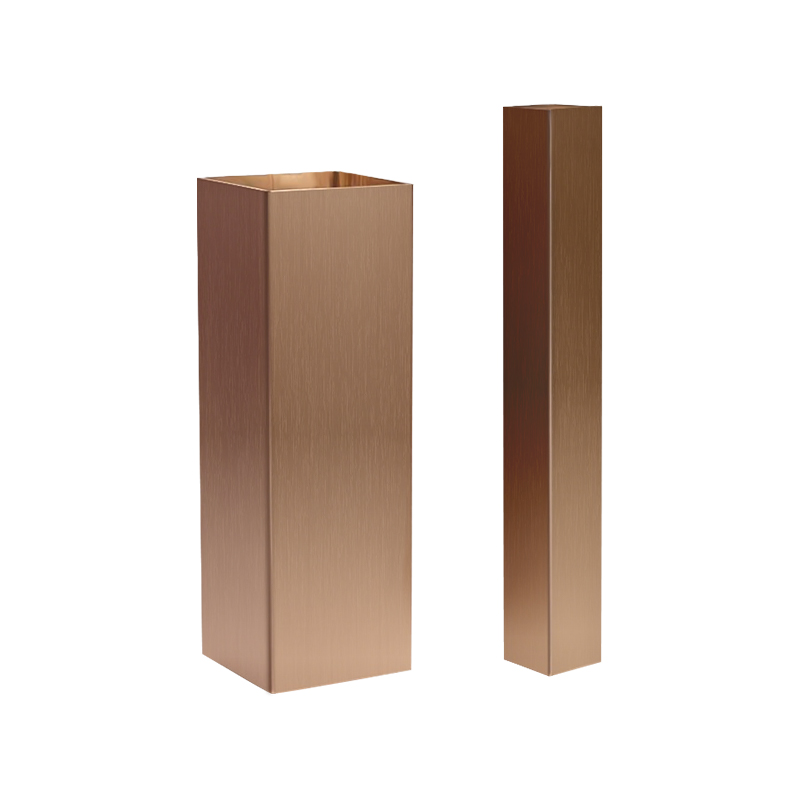
Copper square tube is a metal tube with a hollow square cross-section. It is made of high-purity copper or copper alloy materials through multiple pre...
See Details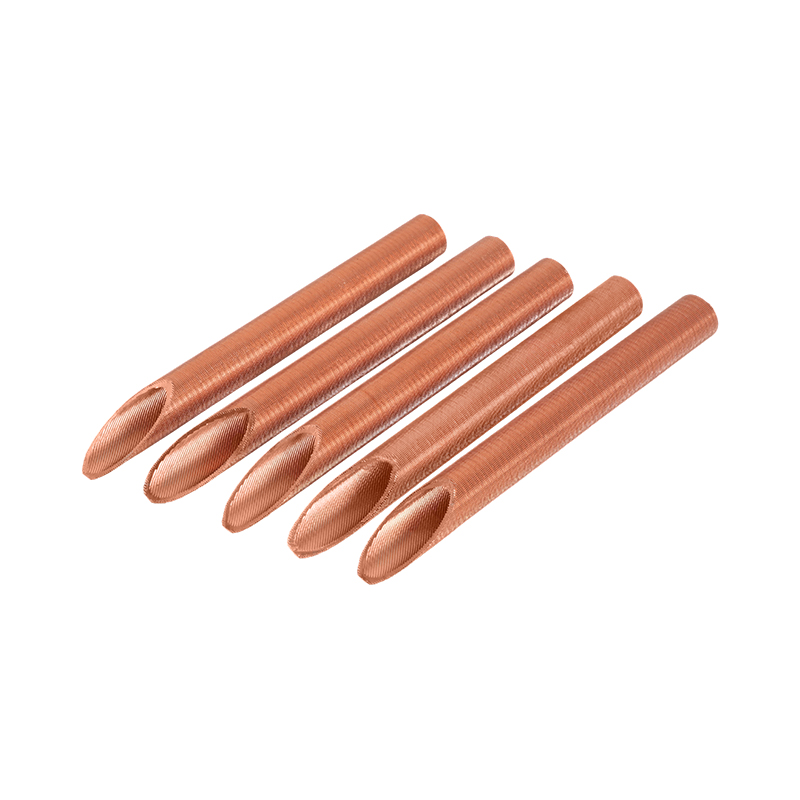
The condenser copper tube adopts a proprietary design independently developed by the company, and the ends of the fins are provided with radial and ax...
See Details
 Tangpu Industrial Zone, Shangyu District, Shaoxing City, Zhejiang Province, China
 +86-13567501345
© Zhejiang Jingliang Copper-Tube Products Co., Ltd All rights reserved.

