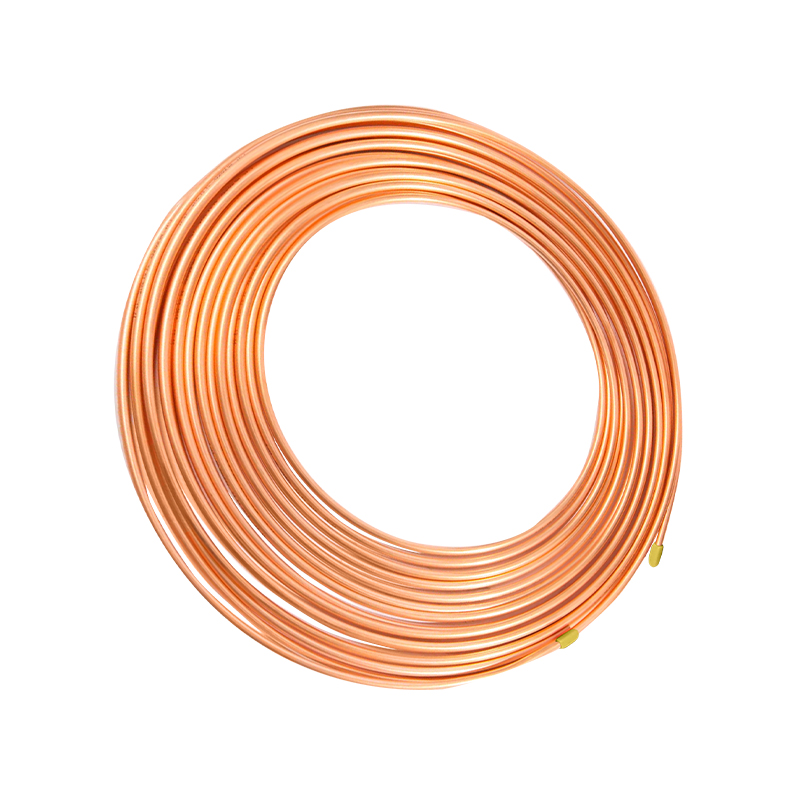
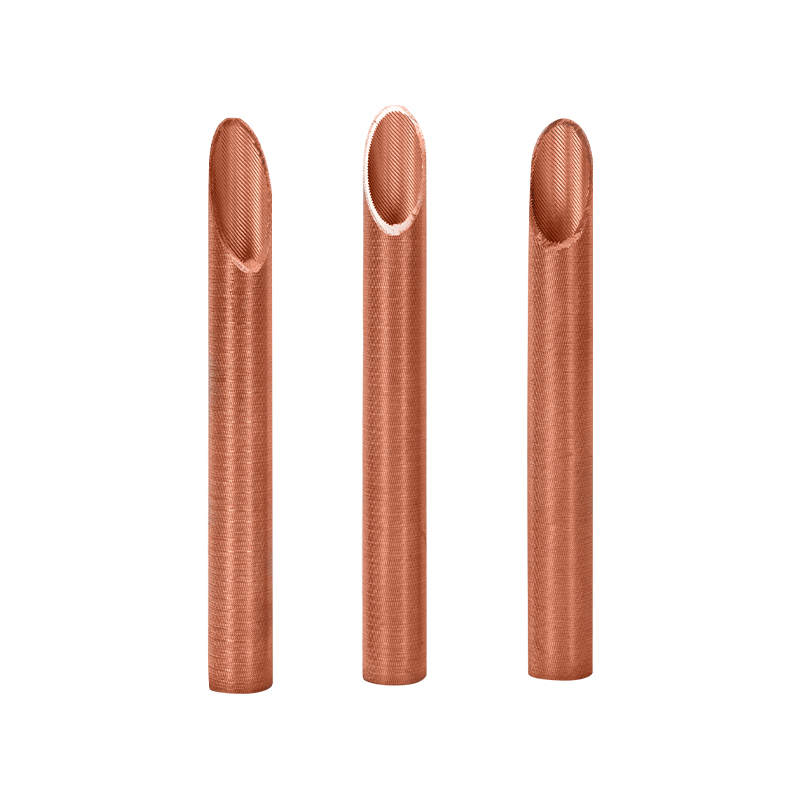
Fin copper tubes are the preferred choice for heat transfer applications in HVAC, refrigeration, and industrial heat exchangers — and for good reason. They combine the superior thermal conductivity of copper (approximately 385 W/m·K) with an extended fin surface that can increase heat transfer efficiency by up to 300–500% compared to plain copper tubes. If you are sourcing components for a cooling system, an air handler, or a condenser unit, understanding fin copper tube specifications, types, and supplier quality standards will directly impact your system's performance and service life.
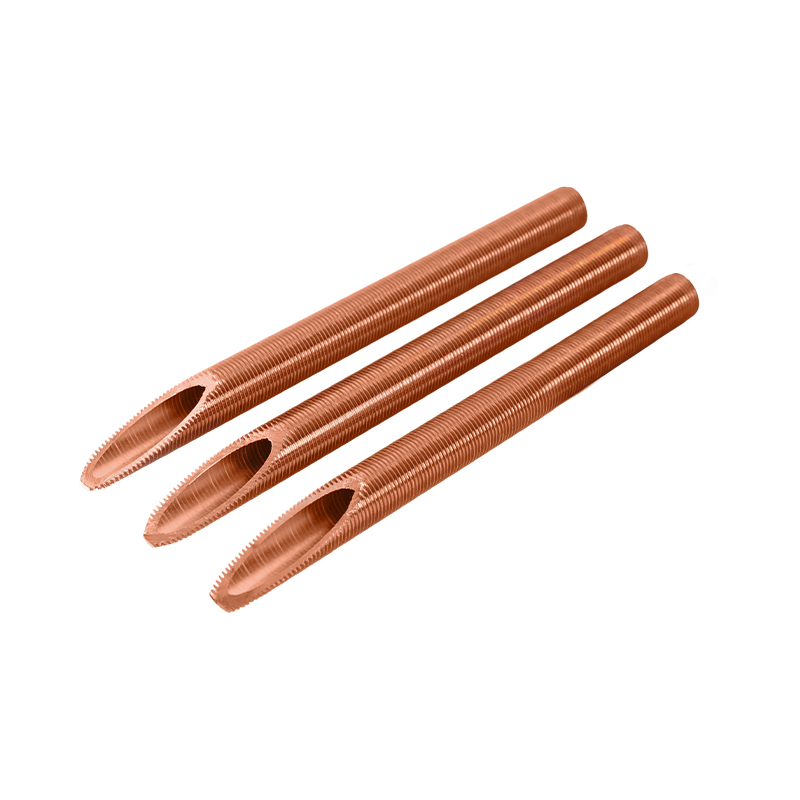
A fin copper tube is a copper tube with external or internal fins — thin metallic extensions — that significantly increase the effective surface area available for heat exchange. The base tube carries the working fluid (refrigerant, water, or steam), while the fins transfer heat to or from the surrounding air or fluid medium.
There are two primary fin configurations:
The combination of high thermal conductivity, corrosion resistance, and mechanical workability makes copper the dominant material for finned tube construction, outperforming aluminum-only or steel alternatives in most HVAC scenarios.
Choosing the correct fin copper tube begins with understanding the main product categories and their typical dimensional ranges. The table below summarizes the most common types used in the industry:
| Type | Fin Style | OD Range (mm) | Fin Pitch (FPI) | Primary Application |
|---|---|---|---|---|
| Inner Grooved Copper Tube | Internal spiral fins | 5 – 19.05 | 40 – 70 grooves | Air conditioners, heat pumps |
| Extruded Fin Tube | External integral fins | 12.7 – 51 | 8 – 26 FPI | Dry coolers, air-cooled chillers |
| L-Foot / LL-Foot Fin Tube | Wound aluminum/copper fin | 15.88 – 38.1 | 6 – 14 FPI | Radiators, waste heat recovery |
| Brazed / Soldered Fin Tube | Copper-aluminum bonded fin | 9.52 – 25.4 | 12 – 20 FPI | Fan coil units, evaporator coils |
| High-Efficiency Micro-Fin Tube | Internal micro-grooves | 5 – 9.52 | 60 – 80 grooves | Inverter ACs, next-gen heat pumps |
Wall thickness typically ranges from 0.25 mm to 1.5 mm, with thinner walls favored in high-volume HVAC production for weight and cost reduction, while thicker walls suit high-pressure industrial or marine environments.
The geometry of the fin is not cosmetic — it directly controls thermal resistance, pressure drop, and fouling behavior. Engineers and procurement teams should understand the following design variables:
Higher FPI means more fins per unit length, increasing surface area. A 16 FPI tube offers roughly 30–40% more surface area than an 8 FPI tube of the same diameter. However, FPI above 14 is not recommended in environments with dusty or greasy air, because the narrower fin spacing clogs quickly, negating the efficiency gain. For clean indoor applications (fan coil units in office buildings), 18–22 FPI is common and effective.
Taller fins extend the heat transfer surface radially but introduce a "fin efficiency" penalty — the tip of a tall fin is less effective at transferring heat than the base. Most industrial fin copper tubes keep the fin height between 8 mm and 25 mm to maintain fin efficiency above 80%. Fin thickness in copper tubes is usually 0.2–0.4 mm for wound types and 0.5–1.5 mm for extruded integral fins.
For inner-grooved copper tubes, the helix angle of the spiral groove (typically 15°–30°) influences refrigerant swirl and contact with the tube wall. A helix angle of 18° is a widely adopted standard for R410A and R32 refrigerants, delivering a measured heat transfer coefficient improvement of 50–80% over smooth tubes at typical operating velocities.
Not all copper is the same. The alloy composition and temper state of the copper tube base stock significantly affect mechanical strength, formability, and corrosion performance. The following standards govern most commercial fin copper tube production:
The most common alloy is C12200 (DHP copper, phosphorus-deoxidized) with a copper content ≥99.90%. This alloy is preferred because it is weldable/brazeable, has minimal residual oxygen that could cause hydrogen embrittlement, and maintains adequate tensile strength (≥200 MPa for hard temper) while remaining formable in annealed (O60) temper for bending operations.
Fin copper tubes appear across a broad spectrum of thermal management systems. Understanding where each type is deployed helps buyers specify the right product:
This is the largest single application segment. Inner-grooved copper tubes with diameters of 7 mm or 9.52 mm dominate residential and light commercial split-system air conditioners globally. A typical 2-ton (7 kW) residential AC unit contains 15–25 meters of inner-grooved copper tube with aluminum fins mechanically bonded to the outside. The copper-aluminum combination leverages copper's superior conductivity for the tube and aluminum's low cost and low weight for the fin sheet.
Large-diameter extruded fin copper tubes (19.05 mm – 51 mm OD) are used in shell-and-tube or air-cooled heat exchangers for process cooling, power generation cooling circuits, and data center liquid cooling. In these applications, copper's biofouling resistance is an additional advantage over stainless steel — copper surfaces can reduce microbial growth in cooling water loops, cutting maintenance intervals by 20–40% in some industrial studies.
Flat-plate solar collectors use copper riser tubes bonded to copper fin sheets (the absorber plate). The copper-copper bonded construction maximizes heat transfer from the absorber surface to the fluid. Selective-coating copper fin tube absorbers can achieve thermal efficiencies of 70–80% under standard test conditions (EN 12975), making them among the most efficient flat-plate collectors available.
Fin copper tubes in L-foot or KL-foot configurations are used in economizers and waste heat boilers where gas-side fouling is a concern. The mechanical bond between the wound fin and tube base resists fin loosening due to thermal cycling, which is critical in flue gas environments where temperature swings of 200–400°C occur during startup and shutdown cycles.
The quality of a fin copper tube is only as good as the manufacturing process behind it. When vetting a copper tube factory, buyers should assess the following dimensions systematically:
A capable factory should operate continuous casting and rolling lines for copper rod, followed by cold drawing or extrusion for tube forming, and then dedicated finning lines (fin rolling, groove forming, or winding). Vertically integrated factories that process copper cathode through to finished fin tube offer better traceability and cost control than converters who purchase blank tube and add fins externally.
At a minimum, buyers should require:
Major copper tube factories in China, for example, operate annual capacities ranging from 5,000 to over 100,000 metric tons of copper tube products. For fin tube specifically, verify that the factory has dedicated finning lines rather than subcontracting the fin-forming step. Lead times for standard inner-grooved copper tube coils are typically 15–30 days ex-works for established buyers; custom fin geometries can extend this to 45–60 days.
Copper tubes are susceptible to internal oxidation and contamination during storage and transit. Reputable factories seal tube ends with PE caps, charge the tube interior with dry nitrogen before sealing, and pack coils in moisture-barrier polyethylene film within wooden crates. Nitrogen-charged, sealed coils can maintain internal cleanliness for 12–18 months — a critical requirement for ACR tube destined for refrigeration systems.
Copper is not without competition. Aluminum multi-port extrusion (MPE) tubes have gained market share in automotive and some light commercial HVAC applications. The comparison below provides a practical overview:
| Property | Fin Copper Tube | Aluminum MPE Tube | Stainless Steel Fin Tube |
|---|---|---|---|
| Thermal Conductivity (W/m·K) | 385 | 205 | 16 |
| Corrosion Resistance (general) | Excellent | Good (with coating) | Excellent |
| Brazability / Joinability | Excellent | Moderate | Good (TIG/MIG) |
| Material Cost (relative) | High | Low–Medium | Medium–High |
| Best Fit Application | HVAC, refrigeration, solar | Automotive, micro-channel HVAC | Marine, chemical processing |
Despite aluminum MPE's lower cost, copper's thermal conductivity advantage of nearly 2:1 over aluminum means copper fin tubes can achieve equivalent heat transfer performance with a significantly smaller heat exchanger footprint — a decisive factor in space-constrained installations such as wall-mounted HVAC cassettes or compact chiller cabinets.
The fin copper tube industry is not static. Several important trends are reshaping product design and factory investment priorities:
Before placing an order with any copper tube factory, use the following checklist to validate that the product and supplier meet your requirements:
Fin copper tubes represent a mature yet continuously evolving product category that sits at the core of modern thermal management. Their dominance in HVAC, refrigeration, and industrial heat exchange is built on copper's unmatched combination of thermal conductivity, corrosion resistance, and workability. Selecting the right fin geometry, alloy specification, and manufacturing standard — and pairing that with a qualified copper tube factory that can demonstrate consistent process control and certified quality — is the most reliable path to long-term system performance.
As refrigerant regulations tighten and energy efficiency standards rise globally, fin copper tubes will continue to evolve toward smaller diameters, more complex groove geometries, and environmentally optimized manufacturing. Buyers who understand the technical fundamentals outlined here will be better positioned to specify the right product, negotiate effectively with factories, and avoid the quality pitfalls that derail HVAC and heat exchanger projects.
Content
Fin copper tube is a highly efficient heat exchange element. Its structural feature is that uniform fins are formed on the outer wall of the copper tu...
See Details
Copper Tube is made of high-purity copper material with a copper content of not less than 99.9%. The main material codes are T11050 and C12200(DHP), a...
See Details
The Copper Water Tube produced by our company is a high-performance copper tube suitable for hot and cold water systems and heating applications. It h...
See Details
Copper capillary tube is usually manufactured by precision machining, and its dimensional accuracy can reach one thousandth of an inch. This ultra-hig...
See Details
The copper evaporator tube adopts a unique fin design, and the external fins are equipped with specially designed interconnected channels, so that eac...
See Details
Copper square tube is a metal tube with a hollow square cross-section. It is made of high-purity copper or copper alloy materials through multiple pre...
See Details